
Vandaag of morgen in huis

Kwaliteit gegarandeerd

Welkomstaanbiedingen ontgrendelen: GRATIS bezorging | Tot 80% korting | Gratis 30 dagen JoyPlus-proefperiode
Download de app
Buying a blender sounds simple, until you have to choose between a jug blender, stick blender, smoothie blender or hand blender. Manufacturers often highlight wattage, extra functions and terms such as “high speed”. However, these details do not tell you everything about day-to-day use. An appliance may be powerful, but awkward to clean, too small for a family or unsuitable for hot ingredients.
With this guide, you can compare blenders using verifiable product specifications. That way, you can avoid making the wrong purchase and choose an electric blender that suits your recipes, kitchen space and cleaning routine.
High power sounds appealing, but the result also depends on the blades, jug shape, speed control and recommended usage time. A powerful blender with a large jug is useful for frozen fruit or ice, while a stick blender is particularly practical for soups, sauces and small portions.
Also pay attention to the difference between nominal power and maximum or claimed power. When a brand mentions performance figures such as a particular processing speed, treat this as information from the product description or based on the brand’s own research, rather than a universal guarantee for every recipe.
A 1.8-litre jug may have a lower maximum fill level in practice. Hot preparations expand and need extra room. Therefore, always check:
A blender for smoothies and soups therefore needs to be not only large enough, but also suitable for the temperature of your preparations.
A blender with accessories may look appealing, but a whisk, chopper and extra cup all take up space. Think beforehand about whether you really want to chop, whisk and blend with one appliance. For everyday use, a removable foot or accessory that is easy to clean is often more important than a long list of functions.
For soft ingredients such as bananas, yoghurt and cooked vegetables, medium power is often sufficient. If you regularly want to process nuts, frozen fruit or ice, look for a powerful blender with a pulse setting and an explicit ice-crushing blender function.
More speeds give you greater control over the texture, but they are not automatically essential. A model with one button can be convenient for simple smoothies. A model with two, nine or twenty settings is more interesting if you want to switch between coarse chopping, puréeing and light whisking.
A blender with a glass jug feels sturdy and is suitable for many cold preparations. However, glass is heavier and can break if dropped or used incorrectly. Plastic is lighter, but check whether the material is suitable for food contact and which temperatures are permitted.
For one person, a cup of around 600 ml may be sufficient. For several people, a 1.25- to 1.8-litre jug is more practical. Consider the space available beneath your kitchen cupboards and the weight of a full glass jug.
Check whether the components are dishwasher-safe and whether the blades can be removed. The motor base must not be immersed in water. With a stick blender, a splash guard, click or twist-lock mechanism and removable blending foot are useful features.
Always follow the instructions regarding the maximum filling temperature and continuous operating time. Some models, for example, recommend blending for a maximum of one minute, followed by a pause. Take care when preparing hot soup: allow it to cool if the product instructions do not permit hot liquids.
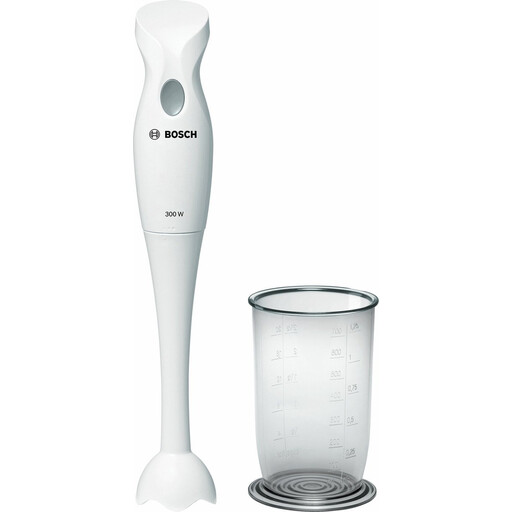
Why it suits this profile: A compact stick blender with 300 W, one speed and a measuring jug for simple preparations such as sauces and smooth soups.
The specifications are clear and straightforward, without unused extra accessories or complicated programmes.
300 W, turbo function according to the product description, a 1.5-metre cable and dishwasher-safe removable components.

Why it suits this profile: A jug blender for households that value multiple programmes, a generous jug and a glass construction.
The jug’s usable capacity is stated separately: 1.5 litres within a total capacity of 2 litres.
1200 W, six stainless-steel blades, three automatic programmes and a dishwasher-safe glass jug according to the product information.
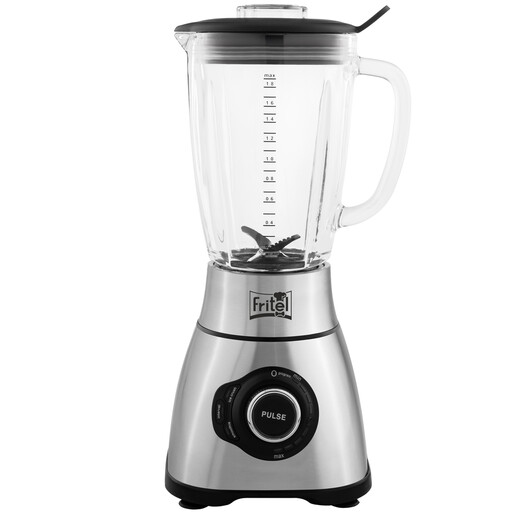
Why it suits this profile: Designed for larger portions of smoothies, dips, soups and cold drinks, with a 1.8-litre glass jug.
The ice-crushing and pulse functions are listed separately, so you do not have to rely on wattage alone.
1.8-litre capacity, Ice Crush and Smoothie programmes, a pulse function, and a dishwasher-safe jug and lid according to the product description.

Why it suits this profile: A hand blender for anyone who wants to whisk, chop and grind ingredients as well as purée them.
The set specifies capacities of 500 ml for the chopper and 800 ml for the mixing cup, rather than simply claiming to include “lots of accessories”.
600 W, two speeds, whisk, meat grinder, chopper and removable components according to the product description.
We have put together a complete, up-to-date list of products that fully meet these strict selection criteria and the applicable European safety regulations.
A stick blender is compact and can be used directly in a pan or bowl. This is practical for soup, sauce and baby food, provided you follow the temperature and usage time specified in the instructions. A jug blender usually has a larger jug and is better suited to multiple portions, smoothies and crushing ice.
For soft vegetables and fruit, wattage is not the only deciding factor. Also look at the blades, pulse function, jug capacity and instructions for frozen ingredients. If you regularly use ice or frozen fruit, a model with an explicit ice-crushing function and suitable speed control is a sensible choice.
Its lifespan depends on how it is used, cleaned and whether the instructions are followed. Overfilling, running it dry and blending for too long at a time can put additional strain on the motor and blades. Clean removable components immediately after use, allow the motor to cool when instructed and check the warranty and service terms before buying.
