
Vandaag of morgen in huis

Kwaliteit gegarandeerd

Welkomstaanbiedingen ontgrendelen: GRATIS bezorging | Tot 80% korting | Gratis 30 dagen JoyPlus-proefperiode
Download de app
A blender may seem simple at first glance: jug, motor, blades and a button. In practice, however, there are major differences in ease of use, capacity, materials and noise levels. A model that works perfectly well for a daily smoothie may not be suitable for hot soup, frozen fruit or large family-sized portions.
The three most common buying pitfalls:
For soft ingredients such as banana, yoghurt and ripe berries, a compact smoothie blender with lower power is often sufficient. If you also want to blend frozen fruit, nuts, hard vegetables or ice, look for a powerful blender with a motor of around 800W or more.
The stated power is not a guarantee of a particular texture. So also check:
A high-speed blender may list high revolutions per minute, but noise levels and the recommended operating time are just as relevant in a Dutch home with an open-plan kitchen.
For one person, a personal blender with a cup of around 600 to 700ml is practical. The cup can sometimes be taken with you straight away, so there is less need to transfer the contents. For several people, a blender with a large capacity is more convenient. Pay attention to the difference between the jug’s total capacity and its maximum fill level.
A 1.25 to 1.5-litre jug is often suitable for everyday family preparations. Models with a capacity of 1.75 to 2.1 litres offer more room for multiple portions, but also take up more space on the worktop. Measure the height beforehand, especially if the blender needs to fit underneath kitchen cupboards.
A blender with a glass jug is worth considering if you value a sturdy, heat-resistant material. Always check the instructions for hot ingredients, though. Not every glass jug is automatically suitable for boiling-hot liquids.
Plastic and Tritan are often lighter. According to some brands’ product descriptions, Tritan cups may be BPA-free; check this for each model. An easy-to-clean blender has removable parts, dishwasher-safe components or a cleaning programme.
Also look out for practical safety details:
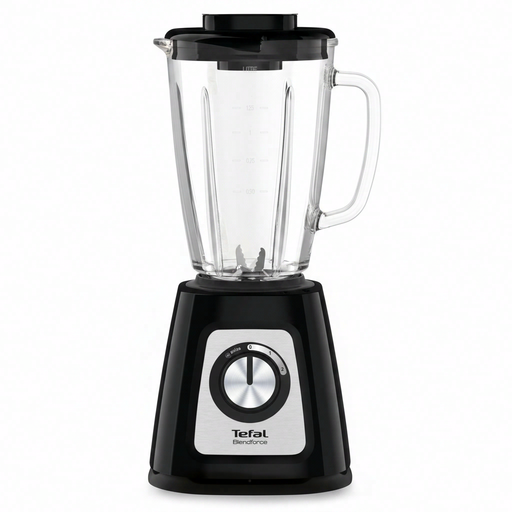
Why it suits this profile: This model combines an 800W motor with a 1.25-litre glass jug and straightforward controls. It is suitable for smoothies, sauces, soups and cold drinks, without requiring a large appliance.
The specifications list two speeds, pulse and an ice-crushing function, so you do not have to rely on wattage alone.
Glass jug, stainless-steel blades, non-slip feet and dishwasher-safe parts, according to the product description.

Why it suits this profile: The combination of a 2.1L jug, 700ml cup and manual settings suits households that prepare both family-sized portions and individual smoothies.
The product description lists 14 manual speeds and four programmes, giving you more control than simply switching the blender on and off.
1200W power, a large jug, a separate cup and a BlendSense function which, according to the manufacturer, adjusts settings to the ingredients and quantity.
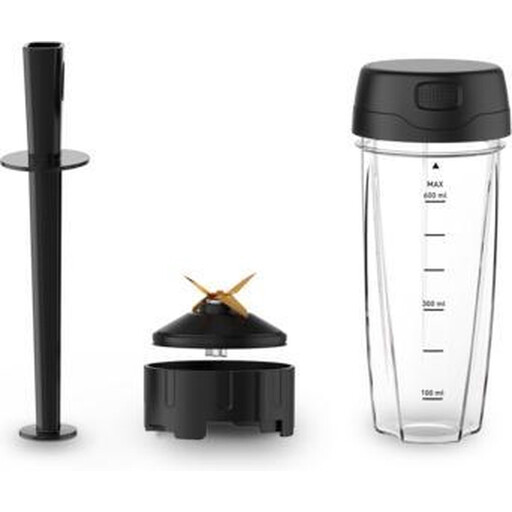
Why it suits this profile: If you regularly make smoothies, dips, hummus, milkshakes or frozen desserts, you get a spacious jug and several automatic programmes.
In addition to the stated 1600W power, there are five automatic programmes, manual time and speed controls, and a stirring accessory.
1.75L Tritan jug, 600ml cup, 35,000 revolutions per minute according to the specifications, and an included recipe book.
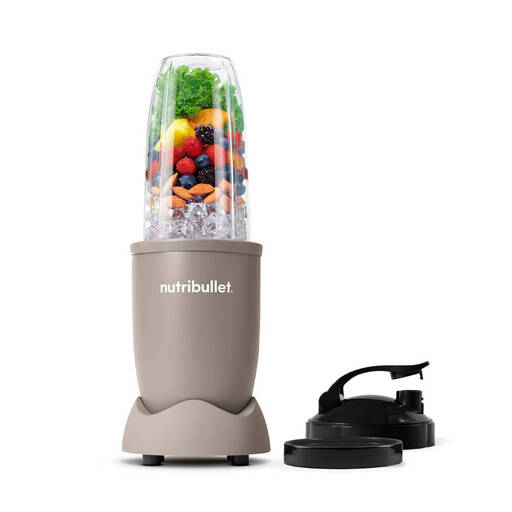
Why it suits this profile: The compact 700ml cup and included to-go lid are ideal for everyday use by one person, at home or on the move.
The product information states a maximum operating time of one minute per cycle. This makes the usage limit clear before you buy.
900W power, 22,000 revolutions per minute according to the specifications, pulse control and dishwasher-safe accessories.
We have put together a complete, up-to-date list of products that fully meet these strict selection criteria and the applicable European safety regulations.
When making a smoothie, start with enough liquid and do not add all the hard or frozen ingredients at once. Keep within the maximum fill line and use the pulse function for short, powerful bursts. Allow the motor to cool down between longer cycles if the instructions require it.
Extra care is needed when preparing hot ingredients. Allow ingredients to cool as instructed by the manufacturer, close the lid securely and do not overfill the jug. Check each model to confirm whether hot liquids are permitted; a personal blender is not automatically designed for them.
For soft smoothies, lower power may be sufficient. For ice, nuts and frozen fruit, a model from around 800W is a sensible starting point. Also consider the blades, programmes, jug shape and operating time.
No. Check the manual and product description. Some jugs are suitable for hot preparations, while compact cups often have restrictions. Do not leave hot liquids running unsupervised in a sealed jug.
Its lifespan depends on how it is used, maintained and loaded, as well as whether you follow the instructions. Overloading, running it empty and using it continuously for long periods can put additional strain on the motor and blades. Clean removable parts after use and store the blender in a dry place.
