
Vandaag of morgen in huis

Kwaliteit gegarandeerd

Welkomstaanbiedingen ontgrendelen: GRATIS bezorging | Tot 80% korting | Gratis 30 dagen JoyPlus-proefperiode
Download de app
Buying a blender seems simple until you compare different motor powers, jugs and operating modes. A smoothie blender for taking on the go has different requirements from a powerful blender for frozen fruit, sauces or multiple portions. A hand blender may also be the right choice if you mainly prepare soups, sauces and small quantities.
The key question is therefore not which model has the most features, but which features you will actually use. Below, you’ll find what to look for and which popular choices suit different user profiles.
Higher wattage does not automatically mean that every ingredient will be processed faster or more smoothly. The shape of the jug, blade design, filling quantity and recommended operating time also play a part. A 7.4-volt rechargeable blender is handy for soft ingredients and drinks on the go, but it is not the same as a 900- or 1,100-watt kitchen blender.
A 700 ml cup may have less usable volume when ingredients need to remain below the maximum fill line. Check whether the stated capacity refers to the total volume or the recommended usable capacity. For one smoothie, around 400 to 600 ml is often practical; for a family, a larger jug or a model with several cups is more convenient.
A blender with lots of separate parts can quickly end up sitting unused after you’ve finished with it. Look for removable blades, clear cleaning instructions and parts that the product specifications state are dishwasher-safe. For a blender to go, a secure-fitting lid is also important. ‘Leak-proof’ still means in practice that the lid must be fitted correctly.
A personal blender, mini blender or blender with a travel cup is suitable when you want to blend directly into a drinking cup. Models from 475 to 590 ml are compact enough for a handbag, desk or gym bag. However, check whether you mainly use soft fruit and liquid, or also ice and frozen ingredients.
A hand blender works directly in a bowl, saucepan or measuring jug. This is practical for soup, mayonnaise, dips and sauces. You generally need less storage space and can prepare a wider range of recipes with accessories such as a whisk or chopper. A mains cable provides a constant power supply.
A powerful blender with a fixed base makes more sense for larger quantities, frozen fruit, ice or thick mixtures. Alongside the power rating, look at the cup capacity, programmes, pulse function and maximum continuous operating time. Always follow the instructions and do not blend hot or carbonated liquids if the manufacturer prohibits this.
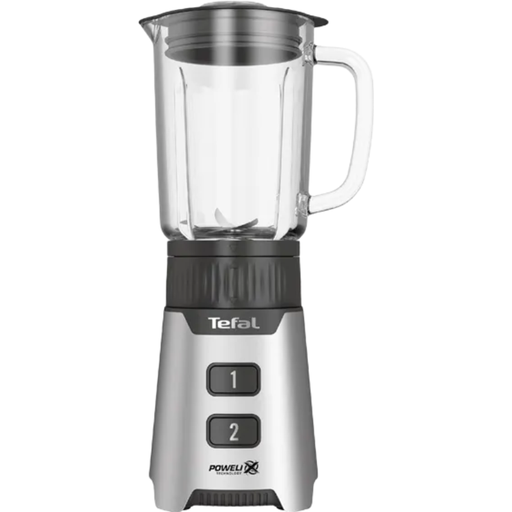
Why it suits this profile: This compact smoothie blender has a 400 W motor, a stated usable capacity of 700 ml and two speeds. The included drinking bottle is designed for taking your preparation with you.
The specifications state both the total and usable jug capacity. The removable blades and dishwasher-safe parts make cleaning less of a chore.
400 W, two speeds, 0.7-litre usable capacity and dishwasher-safe removable parts.
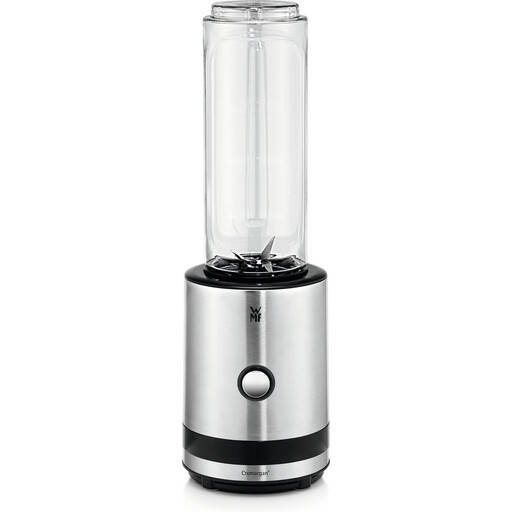
Why it suits this profile: This model is designed for smoothies at home and on the go. The product information lists two 600 ml Tritan drinking bottles, a four-blade stainless steel blade and a speed of 23,000 rpm.
You get two cups and a leak-proof drinking lid, so there’s no immediate need to buy an additional travel cup.
Two 600 ml cups, four stainless steel blades, non-slip base and dishwasher-safe bottles.
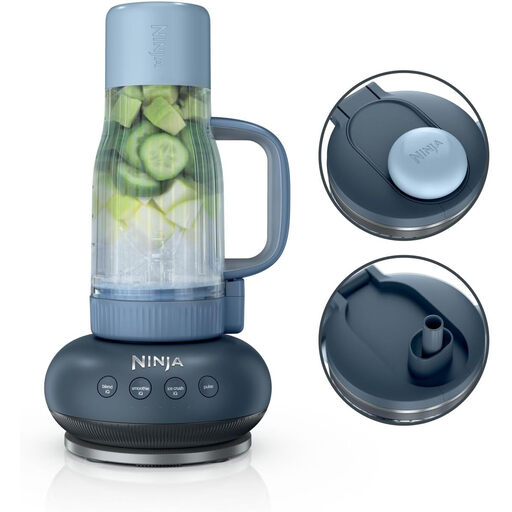
Why it suits this profile: This 1,100-watt blender has three automatic programmes, a pulse function and a 710 ml travel cup. According to the product description, the model is intended for ice, fresh fruit, frozen fruit and seeds.
The high power rating is complemented by specific programmes and a pulse setting. However, check the instructions for the maximum blending time and suitable quantities.
1,100 W, three automatic modes, pulse function, 710 ml travel cup and dishwasher-safe removable parts.
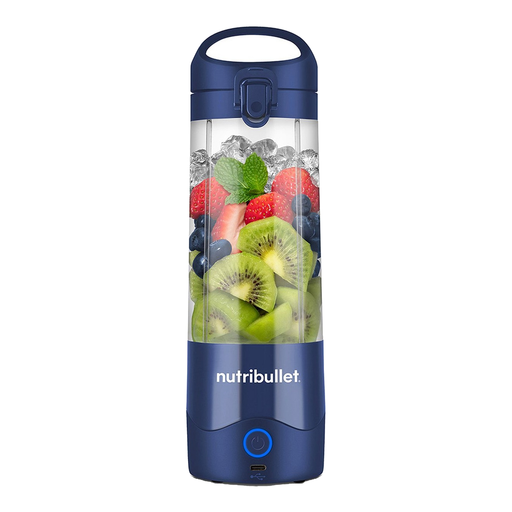
Why it suits this profile: This portable blender has an integrated handle, a capacity of 475 ml and a rechargeable battery. The product information states that it can deliver more than 15 blending cycles after approximately one hour of charging.
The battery indicator and included USB charging system make it easy to check the charging status. The motor base must be kept out of the dishwasher.
475 ml capacity, USB charging, leak-proof drinking lid, handle and removable parts.
We’ve put together a complete, up-to-date list of products that fully meet these strict selection criteria and the applicable European safety regulations.
For one small smoothie, a personal blender or smoothie blender can be convenient because you blend directly in the cup. A hand blender is more versatile for soup, sauces and dips, but usually requires a separate bowl or measuring jug. Choose based on the preparations you make most often.
The lifespan depends on how you use and clean it, as well as whether you follow the instructions. Do not run the motor for longer than permitted, avoid running it dry and do not process ingredients the model is not designed for. According to the product information, many of the products mentioned come with a minimum two-year statutory guarantee; also check the terms and conditions provided by the retailer and manufacturer.
A rechargeable blender generally uses little energy per blending cycle, but the exact cost depends on the battery capacity, charging frequency and electricity tariff. For normal household use, the difference compared with a mains-powered blender is usually limited. The main practical benefit is that you do not need a socket while using it.
