
Vandaag of morgen in huis

Kwaliteit gegarandeerd

Welkomstaanbiedingen ontgrendelen: GRATIS bezorging | Tot 80% korting | Gratis 30 dagen JoyPlus-proefperiode
Download de app
Buying a blender seems simple until you have to choose between a smoothie blender, hand blender, blender to go or high-powered blender. A compact model is handy for one drink, but less suitable for hot soups or large quantities. A powerful appliance can process more ingredients, but often takes up more space and requires more cleaning.
The right choice therefore depends on more than just wattage or price. Pay particular attention to the types of food you want to prepare, capacity, accessories and maintenance.
Higher power sounds appealing, but it does not tell you everything about the end result. The shape of the jug, blade design, speed and maximum operating time also play a part. A mini blender with lower power may be perfectly adequate for soft fruit and liquids. For crushing ice, frozen ingredients or hard vegetables, a model with more power and a suitable blade design is the more sensible choice.
A 600 ml or 1.25-litre jug cannot always be filled completely. The maximum fill line and the manufacturer's instructions should be your guide. If you are making smoothies or sauces for several people, a larger jug will be more useful. For a single portion, a blender with a drinking cup is often more practical.
A blender that is difficult to take apart may end up being used less often. Check whether the components are removable and dishwasher-safe. Also check which accessories are actually included. A hand blender with a whisk and chopper can be more versatile than a standard blender, while a blender to go has fewer separate parts.
Use these guidelines as a practical indication:
In addition to the wattage, check the maximum continuous operating time. Some appliances need to cool down after around one minute of use. This is not a defect, but it is a limitation to bear in mind when preparing multiple portions.
A smoothie blender often has a cup with a capacity of 475 to 700 ml. For a family, a jug of around 1.2 litres may be more convenient. Tritan is a lightweight, BPA-free plastic material often used for drinking cups. Glass is heavier, but feels sturdy and is less prone to retaining odours. Always check the product specifications rather than relying solely on the marketing name.
A portable blender or cordless blender runs on a rechargeable battery. This is handy in the office, when travelling or at the gym, but capacity and operating time are limited. Check the charging connection, charging time and whether the cup seals securely to prevent leaks.
A model with one button is quick to use, while multiple speeds give you more control over the texture. A pulse function can help with short bursts of blending. For crushing ice, a dedicated function or clear confirmation of suitability in the product information is important.
Finally, check which parts can go in the dishwasher. With many blenders, the motor base and blade unit are not dishwasher-safe. The instruction manual should always be treated as the definitive source.

Why it suits this profile: This 250W blender has a 500 ml capacity and comes with a lid featuring a drinking spout for use on the go. That makes it suitable for simple smoothies and shakes for one person.
The product information clearly states the capacity, one speed and dishwasher-safe removable parts. This keeps expectations clear.
500 ml Tritan cup, drinking lid, 250W power and non-slip base.
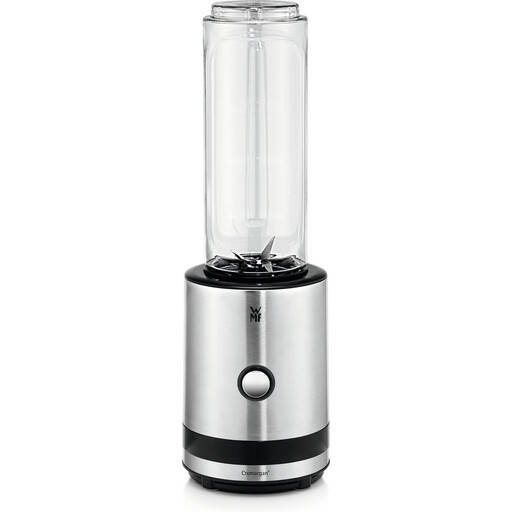
Why it suits this profile: This model is designed for smoothies on the go and comes with two 600 ml Tritan drinking bottles. The product description states that it has four stainless-steel blades and an ice-crushing function.
The two cups, leak-proof lids and dishwasher-safe bottles make its intended use clear. You are not just buying a motor base, but a complete to-go system.
600 ml capacity, two drinking bottles, 23,000 rpm according to the product information and stainless-steel blades.
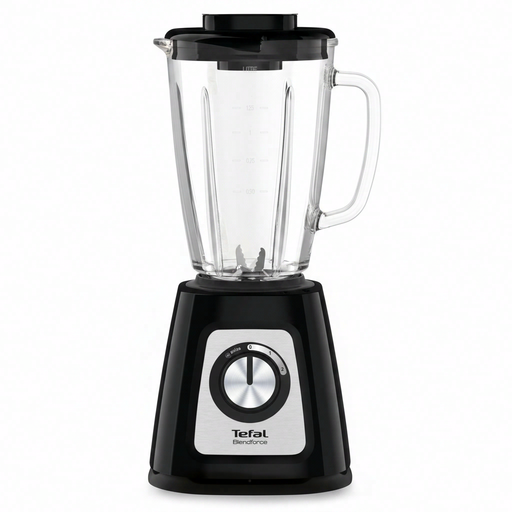
Why it suits this profile: This 800W blender has a 1.25-litre glass jug and pulse and ice-crushing functions. This makes it suitable for larger quantities, cold drinks and everyday preparations.
The power is combined with a large jug, two speeds, a pulse function and a separate ice-crushing mode. Do check the maximum operating time in the manual.
800W power, 1.25-litre glass jug, pulse function and dishwasher-safe parts according to the product information.
We have put together a complete, up-to-date list of products that fully meet these strict selection criteria and the applicable European safety regulations.
For one portion, a smoothie blender or blender to go with a cup of around 500 to 700 ml is practical. If you also want to process frozen fruit or ice, look at the power, blade design and an explicit ice-crushing function. A cup with a drinking lid is handy if you want to take your smoothie with you straight away.
Its lifespan depends on how it is used, how well it is maintained and whether the instructions are followed. Do not overfill the jug, do not use hot liquids unless permitted and allow the motor to cool down as instructed. In the European Union, consumers are generally entitled to a minimum two-year legal guarantee, in addition to any supplementary manufacturer's warranty.
A cordless blender uses a rechargeable battery and does not need to be plugged in while blending. Energy consumption depends on the battery capacity, the number of blending cycles and how often it is recharged. For daily use at home, a mains-powered model may be more practical; for use on the go, a cordless blender offers greater flexibility.
