
Vandaag of morgen in huis

Kwaliteit gegarandeerd

Welkomstaanbiedingen ontgrendelen: GRATIS bezorging | Tot 80% korting | Gratis 30 dagen JoyPlus-proefperiode
Download de app
Buying a blender seems straightforward—until you have to choose between a smoothie blender, countertop blender, hand blender or portable model. Manufacturers often highlight wattage, the number of speed settings or terms such as “powerful technology”. This information is useful, but it does not tell the whole story.
The right choice mainly depends on what you prepare, how many people you are serving and how much space you have available. Use the checks below to avoid paying for features you will rarely use.
Higher wattage does not automatically mean a smoother result. The shape of the jug, blade design, amount of liquid and maximum operating time also play a role. A 350-watt blender may be perfectly suitable for soft fruit and small portions, while a model rated at 1,000 watts or more makes more sense for frozen ingredients, nuts or larger quantities.
Always assess the combination of power, capacity, blade design and recommended use.
A 2-litre jug may seem appealing for a family, but the maximum working capacity is often lower. According to the product description, the Philips HR3020/20 has a total jug capacity of 2 litres and a working capacity of 1.5 litres. Do not exceed the indicated fill mark: an overfilled jug blends less evenly and may splash.
For one person, a mini blender with a capacity of 400 to 700 ml may be more practical. For multiple servings, models of around 1.2 to 1.5 litres are often more convenient.
With many appliances, only the removable parts are dishwasher-safe. The motor base must not be submerged. Also check the manual to confirm exactly which parts may go in the dishwasher and at what temperature.
An easy-to-clean blender typically has a removable blade unit, few separate seams and a jug that is easy to access. For everyday use, this is often more important than an additional automatic programme.
For smoothies made with banana, yoghurt and soft berries, a compact model is often sufficient. If you regularly blend ice, frozen fruit, nuts or fibrous vegetables, look for a powerful blender with a higher rated wattage and a suitable pulse function.
A blender with an ice-crushing function is designed for short blending pulses. That does not mean every model can process unlimited quantities of ice. Follow the instructions and add the recommended amount of liquid when working with dry or hard ingredients.
A blender with a glass jug is less prone to discolouration and absorbs odours less readily. Glass is heavier, however, and can break if subjected to a hard impact. Plastic or Tritan is lighter and well suited to everyday use, but check whether the material is BPA-free if this is important to you.
Also consider the height of the appliance. A tall jug may not fit comfortably beneath kitchen cabinets. Measure the available space before placing your order.
A blender with multiple speed settings gives you greater control over soft and hard ingredients. A pulse function is useful for short bursts of power, for example when roughly chopping ingredients or breaking up ice.
A hand blender is more versatile for soup, sauces and baby food because you can blend directly in a saucepan or bowl. A countertop blender is generally better suited to larger quantities of smoothies and cold drinks. When comparing accessories, pay attention to the actual capacity of the chopper or measuring cup.
The models below have been selected based on verifiable information from the supplied product descriptions. Features such as operation, speed and cleaning are presented according to information provided by the manufacturer or seller.

Why it’s a good fit: A compact 0.6-litre smoothie blender for students, smaller households and anyone who mainly prepares individual portions.
The capacity is clearly intended for a single serving, so you are not buying a large jug for small quantities.
According to the product description: 350 watts, two speed settings, pulse function, non-slip feet and dishwasher-safe removable parts.
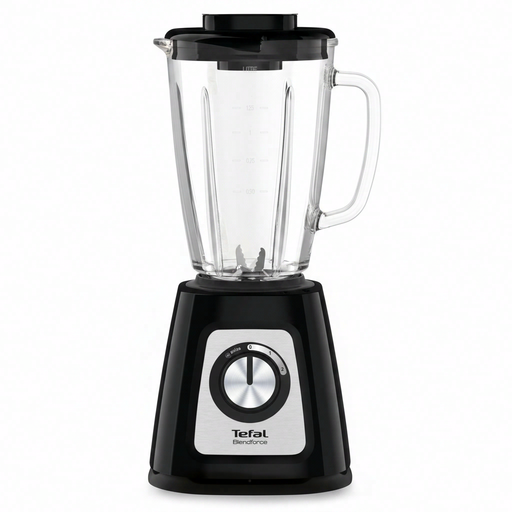
Why it’s a good fit: Well suited to households looking for a countertop blender for smoothies, cold drinks and soups.
The product description lists the jug capacity, glass construction and dishwasher-safe parts separately.
According to Tefal’s product information: 800 watts, a 1.25-litre glass jug, two speed settings, pulse function and ice-crushing mode.

Why it’s a good fit: Designed for large portions, frozen ingredients and users who want extensive control over the preparation process.
The stated 2.1-litre jug capacity and warning to observe the fill mark make the portion limits clear.
According to the product description: 1,200 watts, fourteen manual speed settings, four programmes, pulse function and ice crusher.
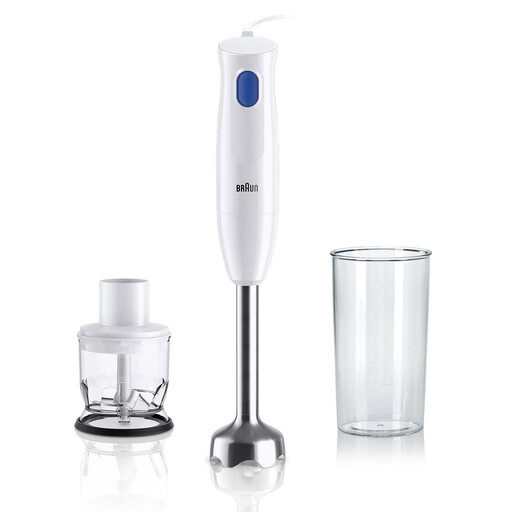
Why it’s a good fit: A hand blender for mixing directly in a bowl or saucepan, with a measuring cup and chopper for smaller preparations.
There is no need to use a large countertop blender for a small saucepan of soup, sauce or purée.
According to Braun: 450 watts, one control button, a 600-ml beaker and a 350-ml chopper. Check the manual before using it with hot ingredients.
A mini blender or portable blender is a good choice for anyone who wants to make a smoothie on the go. According to the product description, the Nutribullet Portable has a capacity of 475 ml, USB-C charging and a stated runtime of more than fifteen blending cycles per charge. The Xiaomi Portable Blender has a capacity of 400 ml and a rechargeable USB-C battery.
These models are less suitable for large family portions. Do not blend hot liquids, and follow the charging and cleaning instructions. For everyday use at home, a mains-powered model may offer greater capacity and longer continuous operating time.
Explore a current selection of blenders for smoothies, juices, cold drinks and other preparations, with filters for size, power and features.
For individual smoothies, a compact blender rated at 350 to 700 watts with a cup of around 400 to 700 ml is often sufficient. If you regularly use frozen fruit or ice, choose a model whose product description confirms that these ingredients are permitted and which includes a pulse or ice-crushing function.
A hand blender is practical when you want to purée soup directly in a saucepan and minimise washing up. A countertop blender may produce a smoother result with larger quantities, but always check the maximum temperature and fill limit in the manual.
Service life depends on usage, cleaning, overloading and storage. Allow the motor to cool when instructed in the manual, do not use a damaged jug or cable, and clean the blades carefully. In the Netherlands, many new electrical consumer products are covered by a statutory warranty period; your exact rights depend on the purchase and the nature of the problem.
