
Vandaag of morgen in huis

Kwaliteit gegarandeerd

Welkomstaanbiedingen ontgrendelen: GRATIS bezorging | Tot 80% korting | Gratis 30 dagen JoyPlus-proefperiode
Download de app
Buying a blender seems simple until you start comparing motor power, cups, blades and programmes. A compact smoothie blender can be handy for one person, while a hand blender is better for making soup in a pan. If you mainly want to blend on the go, you’ll have different needs from a family preparing several portions at once.
Look out for these three common pitfalls:
First, think about what you actually want to make. For smoothies, shakes and small portions, a personal blender, mini blender or smoothie maker is often a practical choice. A blender with a cup you can blend and drink from saves on washing up.
A hand blender may be more convenient for soup, sauces and baby food. You can blend straight in a bowl or pan, so you don’t need a large jug. For hot ingredients, always check the maximum temperature. Some models can’t be used with hot liquids.
A multi-purpose blender with a jug, travel cup and chopper gives you more options, but takes up more cupboard space. A rechargeable blender is worth considering for the office, the gym or travelling, as long as you bear its battery life and limited capacity in mind.
Wattage is a useful first indicator:
More power doesn’t mean you can process any ingredient for as long as you like. Check the number of speed settings, whether it has a pulse function and its maximum continuous running time. For example, the Fritel HB 2870 has a maximum running time of 60 seconds per cycle, with a cooling period between cycles.
Speeds aren’t always listed in the same way. So don’t compare rpm alone: take the type of appliance and the cup capacity into account too.
A 450 to 600 ml cup is suitable for one smoothie or shake. This size works well for a blender to go and doesn’t take up much space. For two portions, around 700 ml to 1 litre is more practical. A larger jug is handy for soup or sauce, but less suitable for taking with you.
Also consider the shape. A tall cup might not fit under your kitchen cupboards or in a cycle bag. Portable blenders often have an integrated handle, but check that the lid is actually designed for carrying the cup around.
Stainless steel blades are common in blenders. Check how many blades there are and whether the blade unit can be removed. A dishwasher-safe cup or drinking bottle can save time, but the motor base must never go in water or the dishwasher.
BPA-free plastic cups are a popular choice. Also look for:

Why it suits this type of user: This hand blender comes with a whisk, a 500 ml chopper and an 800 ml beaker. It’s a handy way to get started with smoothies, sauces, soups and simple recipes without buying several appliances.
The set clearly lists the accessories included. Always check the instructions for each recipe, and don’t fill the beakers above the marked limit.
600 watts, two speeds and several attachments for everyday kitchen tasks.
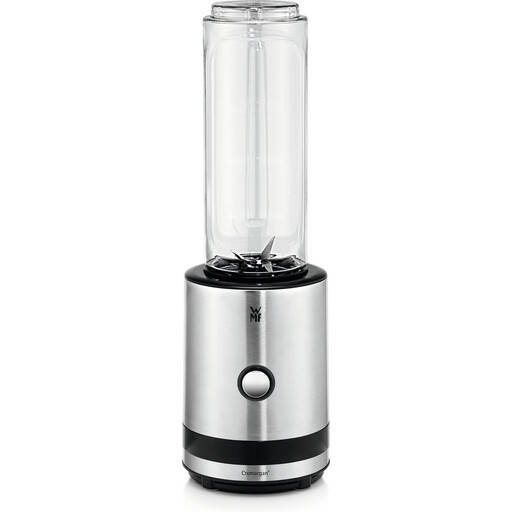
Why it suits this type of user: This model is designed for making smoothies straight into a drinking bottle. The set includes two 600 ml Tritan bottles with sealable drinking lids.
The capacity, number of bottles and safety lock are all specified. WMF’s product information also lists an ice-crushing function; check the instructions for how to use it correctly.
Four stainless steel blades, 23,000 rpm according to the product information, and dishwasher-safe bottles.
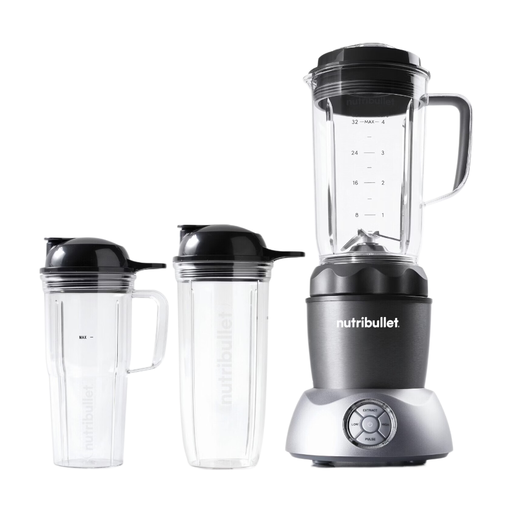
Why it suits this type of user: With a 0.90-litre jug, several speeds, pulse and extract settings, this model suits people who regularly make a variety of cold recipes.
The controls offer several settings, rather than relying on high power alone. The product information says the jug is suitable for hot and cold ingredients; follow the instructions when using hot liquids.
1,000 watts, a 0.90-litre capacity and dishwasher-safe parts, except for the base and blade.
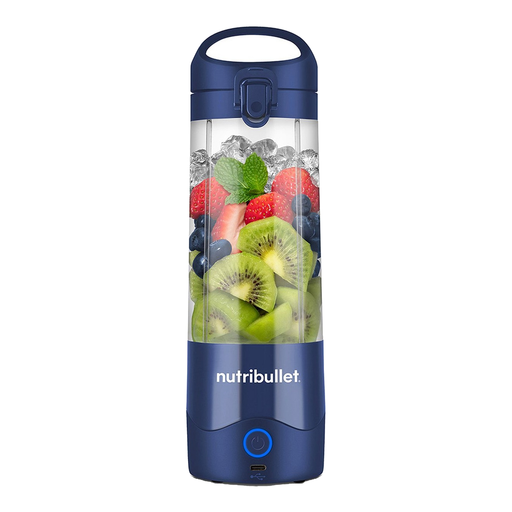
Why it suits this type of user: This rechargeable blender works without being plugged in and has a handle and leakproof to-go lid. That makes it a good fit for use at the office, at the gym or while travelling.
The battery life and charging time are listed: around one hour to charge and, according to the product information, more than 15 blends. The base and USB cable must not be submerged.
475 ml capacity, USB-C charging, 17,000 rpm according to the product specifications, and removable parts.
We’ve put together a complete, up-to-date list of products that meet these strict selection criteria and current European safety regulations.
A blender has sharp blades and moving parts. Unplug it or remove the USB-C cable before cleaning. Don’t fill a cup above the marked line, and never leave the motor base in water.
Take extra care with a portable blender:
For soft fruit and liquids, 300 to 600 watts may be enough. If you’re planning to process frozen ingredients, nuts or fibrous vegetables more often, consider 600 watts or more. Always check which ingredients are suitable and how long the blender can be used for.
It can be, especially if you’re making one portion at a time. Check the capacity, battery life, charging time and cleaning requirements. A portable blender is less suitable if you want to make several portions or hot dishes.
Power consumption depends on the wattage and running time. A 600-watt appliance running for one minute uses around 0.01 kWh in theory. With a rechargeable blender, most of the cost comes from charging it; the total depends on how often you charge it and how long the battery lasts. Also check whether replacement cups and blades are available, as well as the warranty terms.
