
Vandaag of morgen in huis

Kwaliteit gegarandeerd

Welkomstaanbiedingen ontgrendelen: GRATIS bezorging | Tot 80% korting | Gratis 30 dagen JoyPlus-proefperiode
Download de app
A blender may seem simple at first: add the ingredients, press a button and you’re done. In practice, models vary considerably in power, capacity, accessories and ease of use. If you look only at the highest wattage or the lowest price, you could end up with an appliance that’s too small, difficult to clean or unsuitable for the recipes you want to make.
This buying guide will help you compare blenders, a hand blender or a food processor objectively. You’ll also find some popular options for different needs.
A higher wattage doesn’t tell you everything about blending performance. The blade design, shape of the jug and way ingredients circulate all play a part too. A compact 900 W smoothie blender may be suitable for one serving, while a large blender with a wider jug may be better for family-sized portions.
Also look out for conflicting specifications. Always check the power, capacity and included parts on the product page and in the instruction manual.
A 2.1-litre jug can’t always be filled to the brim. Hot or frothy ingredients need extra room. For a family, a jug of around 1.5 to 2.1 litres is practical, while a 700 ml cup is better suited to a single smoothie or drink to take with you.
A blender with accessories may seem appealing, but not every part fits every model. If you’re buying a whisk, chopper or extra blending cup, check that the accessory is specifically designed for your appliance. The same applies to parts for a stand mixer or food processor.
For soft ingredients such as bananas, cooked vegetables and yoghurt, 600 W is often enough for everyday household use. A more powerful model may be more practical for ice, nuts, frozen fruit or larger quantities. According to the listed product specifications, the Ninja BN750EU has a power rating of 1200 W, while the Nutribullet Exclusive Blender is listed at 900 W.
Check the permitted operating time too. Some hand blenders can run for a maximum of 60 seconds at a time, after which the motor needs to cool down. This matters if you want to make several portions of soup or sauce in succession.
A stainless-steel blending shaft is sturdy and easy to wipe clean. Check which parts are dishwasher-safe; for some appliances, this applies only to the removable accessories, not the motor unit. Never immerse the motor base in water.
Check the instructions for hot liquids. Product information for various models advises letting hot ingredients cool first. Always take care when fitting and cleaning sharp blades. Also check that the lid locks into place and that the blender sits securely on your worktop.
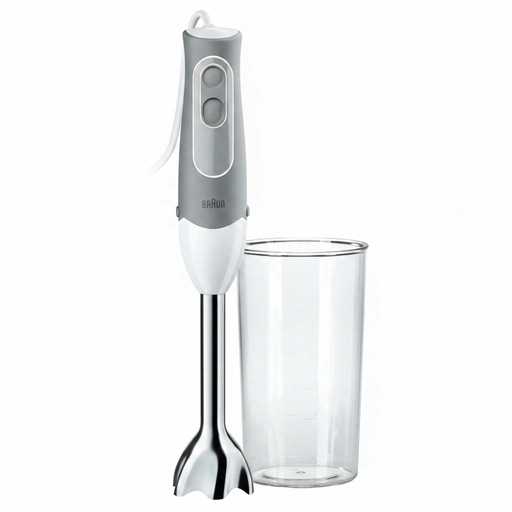
Why it suits this type of user: This lightweight hand blender is designed for everyday tasks such as making soup, purée, milkshakes and sauces. The included 600 ml measuring beaker is handy for smaller portions.
The specifications clearly state 600 W, two speeds and a maximum rotational speed of 12,500 rpm. The anti-splash PowerBell blending shaft helps reduce splashes while puréeing.
Removable stainless-steel blending shaft, dishwasher-safe parts and an included whisk, according to the product description.
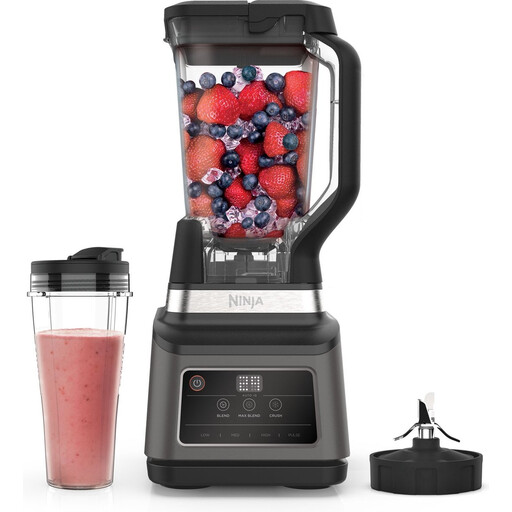
Why it suits this type of user: This model combines a 2.1-litre jug with a 700 ml cup, so you can prepare several portions or a drink to take with you.
With a choice of automatic programmes and manual settings, you’re not limited to one fixed blending mode. The jug and cup each have their own blade system.
1200 W power, four speeds, Auto-IQ programmes and removable dishwasher-safe parts, according to the product details.
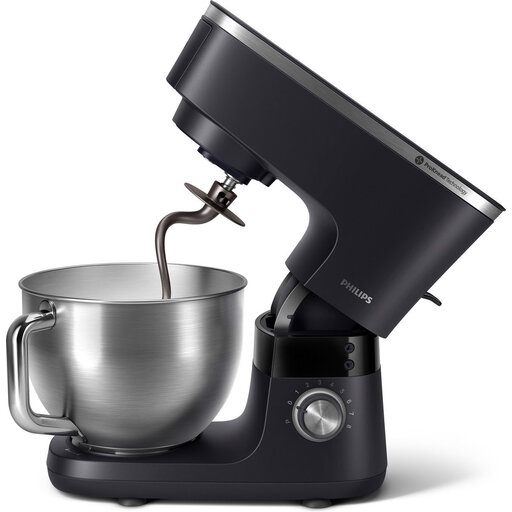
Why it suits this type of user: For keen bakers and families who want to make soup, sauce or smoothies as well as dough and cake batter, this food processor brings several functions together in one appliance.
It does more than blend: the set includes a 5.5-litre bowl, a 1.5-litre glass blender attachment and a meat-grinder attachment. Check that you have room for this larger appliance before buying.
1000 W power, eight speeds, a timer with automatic shut-off and ProKnead technology, according to the product description.
We’ve put together a complete, up-to-date list of products that meet these strict selection criteria and current European safety regulations.
For smoothies, a powerful motor, sharp stainless-steel blades and a suitably sized cup are important. A model with a 700 ml cup is handy for one serving. For several people, a jug of 1.5 litres or more is more practical. Add enough liquid when using frozen fruit, and check the maximum fill line.
How long it lasts depends on how you use and maintain it, as well as the permitted operating time per cycle. Don’t run a blender continuously for longer than the instruction manual allows, and give the motor time to cool down. Check the blades, seals and cups regularly for wear or damage. Statutory guarantees also apply in the Netherlands and the European Union; any additional manufacturer’s warranty varies by brand and product.
Energy use depends on the power rating and how long the blender runs. A 1200 W appliance uses a theoretical 0.02 kWh when running for one minute. In practice, blenders usually run for short periods, so the running cost per use remains low. A higher power rating may also mean more noise and a heavier motor base. So consider how you’ll actually use it rather than focusing on wattage alone.
