
Vandaag of morgen in huis

Kwaliteit gegarandeerd

Welkomstaanbiedingen ontgrendelen: GRATIS bezorging | Tot 80% korting | Gratis 30 dagen JoyPlus-proefperiode
Download de app
A blender can be a useful addition for smoothies, soups, sauces and crushed ice. However, it is easy to make the wrong choice. If you only look at the wattage or an attractive offer, you may discover after just a few weeks that the jug is too small, cleaning is difficult or the appliance is not suitable for hot ingredients.
As a Joybuy Product Recommendation Officer, I filter the most important product specifications and compare them with everyday use. This helps you choose a blender with greater confidence, without being guided by isolated marketing claims.
A powerful blender does not automatically perform the right way for every recipe. The power tells you something about the motor, but the blades, jug design, speed control and maximum operating time are important too. A 350-watt smoothie blender may be practical for soft fruit, while a more powerful blender is better suited to frozen ingredients or nuts.
Also check whether the stated power is the rated power or the maximum power. For example, the ROUNY hand blender is listed with a rated power of 1000 watts and a maximum power of 1200 watts. These values are not the same.
A 2-litre jug does not always mean that you can process 2 litres at once. Manufacturers sometimes state both a total capacity and a lower working capacity. For example, the Philips HR3020/20 has a 2-litre jug with a stated working capacity of 1.5 litres.
For one person, a compact blender with a capacity of 400 to 600 ml may be enough. For a family, a kitchen blender with around 1.2 to 1.5 litres of usable capacity is more practical. Pay extra attention to the instructions and maximum fill level when preparing hot foods.
A dishwasher-safe blender can save time, but this usually applies only to removable parts. The motor base must not be placed in water or in the dishwasher. So check:
With a hand blender, a detachable blending foot and dishwasher-safe accessories are particularly useful for everyday use.
For smoothies and sauces, one speed is often enough. A blender with multiple speeds gives you more control over the texture. A pulse function is useful for short, powerful bursts, for example when crushing ice or chopping ingredients coarsely. Do check the specific usage instructions, though: not every model is suitable for crushing ice for extended periods.
A blender with an ice-crushing function is appealing for cold drinks, but check whether this is a separate mode or simply a general claim in the product description. The Tefal BL435831 lists two speeds, a pulse function and an ice-crushing mode.
A blender with a glass jug feels sturdy and is less prone to discolouration from ingredients such as beetroot or tomatoes. Glass is heavier, however, and can break. A Tritan or other plastic jug is lighter and often more convenient for everyday use.
Hot soup requires extra care. Only use a blender that the product information confirms is suitable for hot preparations, and follow the temperature limit in the manual. The Philips HR3020/20 states that ingredients must not be hotter than 80 °C. The Philips Eco Conscious mini blender specifies a limit of 60 °C and is intended for compact, cold preparations.
Measure the space beneath your kitchen cupboards in advance and check the length of the power cable. A compact blender fits more easily into a smaller kitchen, while a hand blender can be used directly in a saucepan or bowl.
Accessories also help determine a model’s value. Consider:
Make sure that accessories are used only for the tasks specified by the manufacturer.

Why it suits this profile: The 500 ml capacity is suitable for one smoothie or shake. According to the product information, the cup can be sealed with a drinking lid.
The specifications clearly state 250 watts, one speed and 500 ml. This means you know in advance that this model is mainly intended for smaller, cold preparations.
500 ml Tritan cup, drinking lid, non-slip base and dishwasher-safe removable parts.

Why it suits this profile: This model combines a glass jug, 1200 watts of power, automatic programmes and manual speed control for a wide range of recipes.
The product information states both the total jug capacity and the usable capacity of 1.5 litres. Pulse, ice crushing and Auto-Clean are also listed separately.
Heat-resistant glass jug, three automatic programmes, touchscreen controls and a dishwasher-safe jug according to the product description.
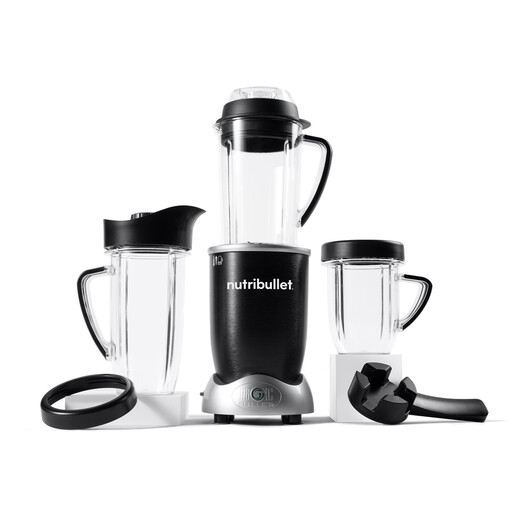
Why it suits this profile: According to the product information, this model is designed for hard ingredients, ice, sauces and hot preparations, with a special soup programme.
According to the description, the supplied vented lid is designed for hot ingredients. Always check the manual and maximum fill level before preparing soup.
1700 watts, soup programme, heat-resistant cups and several included parts.

Why it suits this profile: A hand blender is practical for soups, sauces and smaller portions. This model offers 25 speeds, turbo and a chopper with three texture options.
The speeds are clearly specified and accessories can be changed using an EasyClick system. The motor unit must be kept out of the dishwasher.
1000 watts, 25 speeds plus turbo, chopper for three textures and dishwasher-safe parts according to the product information.
We have put together a complete, up-to-date list of products that fully meet these strict selection criteria and the applicable European safety regulations.
Choose a countertop blender with sufficient working capacity, multiple speeds and clear instructions for hot ingredients. For smaller portions, a hand blender may be more convenient. Always check the maximum temperature and do not use boiling liquid if the manufacturer does not permit it.
Its lifespan depends on how it is used and cleaned, as well as whether the maximum operating time is observed. Allow the motor to cool down when instructed in the manual, do not overfill the jug and regularly check the blades and lid for damage. Many products in the EU come with a statutory guarantee of at least two years, but check the terms for each product.
Consumption depends on the power rating and how long the blender is used. In theory, a 1000-watt model uses 1 kilowatt-hour when running continuously for one hour, but blenders are generally used only for short periods. A lower power rating may be sufficient for soft fruit and everyday smoothies; choose extra power mainly if you regularly want to process ice, hard vegetables or nuts.
