
Vandaag of morgen in huis

Kwaliteit gegarandeerd

Welkomstaanbiedingen ontgrendelen: GRATIS bezorging | Tot 80% korting | Gratis 30 dagen JoyPlus-proefperiode
Download de app
Buying a blender seems simple, until you discover how much models can differ in power, capacity, battery life and accessories. A small portable blender is handy for making a smoothie at the office, but it is not necessarily suitable for frozen fruit or several portions. A high-wattage model may be unnecessarily large if you only blend soft ingredients.
The most important question is therefore not which appliance has the most features, but where, how often and for how many people you will use it.
Higher power sounds appealing, but it does not tell you everything about ease of use. The blade design, jug capacity and maximum operating time also matter. A 250-watt blender may be suitable for soft fruit and yoghurt, while ice or frozen ingredients require more motor power and a suitable blade design.
Also pay attention to the instructions. Some models, for example, may only be used for a maximum of one minute at a time. This is important if you want to make several portions one after another.
In practice, a 700 ml cup may offer less usable capacity if you are not allowed to exceed the maximum fill line. With a personal blender, 475 to 600 ml is generally intended for one drink. For a household or family, several cups or a capacity of around 700 to 900 ml is more practical.
Also check whether the cup is designed for drinking from directly. A blender with drinking cup often comes with a separate drinking lid, but the blade unit must first be replaced or removed safely.
A cordless blender or rechargeable blender is convenient for the gym, train or workplace. However, the battery needs charging and the motor base usually must not be rinsed with water. Therefore, check:
A portable appliance is particularly practical if you genuinely blend while out and about. For everyday use in the kitchen, a corded model with a larger cup may be simpler.
For a smoothie blender containing soft ingredients, 250 to 400 watts is often sufficient according to the product specifications of compact models. The Aigostar Marden BL-250, for example, has a power rating of 250 watts and a 500 ml cup. A 600-watt model, such as various Nutribullet blenders, provides more capacity for harder ingredients and larger portions.
For ice and frozen fruit, you should not only look at the wattage. Check whether the manufacturer mentions this use and follow the instructions. According to the Nutribullet Flex product description, this model is designed for blending frozen ingredients and crushing ice. This is a product claim made by the brand, not a general guarantee for every recipe.
A 475 ml cup is suitable for one smoothie or shake. A capacity of 590 to 600 ml gives you a little more room for sports drinks or a larger portion. A set with two cups can be useful for several users.
Tritan is a commonly used plastic for drinking cups. Check that the product information explicitly states that the material is BPA-free. Glass is easy to assess for odour and colour retention, but it is heavier and more vulnerable when you are out and about.
Choose a model with a tightly sealed cup, a stable base and a safety mechanism that prevents use without correct assembly. Look out for warnings concerning:
A dishwasher-safe cup does not mean that the motor base or blade unit can always go in the dishwasher. Check the instructions for each individual part. The statutory consumer guarantee in the European Union is at least two years for the products mentioned; additional terms may vary by retailer or manufacturer.
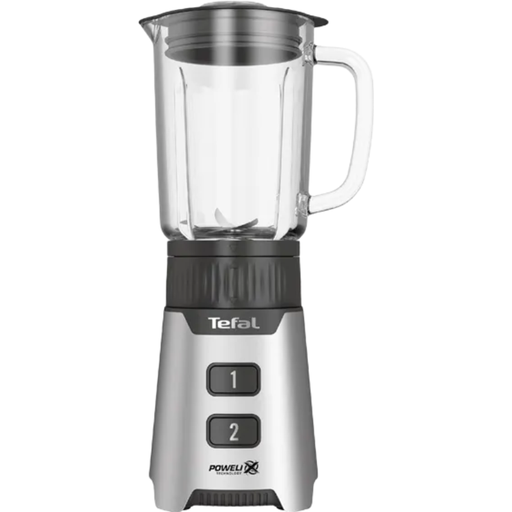
Why it suits this profile: The combination of 400 watts, a usable capacity of 700 ml and an included drinking bottle is ideal for everyday use without complicated controls.
The product information specifies both the motor power and the usable capacity. Removable parts and dishwasher-safe components reduce the cleaning effort.
400 watts, two speeds, an 810 ml drinking bottle and dishwasher-safe parts according to the product description.
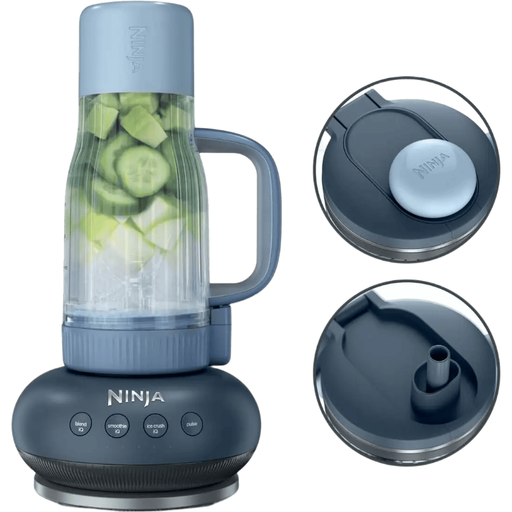
Why it suits this profile: This model is aimed at users who want to make shakes and iced drinks as well as smoothies, and who value several automatic programmes.
The included cup has a leakproof lid and, according to the product description, the parts are dishwasher-safe. This makes transport and maintenance straightforward.
1100 watts, a 710 ml travel cup, three automatic settings and a pulse function according to the product information.
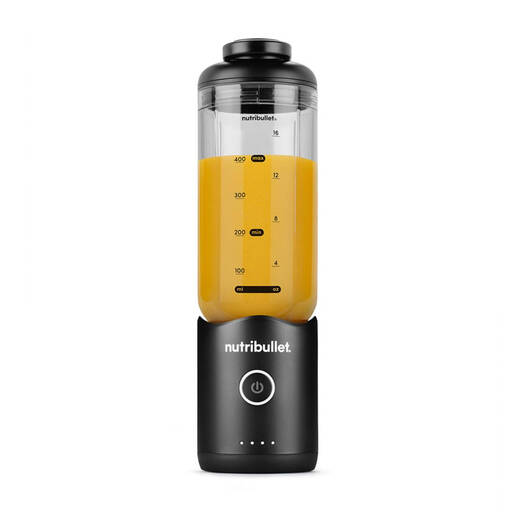
Why it suits this profile: This rechargeable blender is designed for users who want to blend without a power socket, for example while travelling, at the office or after exercising.
The product information lists a removable blade unit, an LED indicator and a fully foldable design. This makes maintenance and battery checks clearer.
590 ml capacity, USB-C charging, a 7.4-volt battery and, according to the product description, suitability for ice and frozen ingredients.
Not every drink requires a blender. If you mainly juice oranges, lemons or grapefruits, a citrus juicer is a better choice. The Philips HR2738/00 has 25 watts, a 500 ml reservoir and automatic shut-off. The Nedis citrus juicer also has 25 watts, a reservoir of approximately 700 ml and left-and-right rotation.
For sparkling water, a SodaStream sparkling water maker makes more sense than a blender. Check the compatibility of the CO₂ cylinder and bottles. According to the product information, the SodaStream ensō comes with a 1-litre bottle and Quick Connect cylinder. A slushie maker, meanwhile, is a specialist choice for frozen drinks and generally takes up more space.
We have put together a complete, up-to-date list of products that fully meet these strict selection criteria and the applicable European safety regulations.
For one smoothie, a personal blender with a capacity of around 475 to 600 ml is usually sufficient. If you often use ice, frozen fruit or hard vegetables, check the specified motor power and confirm that the manufacturer permits these ingredients. A powerful blender is not automatically the most practical choice if you have limited space.
It can be, particularly if you want to blend away from the kitchen. Check the battery life, charging time and leakproof drinking lid. A cordless model is less suitable if you want to make several large portions in succession or process hard ingredients for an extended period.
With corded models, electricity consumption per blending session is generally low because they are only used for a short time. With a rechargeable blender, the battery and charging time are the main considerations. Over the long term, the cost of ingredients, replacement blades, cups and any CO₂ cylinders for a sparkling water maker may have more impact than electricity consumption. Therefore, do not only look at the purchase price, but also at the included accessories and the availability of replacement parts.
