
Vandaag of morgen in huis

Kwaliteit gegarandeerd

Welkomstaanbiedingen ontgrendelen: GRATIS bezorging | Tot 80% korting | Gratis 30 dagen JoyPlus-proefperiode
Download de app
A blender seems simple: put the ingredients in the jug, press a button and you’re done. Yet many households buy a model that gets used less often after just a few weeks. The problem usually isn’t the brand, but misjudging power, capacity, materials and ease of cleaning.
Anyone looking for a smoothie blender has different requirements from someone who wants to make soup, sauces and iced drinks for several people. This buying guide explains what to look for and which models suit different usage scenarios.
A 1000-watt blender sounds powerful, but wattage doesn’t tell you everything about the result. The shape of the jug, the number of blades, the speed settings and the way ingredients circulate also matter. A compact personal blender rated at 900 watts may be suitable for smoothies, but less practical for large quantities of soup.
So always check the combination of:
A 1.5-litre jug isn’t always suitable for filling to the top. With frothy smoothies or hot preparations, you need to stay below the maximum fill line. A countertop blender with a generously sized jug is useful for a family, but for one person, a large jug can create more washing-up than necessary.
Also pay attention to the difference between total capacity and usable capacity. The Tefal PerfectMix+, for example, has a 2-litre jug, while the stated useful capacity is 1.5 litres.
Brands use terms such as “smooth”, “power” or “up to 30% faster”. These claims aren’t a universal guarantee. According to Tefal’s own research, Powelix technology could increase blending efficiency by up to 30%. Treat this as information from the brand and also compare the verifiable product specifications.
A label such as “ice crusher” also doesn’t mean you can process every type of ice or frozen ingredient without limits. Follow the manual and use enough liquid whenever this is prescribed.
For soft fruit, yoghurt and shakes, a lower power rating is often sufficient. If you regularly want to process frozen fruit, nuts, dips or ice, look for a powerful blender with around 800 to 1300 watts and several speed settings.
A high rotational speed can contribute to a smooth texture, but it isn’t the only measure that matters. A practical combination includes:
A model with a dedicated ice-crushing setting is practical for cold drinks. Use this function according to the instructions and avoid running the blender for a long time with an empty jug.
A blender with a glass jug feels sturdy and is suitable for cold preparations. Glass is heavier, however, and can break if dropped or used incorrectly. When using hot ingredients, always check that the jug is suitable for this purpose.
Plastic is lighter and often more convenient for everyday use. Tritan is a transparent plastic used in various personal blenders. Don’t just look at the material name; also check:
Don’t use hot liquids in a cup if the manufacturer prohibits this. If a jug is suitable for hot preparations, steam must be able to escape and you mustn’t overfill the jug.
A 1.2- to 1.8-litre countertop blender is suitable for families and meal preparation. A personal blender with a capacity of 500 to 900 millilitres is better suited to a single portion, a gym bag or a small kitchen worktop.
Also check:
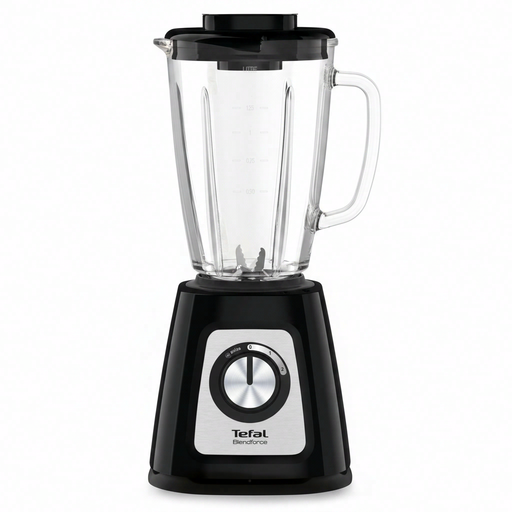
Why it suits this profile: This model combines straightforward controls with 800 watts, a 1.25-litre glass jug, and pulse and ice-crushing functions. That makes it practical for smoothies, milkshakes and simple soups.
The specifications list two speed settings, pulse and a separate ice-crushing function, rather than highlighting only a high wattage.
1.25-litre glass jug, stainless steel blades, non-slip feet and dishwasher-safe components according to the product information.

Why it suits this profile: The combination of a glass jug, 1200 watts, automatic programmes and a cleaning programme is ideal for users who regularly make a variety of preparations.
The useful capacity of 1.5 litres is listed alongside the total jug capacity of 2 litres, helping you estimate portion sizes more accurately.
1200 watts, three automatic programmes, a pulse function and a dishwasher-safe glass jug according to the product information.

Why it suits this profile: If you’re looking for a powerful blender for larger portions, smoothies and crushed-ice drinks, this countertop model offers a 1.5-litre capacity, two speed settings and pulse control.
Alongside 1300 watts, the product information lists 20,000 revolutions per minute, four blades, two speed settings and a pulse function.
1.5-litre capacity, four blades and an explicitly stated ice-crushing function for cold drinks.
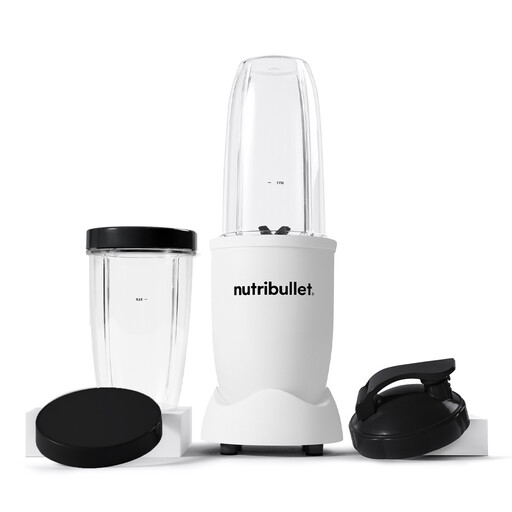
Why it suits this profile: This compact blender comes with two 900-millilitre cups and travel lids. You can make a smoothie and take it with you to work, university or the gym.
Its purpose is clearly focused on portions for taking with you, so you don’t pay for a large jug that you rarely use.
900 watts, two 900-millilitre cups, travel lids and dishwasher-safe components according to the product description.
We’ve put together a complete, up-to-date list of products that fully meet these strict selection criteria and the applicable European safety regulations.
Read the manual before use and check that the jug, lid and blades are fitted correctly. Keep these basic rules in mind:
For soft ingredients, 250 to 600 watts is often sufficient. For frozen fruit, nuts or ice, a model from around 800 watts with a pulse function is more practical. Also look at the blades and the instructions for use; wattage alone doesn’t fully predict blending performance.
No. Check that the jug and lid are suitable for hot ingredients. Some personal blenders are designed to process cold preparations only. Allow hot ingredients to cool first if the manufacturer specifies this, and don’t overfill the jug.
Its lifespan depends on how it is used, cleaned and loaded. A blender that processes hard ingredients every day puts more strain on the motor and blades than a model used occasionally for soft smoothies. Follow the recommended maximum running time, avoid overloading the blender and replace damaged components promptly.
