
Vandaag of morgen in huis

Kwaliteit gegarandeerd

Welkomstaanbiedingen ontgrendelen: GRATIS bezorging | Tot 80% korting | Gratis 30 dagen JoyPlus-proefperiode
Download de app
A blender seems simple enough: add the ingredients to the jug, press a button and you’re done. Yet many people end up disappointed with their purchase. The motor may struggle with frozen fruit, the jug may be too small for a family, or cleaning may take longer than expected. So if you’re looking to buy a blender, it’s worth looking beyond the wattage or a bold product claim.
This guide explains which specifications really matter, which marketing pitfalls to watch out for and what type of blender might suit the way you use it at home in the Netherlands.
A 1,000-watt blender sounds powerful, but wattage doesn’t tell you everything about how it performs. The blade design, jug shape, speed settings and maximum running time all matter too. A compact 600-watt personal blender may be suitable for soft ingredients and everyday smoothies, but less suited to large quantities or crushing ice for extended periods.
So use wattage as one factor when comparing models, not as proof of performance on its own.
A 1.5-litre jug can’t always be filled to the brim. Foamy drinks and hot preparations need extra space, so check whether the stated capacity is the total capacity or the recommended usable capacity.
A capacity of 500 to 900 ml can be practical for one person. A household will usually benefit more from a kitchen blender with a capacity of around 1.25 to 2 litres. Also consider the dimensions: a large glass jug takes up space on the worktop and can be heavy when pouring.
A dishwasher-safe blender usually means that only certain removable parts can go in the dishwasher. The motor base cannot. Check whether the jug, lid and blades can be removed, and whether the product clearly states which parts are dishwasher-safe.
A blender with an automatic cleaning function can be handy, but it won’t always replace manual cleaning around the blade unit and seals.
A compact model is often enough for smoothies made with soft fruit. For frozen ingredients, nuts, hard vegetables, soups and sauces, a powerful blender with a sturdy blade and drive system is more practical. On paper, a model rated at 800 to 1,300 watts offers more power in reserve than a 250- or 350-watt mini blender.
Also check the instructions. Some models can only run for short cycles at a time. Overheat protection is useful, but it doesn’t mean you can put the appliance under heavy strain indefinitely.
A blender with a glass jug is often heavier, but it may appeal if you want a sturdy material and clear measurement markings. Always check the instructions before preparing hot ingredients; not every glass jug is suitable for hot liquids.
Plastic and Tritan are lighter and suitable for everyday use. BPA-free materials can be a useful product specification, but they don’t tell you anything about blending quality on their own. Also look at scratch resistance, the seal and whether spare parts are available.
A pulse function delivers short, powerful bursts. It’s useful for a coarser texture, loosening ingredients or crushing ice with more control. Automatic programmes can make a blender easier to use, while manual speed settings are helpful if you want to control the texture yourself.
For a blender used for soups and sauces, the jug and clear temperature guidance are important. For a smoothie blender, a drinking cup, leak-proof lid and easy cleaning are often more useful than a large number of programmes.
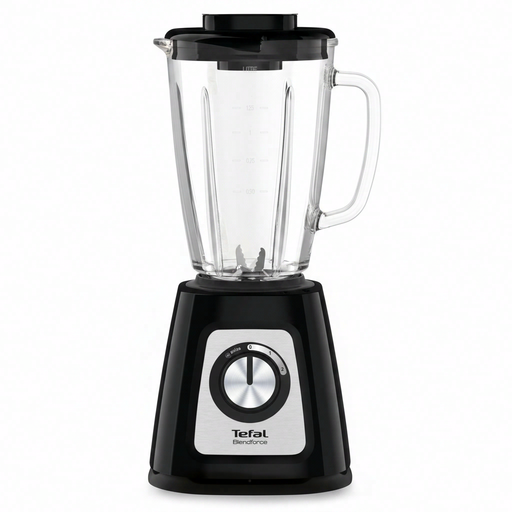
Why it suits this type of user: With 800 watts of power, a 1.25-litre jug and two speeds, this blender is easy to get to grips with for everyday use. The glass jug has measurement markings and an ergonomic handle.
The specifications cover more than just power: they also include capacity, a pulse function and an ice-crushing mode. According to the product description, the parts are dishwasher-safe.
800 watts, 1.25-litre glass jug, two speeds, pulse function, safety lock and non-slip feet.

Why it suits this type of user: This model combines a 1,200-watt motor with automatic programmes, a pulse function and a glass jug with a usable capacity of 1.5 litres, according to the product description.
The product information gives both the total and usable capacity. According to the manufacturer, the glass jug is suitable for hot and cold preparations; always check the instructions to be sure.
1,200 watts, six stainless steel blades, three automatic programmes, pulse function and dishwasher-safe glass jug.

Why it suits this type of user: The large 2.1-litre jug is practical for families and bigger batches. The model also offers 14 manual speeds, automatic programmes and a separate 700 ml cup.
The large capacity means you’re less likely to need to make several small batches. The product description says the blender alerts you when more liquid is needed; treat this as a handy operating feature, not a guarantee of a particular texture.
1,200 watts, 2.1-litre jug, 14 speeds, four automatic programmes, pulse function and ice-crushing function.
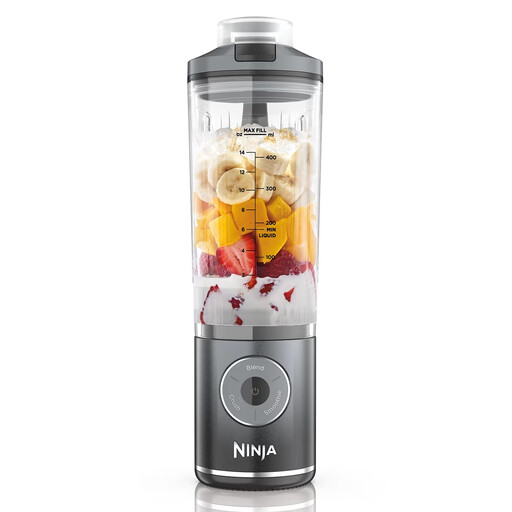
Why it suits this type of user: This portable blender is cordless, has a rechargeable battery and comes with two 530 ml cups. It’s a good fit for smoothies and shakes to enjoy at work, after a workout or on the go.
The product description makes clear that this is a compact 150-watt model. That means you won’t expect it to perform like a full-size kitchen blender, and can choose it specifically for its portability.
150 watts, cordless use, USB charging, leak-proof lid, two 530 ml Tritan cups and dishwasher-safe parts.
We’ve put together a complete, up-to-date list of products that meet these strict selection criteria and the applicable European safety regulations.
Consumer products in the EU are generally covered by a legal guarantee of at least two years. Keep your proof of purchase and check the seller’s and manufacturer’s terms.
For smoothies made with soft ingredients, 250 to 600 watts may be enough. If you regularly blend ice, frozen fruit, nuts, soups or sauces, consider models rated at around 800 watts or more. Always compare jug capacity, blades, speeds and recommended running time too.
It depends on what you prefer. Glass is heavier and can be a good choice if you value stability and measurement markings. Plastic or Tritan is lighter and easier to take with you. For hot ingredients, always check that the jug in question is suitable.
A blender’s lifespan depends on how often and how heavily you use it, how well you maintain it and whether spare parts are available. Follow the instructions, avoid overloading the appliance and let it cool down between demanding blending cycles. A model with a clear safety lock and replaceable parts can be a practical choice for long-term use.
