
Vandaag of morgen in huis

Kwaliteit gegarandeerd

Welkomstaanbiedingen ontgrendelen: GRATIS bezorging | Tot 80% korting | Gratis 30 dagen JoyPlus-proefperiode
Download de app
A blender can be useful for smoothies, soups, sauces, baby food and crushing ice. But a high wattage or a flashy product name doesn’t guarantee that an appliance is right for the way you’ll use it. If you’re buying a blender, it’s worth looking beyond the price and power rating.
The most common buying mistakes are:
For soft fruit and vegetables, a compact smoothie blender with around 350 to 500 watts is often enough. For frozen fruit, nuts, thick sauces or crushing ice, a more powerful blender is usually more practical. Models such as the Cecotec, with a stated maximum power of 1300 watts, the Fritel at 1800 watts and the Tefal PerfectMix+ at 1200 watts are designed for heavier blending tasks.
Don’t look at the wattage alone. Also check:
A powerful blender with limited cooling isn’t automatically suitable for prolonged use. Let the appliance cool down when instructed to do so in the manual.
For one person, a personal blender with a 0.6 to 0.7-litre cup can be practical. For a family, a kitchen blender with a capacity of 1.2 to 1.8 litres, or a blender with a larger jug, makes more sense. Consider the space beneath your kitchen cupboards and the width of the base.
A glass jug is sturdy and generally absorbs less odour or colour than some plastics. The downside is that it’s heavier and can break. A plastic or Tritan cup is lighter and handy for taking with you. For plastic, always check the manufacturer’s information about food contact and BPA.
Take extra care when preparing hot ingredients. A blender with a heat-resistant jug may be designed for this purpose, but always follow the manual. A cup intended for cold drinks isn’t automatically suitable for hot liquids.
Four or six stainless steel blades may be suitable for a range of blending tasks, but the number of blades doesn’t tell the whole story. The shape of the jug, how the ingredients circulate and the position of the blades all affect the result.
These features are useful for everyday use:
A self-cleaning programme can help with light residue, but it won’t always replace manual cleaning around the blades and sealing ring.
The options below are based on verifiable details from the product descriptions provided. Brand claims about blending results or speed, for example, are not presented as independently proven performance.
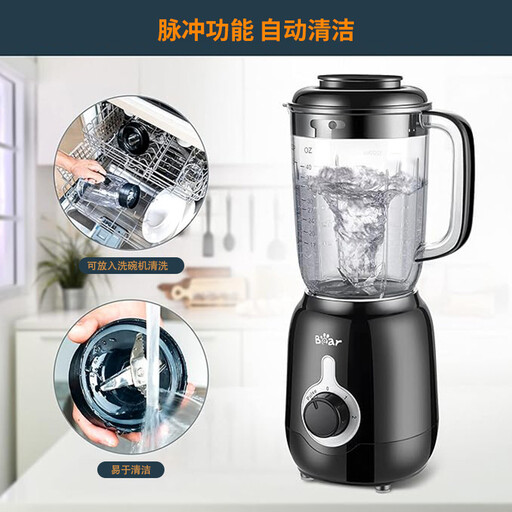
Why it suits this type of user: With a capacity of 1.2 litres, it’s suitable for everyday smoothies, sauces and smaller family portions. The speed settings and pulse function make it easy to use.
The product information lists 500 watts, four stainless steel blades, a safety lock and a maximum liquid capacity during use. That gives you more to go on than just a marketing name.
1.2-litre capacity, pulse function, non-slip base, and grinding and chopping cups included, according to the product description.
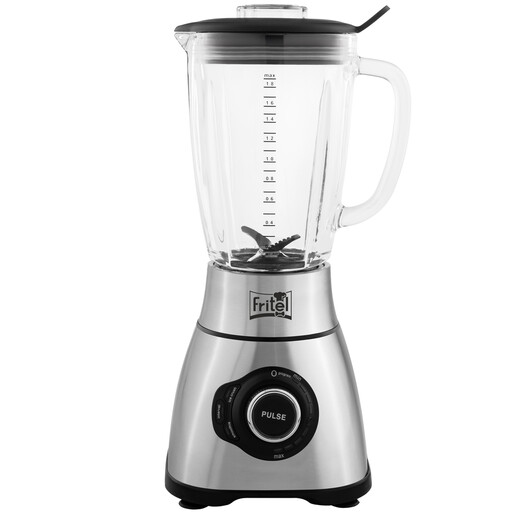
Why it suits this type of user: If you regularly make larger quantities of smoothies, pesto, soup or dips, this blender offers a 1.8-litre glass jug and several programmes.
The specifications list a glass jug, removable blade assembly, dishwasher-safe jug and lid, and automatic shut-off after ten minutes.
1800 watts, a 1.8-litre glass jug, pulse function and programmes for smoothies, interval blending and ice, according to the product details.

Why it suits this type of user: This model is aimed at people who want to prepare both cold and certain hot dishes, and value preset programmes and a glass jug.
The product description lists a heat-resistant glass jug, a usable capacity of 1.5 litres in a 2-litre jug, and an Auto-Clean programme. Always check the manual before blending hot liquids.
1200 watts, six stainless steel blades, touchscreen controls, three automatic programmes and a dishwasher-safe glass jug, according to the product information.
We’ve put together a complete, up-to-date list of products that meet these strict selection criteria and the applicable European safety requirements.
Use this quick checklist:
A blender isn’t a complete alternative to a hand blender. For small quantities or blending ingredients directly in a pan, a hand blender is often more convenient. For larger portions, smoothies and ice, a jug blender generally offers more capacity.
For soft ingredients, 350 to 500 watts may be enough. If you often use frozen fruit, nuts or ice, look for a more powerful model with a pulse function and suitable blade design. Also check the maximum operating time.
Its lifespan depends on how often you use it, how hard you push it, how well you maintain it and how you store it. Overloading the blender, using too little liquid and running it continuously for too long can put strain on the motor. Clean the jug after use, check the seal and follow the manufacturer’s instructions.
Energy use depends on the appliance’s power rating and how long you use it for. A 1200-watt appliance running for one minute uses about 0.02 kilowatt-hours. Blenders are usually used for short periods, so the time spent blending matters more than the maximum wattage alone.
