
Vandaag of morgen in huis

Kwaliteit gegarandeerd

Welkomstaanbiedingen ontgrendelen: GRATIS bezorging | Tot 80% korting | Gratis 30 dagen JoyPlus-proefperiode
Download de app
A blender may seem simple at first glance: a motor, blades and a jug. Yet many people buy a machine that does not suit the way they use it every day. A smoothie blender for one person works differently from a kitchen blender for soup, ice or larger portions. Stick blenders, food choppers and food processors are also often marketed under the same broad category, even though they are designed for different tasks.
Joybuy Product Recommendation Officer helps you cut through marketing terms and focus on points you can verify. This makes it easier to choose a blender based on power, capacity, materials, accessories and maintenance.
A higher wattage does not automatically mean that every recipe will turn out better. The result also depends on the blade design, the amount of liquid, the jug capacity and the recommended operating time. A 300-watt blender may be suitable for soft fruit, while ice, nuts and firm vegetables may require a different type of appliance.
Pay attention to the combination of power, blade material, speed settings and usage limitations. A powerful blender is particularly useful if you regularly process hard or frozen ingredients.
A compact smoothie maker with a cup is practical for a single serving. For a family, a capacity of around 1 to 2 litres is more convenient. Bear in mind that the maximum capacity is not always the same as the recommended filling level. Overfilling can cause leaks, uneven blending and additional strain on the motor.
A blender with a glass jug is sturdy and less likely to absorb smells or become discoloured. Glass is heavier, however, and can break if dropped or exposed to a sudden change in temperature.
Blades that are difficult to access, narrow openings and parts that cannot go in the dishwasher can make everyday use less convenient. Check in advance whether the jug, blades, lid and accessories can be removed. A dishwasher-safe blender can save time, but always check the manual: dishwasher suitability may apply only to removable parts and at a limited temperature.
A stick blender works directly in a saucepan or bowl and is useful for soup and baby food. A food processor or meat grinder is better suited to chopping, grinding and processing larger quantities of solid ingredients. An ice-crushing function should be explicitly listed in the product specifications; do not rely solely on the word “powerful”.
Choose the capacity according to your portion sizes:
A blender with a pulse function provides short bursts for coarse chopping or crushing ice. Multiple speed settings are useful if you want to prepare both soft ingredients and thick soups. A turbo or automatic function can be convenient, but always check how long the appliance can run continuously.
Look for stainless steel blades, a stable non-slip base and a lid or safety lock that stays securely in place. The motor base should never be submerged in water. When working with hot liquids, follow the manufacturer’s instructions; not every model is designed for boiling-hot preparations.
Also check:
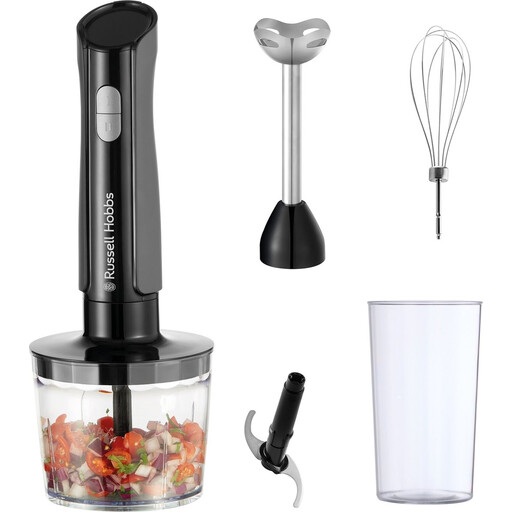
Why it suits this profile: A hand blender with a blending beaker, chopping attachment and whisk for anyone who wants to handle different tasks with one compact appliance.
The functions are clearly specified: 500 watts, two speed settings and separate accessories. This means you do not have to rely on marketing terms alone.
600 ml blending beaker, 500 ml chopping bowl and removable dishwasher-safe parts, according to the product information.
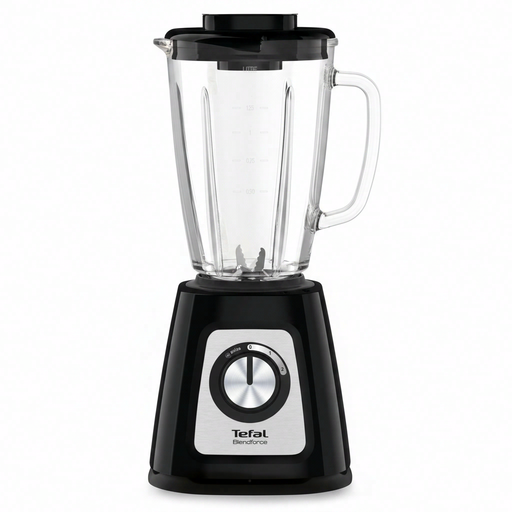
Why it suits this profile: For households that want to combine a glass jug, generous capacity and functions for smoothies, soups and ice.
The capacity and controls are clearly stated: a 1.25-litre glass jug, two speed settings, a pulse function and an ice-crushing function.
800 watts, stainless steel blades, safety lock and dishwasher-safe parts, according to the product description.

Why it suits this profile: For families and users who need to process large quantities and ice, with a choice of automatic programmes.
The product information lists both manual and automatic settings, along with a 2.1-litre jug and a 700 ml cup.
1,200 watts, fourteen manual speed settings, four programmes and an ice-crushing function, according to the product description.
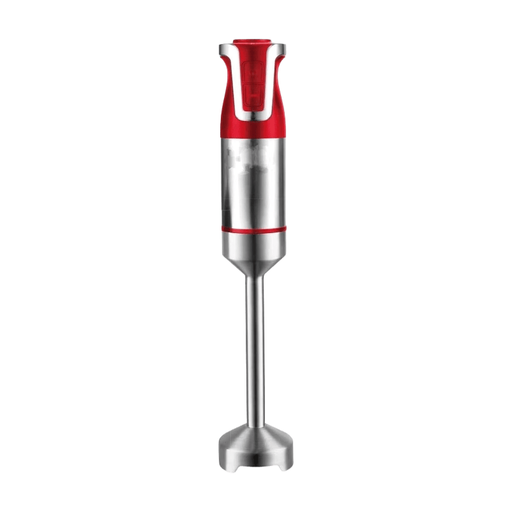
Why it suits this profile: A hand blender is convenient when you want to purée food directly in a saucepan, bowl or measuring jug without using a large kitchen blender.
The controls can be adjusted using twenty speed settings and a turbo function. This allows you to match the speed to thin sauces, soup or thick batter.
800 watts, stainless steel shaft, removable parts and a dishwasher-safe accessory, according to the product information.
We have put together a complete, up-to-date list of products that fully meet these strict selection criteria and the applicable European safety regulations.
A stick blender is practical when you want to purée soup directly in the pan and minimise washing up. A kitchen blender can produce a smooth, even texture, but you must transfer the soup safely into the jug and follow the instructions for hot liquids.
The lifespan depends on how you use and maintain it, the load placed on the motor and how you process hard ingredients. Do not run the blender empty, do not exceed the maximum fill line and allow the appliance to cool down when instructed in the manual. Take extra care when cleaning sharp blades and the motor base.
Energy consumption depends on the wattage and how long the appliance is used. An 800-watt appliance theoretically uses less energy when running for one minute than when used continuously for ten minutes. Pulse functions and short preparation times can help keep operating time to a minimum. Above all, consider your recipes: very high power is not always necessary for soft smoothies.
