
Vandaag of morgen in huis

Kwaliteit gegarandeerd

Welkomstaanbiedingen ontgrendelen: GRATIS bezorging | Tot 80% korting | Gratis 30 dagen JoyPlus-proefperiode
Download de app
Buying a blender sounds simple until you have to choose between a smoothie maker, a powerful blender, a glass blender or a compact model for taking with you. Marketing copy often focuses on high wattage, thousands of revolutions per minute or automatic programmes. However, these figures do not tell you everything about day-to-day use.
The most important question is therefore not which blender has the most features, but which model suits your recipes, portion sizes, available space and cleaning routine.
A higher wattage can help with hard or frozen ingredients, but it does not automatically say anything about the end result. The blade design, jug shape, filling level and speed control also play a part. A compact 300 or 600 W blender may be sufficient for soft fruit, while ice, nuts or frozen fruit place greater demands on the motor.
Also look out for conflicting product specifications. If in doubt, check the product page and manual, especially when the power, capacity or speed is stated differently in different places.
A 1.5 or 2-litre jug may seem spacious, but the maximum fill line is usually lower. You need to leave extra room when preparing hot ingredients. Always follow the manufacturer’s instructions. Some models also come with a travel cup, while the large jug is intended for several portions.
A blender that is difficult to take apart is more likely to remain unused in the cupboard. Check whether the cup, jug, lid and blades can be removed, and which parts are dishwasher-safe. A glass jug is resistant to odours and discolouration, but is heavier than Tritan or plastic. Also check that the motor base must never be immersed in water.
A model with a moderately powerful motor is often sufficient for smoothies and shakes. If you also want to crush ice or process hard ingredients such as nuts, seeds and raw vegetables, a blender with an ice crusher, pulse function and multiple speeds is a useful choice.
Speed is usually stated in revolutions per minute. A high speed can break ingredients down quickly, but always consider the complete system. In practice, a model with four stainless-steel blades, a well-designed jug and a stable base may be more suitable than an appliance with only a higher figure on the packaging.
A blender with a glass jug is an appealing option if you want a sturdy, odour-free mixing jug. However, glass is heavier and can break if used incorrectly. Tritan is lighter and more impact-resistant. With plastic, check whether the cup is BPA-free and whether the maximum temperature is clearly stated.
For a household, capacities of around 1 to 2 litres are practical for several portions. A compact blender with a cup of around 600 to 700 millilitres is better suited to one smoothie, a shake or use at the office and while exercising.
Manual speed settings give you control over the texture of soup, sauce, pesto or baby food. Blenders with automatic programmes can be particularly convenient if you often prepare the same recipes. An auto-clean programme reduces the number of steps, but does not replace thorough cleaning of the blades and seals.
Also check:
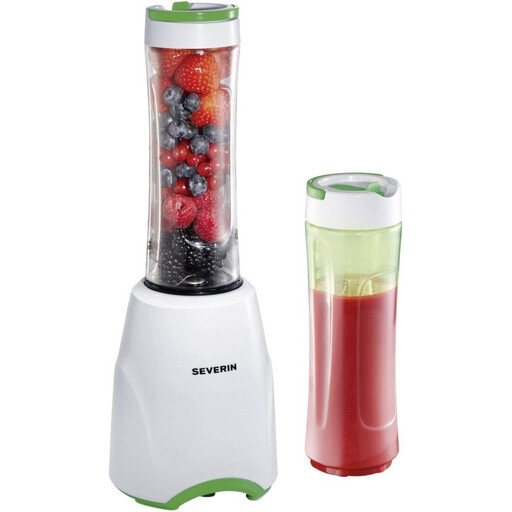
Why it suits this profile: This model is designed for individual portions. You blend directly into a drinking cup and take it with you to the office, school or the gym.
The choice is clearly defined: 300 W, two speeds and a capacity of 0.60 litres. You are not paying for a large jug or features you do not need.
Two removable BPA-free Tritan cups; according to the product specifications, the parts are dishwasher-safe.

Why it suits this profile: The combination of a glass jug, touchscreen, automatic programmes and manual controls is ideal for households that regularly prepare a variety of recipes.
The maximum jug capacity is distinguished from the stated usable capacity: 2 litres in total and 1.5 litres usable. This helps you plan portions.
1200 W, up to 28,000 revolutions per minute, three programmes and a glass jug that is dishwasher-safe according to the product specifications.
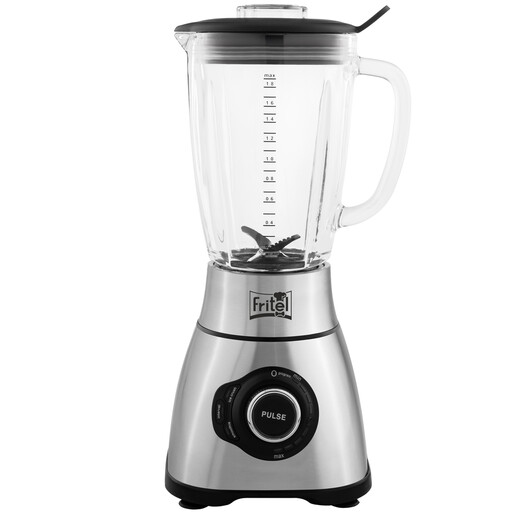
Why it suits this profile: For families and keen cooks who prepare several portions of smoothies, soup, sauces, pesto or iced drinks, the jug offers a capacity of 1.8 litres.
The controls are not limited to automatic settings: there are nine speeds and a pulse function. This allows you to adjust the texture yourself.
1.8-litre glass jug, programmes for Ice Crush, Smoothie and Interval, plus a stated noise level of 75 dB.

Why it suits this profile: The large 2.1-litre jug is suitable for family portions, while the included 700-millilitre cup also lets you make an individual smoothie.
According to the manufacturer, the BlendSense function is designed to adjust the time and speed. Fourteen manual speeds are also available for complete control.
1200 W motor, ice crusher, four automatic programmes and a 2.1-litre jug; the product specifications also mention a 700-millilitre cup.
Place the blender on a flat surface and check before every use that the jug, lid and blades are securely fitted. Do not fill the jug above the indicated mark. Hot liquids require extra care: allow them to cool according to the instructions and do not seal the jug airtight when steam needs to escape.
When processing hard ingredients, use short pulses and take the maximum operating time into account. A model such as the ochama Multifunction Blender, for example, states a limit of one minute of continuous use, followed by a rest period. Clean the blades carefully and always unplug the appliance before removing any parts.
We have put together a complete, up-to-date list of products that fully meet these strict selection criteria and the applicable European safety regulations.
Lower power may be sufficient for soft fruit and liquids. For frozen fruit, ice, nuts and fibrous vegetables, a powerful blender with a pulse function and multiple speeds is more practical. As well as wattage, consider the blades, jug shape and maximum operating time.
That depends on your preference. Glass generally absorbs odours and colour less readily, but is heavier and fragile. Tritan and other plastic cups are lighter and more convenient for taking with you. Always check the temperature limit and care instructions.
Consumption depends on the motor power and how long the blender is used. A blender usually runs for only a few minutes per preparation. This means that higher wattage can still make only a limited contribution to total electricity use, provided you do not run the appliance for extended periods. Follow the recommended cycles to avoid placing unnecessary strain on the motor.
