
Vandaag of morgen in huis

Kwaliteit gegarandeerd

Welkomstaanbiedingen ontgrendelen: GRATIS bezorging | Tot 80% korting | Gratis 30 dagen JoyPlus-proefperiode
Download de app
Buying a blender sounds simple, until you have to choose between a blender, stick blender, hand blender or smoothie blender. A high wattage on the packaging does not tell you everything. A large jug is not automatically convenient either if you usually make just one portion.
The most common disappointing purchases stem from three pitfalls:
For soft ingredients such as bananas, yoghurt and cooked vegetables, a compact lower-powered model may be sufficient. For frozen fruit, nuts or a blender for crushing ice, a more powerful appliance is more practical. The models in this selection range from 250 watts to 1700 watts.
Also check the recommended operating time. According to the product information, the ROUNY hand blender may run for a maximum of one minute at a time, followed by one minute of rest. The Nutribullet Exclusive also specifies a maximum one-minute cycle. So a powerful blender is not always suitable for prolonged continuous use.
A blender with a glass jug is worth considering if you want a sturdy jug with clear volume markings. Glass is heavier than plastic, however. Also check the practical capacity:
For example, a 2-litre jug may have a working capacity of 1.5 litres. Never exceed the indicated fill mark.
A blender with accessories can combine a stick blender, whisk and chopper. This saves space when you want to prepare dips, baby food, sauces or whipped cream as well as smoothies. With a hand blender, splash protection is useful for liquid ingredients.
Also look at:
A CE marking indicates that the product meets the relevant European requirements for market access. It is not an assessment of blending performance or durability.
The recommendations below are based on verifiable product specifications, such as power, capacity, speed settings and included parts. Brands may make additional claims about their technology; these are not presented here as independently verified results.
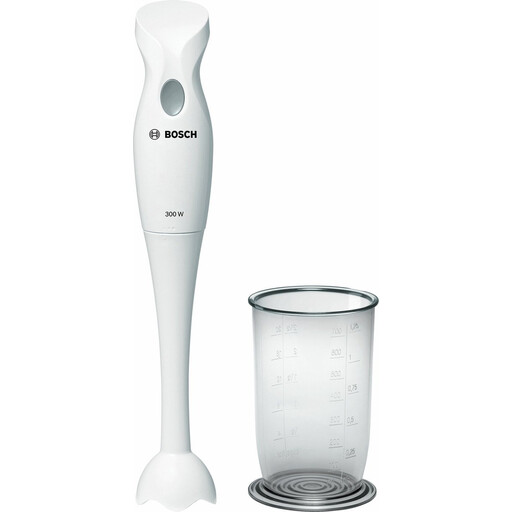
Why it suits this profile: This model is compact and has simple one-speed operation. The included measuring cup is useful for small portions of sauce, soup or baby food.
The specifications are straightforward: 300 watts, one speed and a measuring cup. You are not paying for features you are unlikely to use.
Compact size, turbo function and removable dishwasher-safe parts according to the product description.

Why it suits this profile: The glass jug has a useful capacity of 1.5 litres. With three automatic programmes, a touchscreen and a pulse function, this model is aimed at households that regularly prepare a variety of recipes.
The working capacity is clearly stated alongside the total jug capacity. An Auto-Clean programme is also included, which can make everyday cleaning less of a chore.
1200 watts, a heat-resistant glass jug and a specified ice-crushing programme. According to the product information, the jug is dishwasher-safe.
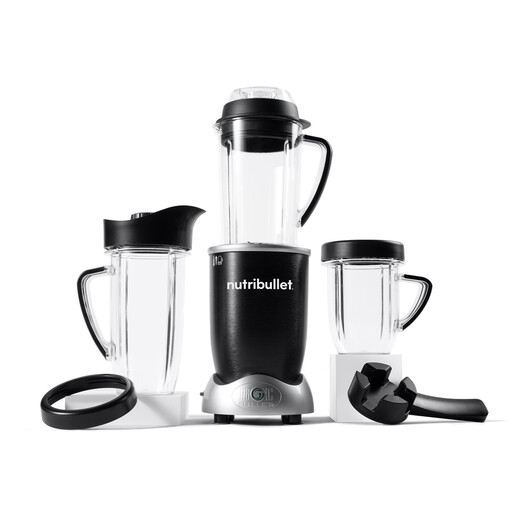
Why it suits this profile: This is a power blender for users who want to prepare nuts, ice, soups and sauces as well as smoothies. The set includes several cups and a jug for hot and cold preparations.
The accessories are clearly specified and there is a separate soup programme. For hot ingredients, a ventilated lid is listed; always follow the manual.
1700 watts, a set with several cups and a jug, plus a specified soup programme. According to the product information, the accessories are dishwasher-safe, except for the base and blade.
We have put together a complete, up-to-date list of products that fully meet these strict selection criteria and the applicable European safety regulations.
Choose a stick blender or hand blender if you want to work directly in a pan, bowl or measuring jug. This is useful for soup, purée, sauces and small portions. A model with a whisk and chopper can also replace several separate kitchen gadgets.
A traditional blender is better suited to larger quantities, smoothies, ice and frozen ingredients. A blender with a to-go cup is particularly practical if you want to blend and drink directly from the same cup. When making hot soup, always check whether the appliance is designed for this. Most compact smoothie blenders warn against hot liquids.
That depends on what you are preparing. For soft ingredients, 250 to 450 watts may be sufficient. If you process ice, frozen fruit or nuts, you should look for 800 watts or more. In addition to wattage, consider the blade design, capacity and operating time.
Its lifespan depends on usage, cleaning, overloading and storage. Use the appliance within the maximum cycle time, do not overfill the jug and allow the motor to cool down whenever the manual instructs you to do so. Before buying, also check the warranty and the availability of original parts.
A higher wattage means a higher maximum electrical power, but actual consumption depends on how long the blender is used. A 1000-watt blender running for one minute uses less energy than the same appliance running for a prolonged period. For occasional smoothies, its overall contribution to your electricity consumption generally remains limited.
