
Vandaag of morgen in huis

Kwaliteit gegarandeerd

Welkomstaanbiedingen ontgrendelen: GRATIS bezorging | Tot 80% korting | Gratis 30 dagen JoyPlus-proefperiode
Download de app
Buying a blender seems simple until you realise how many different appliances are sold under the same name. A smoothie blender, hand blender, food processor and stand mixer can overlap in use, but they’re not designed for the same jobs. If you focus only on wattage or how many accessories are included, you could end up with a bulky gadget that rarely sees the light of day.
The main pitfalls are:
For soft ingredients such as banana, yoghurt and cooked vegetables, a compact appliance is often enough. For frozen fruit, nuts or crushing ice, more drive power helps. Across the range you’ll see ratings from 500 W to 1300 W max.
Also look for:
A 1200 or 1300 W rating doesn’t mean you can blend continuously. Always follow the manual and the maximum fill line.
A jug of 1.5 to 2.1 litres suits families or larger batches of soup and smoothies. For one person, a 600 to 800 ml cup may be more convenient. Check whether the capacity quoted is the total jug volume or the usable capacity.
Also consider the footprint of the base. A multifunctional blender with a food processor can come with multiple bowls and accessories. Decide in advance where you’ll store them. A compact model like a hand blender generally takes up less cupboard space than a stand mixer with a mixing bowl.
Start with what you actually make. For daily blending, a sturdy jug and a good pouring spout matter. For grating, slicing and chopping you’ll need a food processor with the right discs. For dough, a stand mixer with a dough hook is more suitable.
Also check:
A brand claim about, for example, automatic adjustment, quiet operation or a certain extraction percentage is not a blanket guarantee. Based on its own testing, a manufacturer may report such traits under specific conditions. So base your choice mainly on verifiable specifications and your own use case.
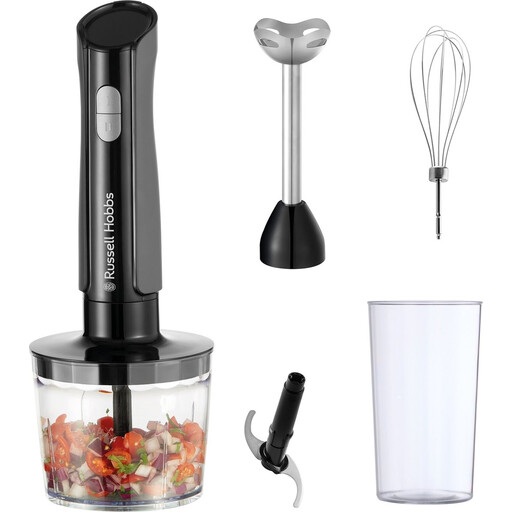
Why it suits this profile: This hand blender is ideal for smaller portions, soups, sauces and simple chopping or whisking tasks. The two speeds keep operation straightforward.
You’re not paying for unused discs or an oversized mixing bowl. The compact design and removable parts make storage and cleaning easier.
500 W, 600 ml beaker, 500 ml chopper bowl and removable, dishwasher-safe parts.

Why it suits this profile: For families and smoothie lovers who want a generous jug, a personal cup and automatic programmes in one.
The specifications spell out exactly what you get: 14 manual speeds, four programmes and a 2.1 litre jug. That’s more concrete than a vague claim about versatility.
1200 W, 2.1 litre jug, 700 ml cup and functions including chopping, grinding and ice processing.
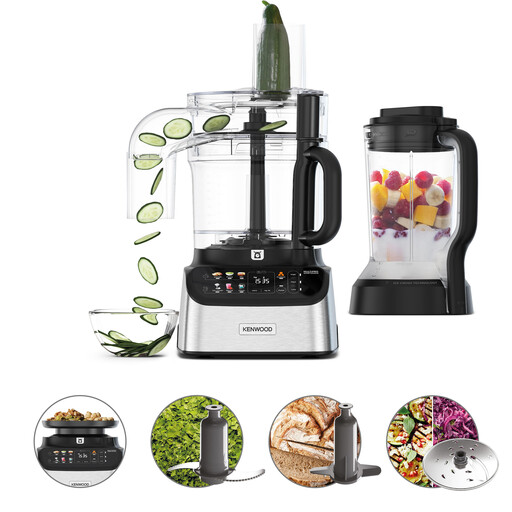
Why it suits this profile: A practical choice for keen cooks who, besides smoothies, also want to weigh, chop, grate, slice, purée and knead dough.
Functions are tied to specific accessories, including a dough hook, slicing and grating disc, and a 1.5 litre blender. Do check beforehand that you’ll use all the parts regularly.
1000 W, integrated scale, 1.5 litre blender and functions for crushing ice, kneading and grating.

Why it suits this profile: This model combines a compact food processor with blender functionality and a personal cup for everyday prep.
The dimensions are 37.9 × 23.4 × 33.8 cm and the set includes six accessories. That helps you gauge your cupboard space in advance.
900 W, seven speed levels, 1.3 litre bowl, personal blender and functions for slicing, grating and crushing ice.
We’ve compiled a complete, up-to-date list of products that fully meet these strict selection criteria and the applicable European safety regulations.
That depends on the tasks. For smoothies, sauces and puréed vegetables, a blender is enough. If you also want to grate, slice, chop or knead, a multifunctional blender or blender–food processor combo is more practical. Check the capacity and accessories before you buy.
Service life depends on motor load, cleaning and how often you use it. Keep within the stated maximum run time, don’t process prohibited hard objects, and let the motor cool down after heavy jobs. The legal warranty in the EU is at least two years; additional manufacturer terms vary by brand.
Power consumption depends on wattage and run time. A 1200 W appliance used for one minute theoretically consumes less energy than the same appliance run for longer. Short programmes, a suitable quantity of ingredients and switching off promptly help to reduce consumption. So don’t just look at wattage; consider how long you run the appliance each time.
