
Vandaag of morgen in huis

Kwaliteit gegarandeerd

Welkomstaanbiedingen ontgrendelen: GRATIS bezorging | Tot 80% korting | Gratis 30 dagen JoyPlus-proefperiode
Download de app
Buying a blender seems straightforward, until you have to choose between a smoothie blender, mini blender, kitchen blender or portable blender. Manufacturers often highlight high wattages, lots of programmes and “professional” results. But one specification rarely tells you enough about how a blender will perform day to day.
Look out for these three common pitfalls:
The right choice depends on what you actually want to make: smoothies for one, sauces and baby food, soup for the family or iced drinks at the weekend.
Power is measured in watts. A 250 to 350-watt mini blender may be suitable for soft fruit and simple shakes. For frozen fruit, nuts or ice, a more powerful model is more practical. For example, consider a blender with 800 to 1,300 watts.
It’s worth comparing wattage with other specifications too:
A blender with an ice-crushing function isn’t automatically suitable for large quantities of ice. Always check the manual and maximum fill level.
A 400 to 700 ml cup is often enough for one person. If you make several smoothies or sauces at once, a kitchen blender with a jug of around 1.2 to 2.1 litres is a better choice.
A glass jug is generally less prone to absorbing odours and becoming discoloured. The downside is that it’s heavier and can break. Tritan and other plastic cups are lighter and handy for taking out and about, but check that they’re BPA-free.
Also look out for the difference between:
A dial with two speeds may be enough for everyday use. Automatic programmes are handy if you want to start blending smoothies or ice, or run a cleaning programme, at the touch of a button. However, more settings also mean more parts to understand and clean.
Before buying a blender, check:
Never use a blender with hot liquids if the manual says not to. Steam and pressure can force the lid off. The sharp blades also need extra care when cleaning.

Why it suits this type of user: The compact 0.6-litre jug and 350 watts are suitable for individual smoothies, sauces and small preparations, without taking up space with a large kitchen blender.
The product information lists two speeds, a pulse function and a separate setting for hard fruit and ice. That means you don’t have to judge it on wattage alone.
0.6-litre capacity, two speeds, pulse function and removable dishwasher-safe parts, according to the product description.

Why it suits this type of user: This model combines a glass jug with touchscreen controls, automatic programmes and a 1,200-watt motor. It’s a good fit for households that regularly make a variety of recipes.
The specifications list a usable capacity of 1.5 litres, alongside a total jug capacity of 2 litres. This makes the difference between advertised capacity and practical use clearer.
Heat-resistant glass jug, 1,200 watts, three automatic programmes and an Auto-Clean programme, according to the product information.
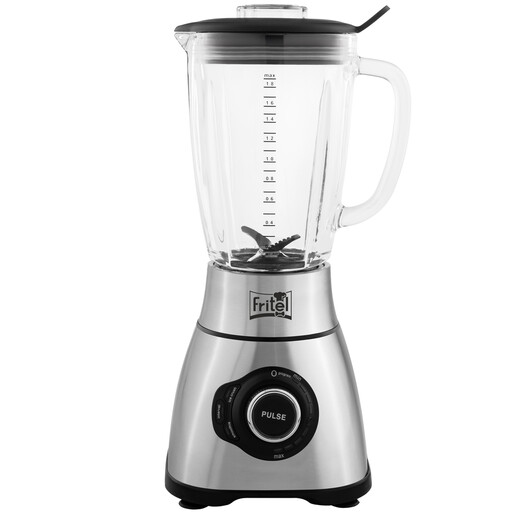
Why it suits this type of user: With a 1.8-litre glass jug, pre-set programmes and a pulse function, this model is designed for larger portions, iced drinks, soups and dips.
The product details list more than just a high speed: they also specify dedicated Ice Crush, Smoothie and Interval programmes. This gives you a clearer idea of what the blender is designed to do.
1.8-litre glass jug, pulse function, three programmes and dishwasher-safe parts, according to the product description.
We’ve put together a complete, up-to-date list of products that meet these strict selection criteria and comply with current European safety regulations.
A smoothie blender with a drinking cup is handy if you usually make one portion and want to keep washing-up to a minimum. Models such as a Nutribullet with a 700 or 900 ml cup are compact and often come with a to-go lid. Check whether the cup is designed for drinking from directly, and whether the motor base must not be cleaned with water.
A portable blender with USB-C charging is suitable for the office, gym or travel. Capacity is usually limited to around 400 to 475 ml. According to Nutribullet’s product information, some models can make more than fifteen blends per charge; this is a brand claim and depends on the ingredients, temperature and how you use the blender. Don’t use these appliances for hot liquids, and take the maximum fill level seriously.
A multifunction blender with chopping or grinding attachments can be useful for herbs, nuts, baby food and sauces. Check whether the attachments are actually included. Some product pages describe the features in more detail than the actual contents of the box.
For soft fruit and liquids, 250 to 600 watts may be enough. If you often use frozen fruit, nuts or ice, look for a model with around 800 watts or more. Check the blades, pulse function and recommended running time too.
A glass jug is relatively heavy, but is generally less likely to absorb odours or become discoloured. Plastic or Tritan is lighter and more practical for a portable blender. Choose based on storage, portability and the kinds of recipes you make.
Power consumption depends on the wattage and how long the motor runs. A 1,200-watt appliance running for ten minutes would theoretically use around 0.2 kWh, but in practice, blenders are usually used for much shorter periods. Cleaning, replaceable blades and expected lifespan often have a greater effect on the overall cost than making one smoothie a day.
