
Vandaag of morgen in huis

Kwaliteit gegarandeerd

Welkomstaanbiedingen ontgrendelen: GRATIS bezorging | Tot 80% korting | Gratis 30 dagen JoyPlus-proefperiode
Download de app
Buying a blender sounds simple—until you have to choose between a smoothie blender, immersion blender, personal blender, or high-performance model for the whole family. A high wattage rating or a long list of programmes does not automatically mean an appliance is right for the way you use it. Pay particular attention to capacity, controls, cleaning and the types of ingredients you plan to process.
As a Joybuy Product Recommendation Officer, I filter the most important product specifications and compare them with common purchasing pitfalls. This helps you make a more informed comparison without being swayed by isolated marketing claims.
A motor rated at 1200 or 1300 watts sounds impressive, but it does not tell you everything about the final result. The shape of the jug, the number of blades, speed control and the amount of liquid all play a role.
A blender designed to crush ice also needs a suitable pulse function and a robust blade assembly. Always check whether ice, frozen fruit or hard nuts are explicitly mentioned in the product description. A small portable blender is generally designed for smoothies and shakes, not prolonged heavy-duty blending.
A 1.5-litre jug does not always mean you can safely process 1.5 litres of ingredients at once. The maximum fill line in the manual is the deciding factor. For a one-person household, 400 to 700 ml may be practical, while families are more likely to benefit from a blender with a 1.2- to 2.1-litre jug.
The shape also matters. A wide jug is often easier to fill and clean. A slim cup fits more easily in a bag or refrigerator, but offers less room for larger portions.
A multifunctional blender with a whisk, chopper and measuring cup can be convenient—but only if you genuinely need those functions. For soups and sauces, an immersion blender is often more practical because you can blend directly in a saucepan or bowl. For smoothies on the go, a cordless blender makes more sense than a heavy countertop model.
When assessing accessories, check whether they are removable and dishwasher-safe. The motor base must never be immersed in water.
For soft vegetables, fruit and shakes, a compact model rated at 250 to 350 watts may be sufficient. If you regularly process frozen fruit, ice cubes or nuts, consider models starting at around 800 watts. A high-performance blender rated at 1200 watts or more is particularly useful for larger portions and hard ingredients.
The stated wattage does not guarantee a particular texture. Use it as a comparison point alongside the recommended operating time. Some models, for example, may run continuously for no more than one minute and then need time to cool down.
A glass jug generally absorbs fewer odours and colours and feels sturdy, but it is heavier. According to the product specifications, the Tefal BlendForce 2 BL435831 has a 1.25-litre glass jug. The Tefal PerfectMix+ BL871A is described as having a 2-litre heat-resistant glass jug, with a stated usable capacity of 1.5 litres.
Tritan is lightweight and well suited to everyday use. The Aigostar Marden BL-250 uses a 500 ml BPA-free Tritan cup. Always check which components are actually BPA-free and follow the manufacturer’s cleaning instructions.
A blender with a pulse function delivers short, powerful bursts of blending. This is useful when you want greater control over the texture or need to crush ice briefly. Two speeds are sufficient for many everyday recipes; more advanced models offer additional settings or automatic programmes.
Removable, dishwasher-safe components can save time, but check whether this also applies to the blade unit and lid. With sharp blades, careful hand-washing may still be necessary.

Why it’s a good fit: A compact choice for a single serving of smoothie or shake. According to the product description, the 500 ml cup can also be used as a drinking bottle.
The capacity and power are clearly stated: 500 ml and 250 watts. This prevents you from buying a large countertop model for small portions.
BPA-free Tritan cup, non-slip base, one speed and removable dishwasher-safe components according to the product information.
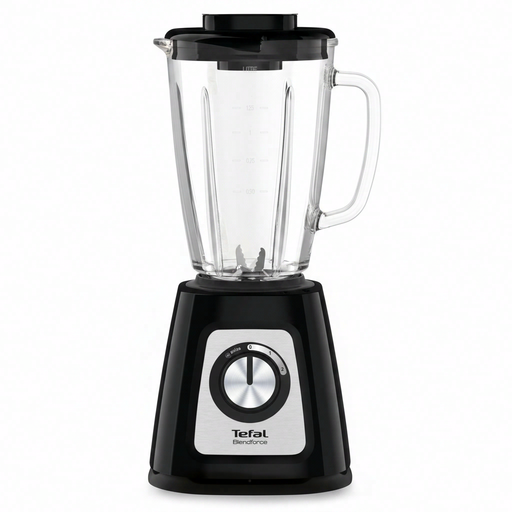
Why it’s a good fit: Suitable for households preparing smoothies, milkshakes, soups and cold drinks in medium-sized quantities.
The specifications list 800 watts, a 1.25-litre capacity, two speeds, a pulse function and a dedicated ice-crushing function. This means you do not have to infer the features from the product name alone.
Glass jug, stainless-steel blades, safety lock and non-slip feet according to the product specifications.

Why it’s a good fit: A countertop model for larger quantities, varied textures and regular use in a busy household.
The product specifications list a 2.1-litre jug, 1200 watts, fourteen manual speeds and four programmes. This clearly distinguishes straightforward operation from extensive control.
According to the product description, this model features a pulse programme, ice crusher and automatic BlendSense adjustment.
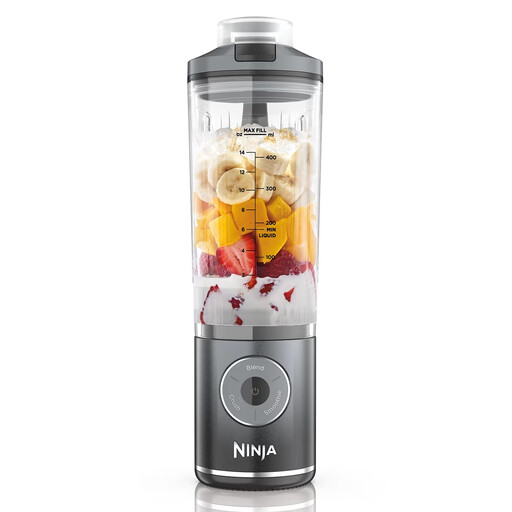
Why it’s a good fit: Ideal for the office, gym, travel or a small kitchen where a cordless appliance is especially convenient.
Its portability is supported by concrete specifications: a rechargeable battery, USB charging and two 530 ml cups. This is not a full-size kitchen model described as portable merely for marketing purposes.
150-watt motor, leak-proof lid design and BPA-free Tritan cups according to the product information.
Browse a current selection of blenders and kitchen appliances, with filters for power, capacity, features and intended use.
It can be, provided the bowl is small enough and the appliance is suitable for soft, cooked ingredients. A compact blender or immersion blender is often practical for small portions. Allow hot ingredients to cool first and always follow the manufacturer’s temperature and fill-level instructions. A dedicated baby food maker, such as the BC Babycare mini food processor, is designed for small portions, but check the current manual before use and cleaning.
Its lifespan depends on usage, maintenance and adherence to the maximum operating time. Allow the motor to cool whenever instructed in the manual, do not overfill the jug and check the blades and cups for damage. In the EU, many new consumer products are covered by a statutory warranty of at least two years; additional manufacturer terms may vary by brand.
Consumption depends on both the wattage and the operating time. A 1200-watt model running briefly does not automatically use more energy than a 350-watt model that needs considerably longer. For occasional smoothies, a personal blender can be economical and practical. For large portions, ice or hard ingredients, a more powerful model may be the better choice—provided you do not run it for longer than recommended.
