
Vandaag of morgen in huis

Kwaliteit gegarandeerd

Welkomstaanbiedingen ontgrendelen: GRATIS bezorging | Tot 80% korting | Gratis 30 dagen JoyPlus-proefperiode
Download de app
Buying a blender sounds simple until you have to choose between a smoothie blender, kitchen blender, hand blender or food processor with a mixing bowl. Marketing copy often focuses on wattage, multiple speeds and terms such as “powerful”. However, these figures do not tell you everything about day-to-day use. An appliance may look impressive on paper but prove awkward because of a small jug, short operating time or parts that are difficult to clean.
Use these practical checks to compare blenders and kitchen mixers based on features that genuinely make a difference in a typical UK household.
A higher wattage does not automatically mean a smoother result. The shape of the jug, the blades, the amount of liquid and the maximum operating time also matter. A 600-watt blender may be suitable for smoothies and sauces, while a 1,000- or 1,300-watt model offers more capacity for harder ingredients or larger portions.
Always check the combination of power, speed, blade system and recommended operating time. According to the product description, the Cecotec 1300 W Countertop Blender reaches up to 20,000 revolutions per minute and has a pulse function. These are verifiable product specifications, but the final result also depends on the recipe.
A 2-litre jug is not always suitable for processing 2 litres of ingredients at once. Manufacturers sometimes specify a maximum working capacity. For example, the Philips HR3020/20 has a 2-litre jug with a stated working capacity of 1.5 litres.
For one person, a compact smoothie blender with a 700 ml cup may be more practical. For a family, models with a working capacity of around 1.5 litres are more convenient. If you regularly make soup or sauce, also check whether the manufacturer specifies a maximum temperature. Philips product information states that ingredients must not be processed at temperatures above 80 °C.
An appliance with lots of accessories may seem versatile, but extra parts take up space and need to be washed. A hand blender is often sufficient for soup, purée and small quantities of sauce. A food processor with a mixing bowl makes more sense if you regularly knead dough or prepare batter and whipped cream.
Consider which accessories you genuinely need: a whisk, chopper, beaker, dough hook or blender jug. Also check whether the parts are dishwasher-safe and whether replacement accessories are available.
As well as the stated wattage, pay attention to the continuous operating time. According to their product information, some compact blenders may run for only one minute at a time before needing a break. This applies, for example, to the ochama Multifunction Blender 600W and the ROUNY hand blender. This need not be a problem for a smoothie or quick preparation, but it can become inconvenient when making several portions.
The load is different for kitchen mixers used for baking. The AUCMA 6L stand mixer states a maximum continuous operating time of six minutes. Honinst recommends mixing heavy yeast dough for no more than ten minutes, followed by a cooling period. Always follow the instructions and do not exceed the maximum quantity of dough.
A blender with a glass jug feels sturdy and is less likely to absorb odours or colours. On the other hand, glass is heavier and needs to be handled with care. The Tefal BL435831 has a 1.25-litre glass jug and stainless-steel blades. The Xiaomi blender uses a reinforced 1.75-litre glass container.
Plastic cups are generally lighter. The Nutribullet Exclusive Blender has a BPA- and BPS-free Tritan cup with a capacity of 700 ml. Check the precise material specifications for each model; words such as “sturdy” or “durable” are not a guarantee of a particular service life without technical details.
Multiple speeds are particularly useful when you want to create different textures. A low setting may be suitable for gentle mixing, while a higher setting can be used for harder ingredients. A pulse function delivers short, powerful bursts and can be useful for ice cubes or coarse chopping.
A blender with an ice-crushing function is not automatically suitable for crushing unlimited quantities of ice. Check the instructions and use small amounts. The Cecotec blender has four titanium-coated blades, two speeds and a pulse function. According to the product description, the Philips HR3020/20 has three speeds, a pulse setting and removable blades.
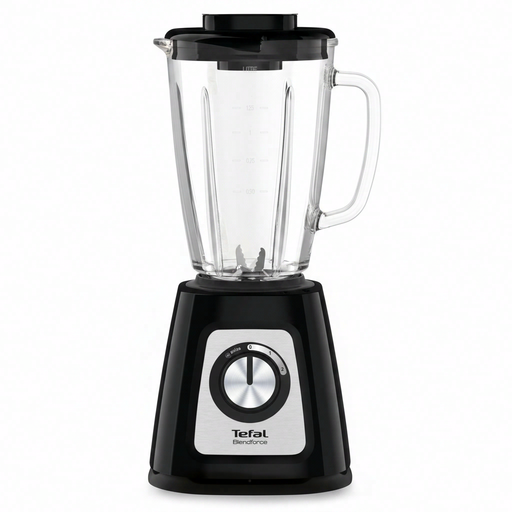
Why it suits this profile: A straightforward kitchen blender for smoothies, cold drinks, sauces and smaller quantities of soup.
The product description states not only 800 watts, but also a 1.25-litre capacity, two speeds, plus pulse and ice-crushing functions.
Glass jug, stainless-steel blades, safety lock and dishwasher-safe parts according to the product information.

Why it suits this profile: Suitable for households that make larger batches of smoothies, sauces or cold preparations and value easy maintenance.
The 1.5-litre working capacity is listed separately from the 2-litre jug capacity. The blades are also removable.
1,000 watts, three speeds plus pulse, a manual cleaning setting and dishwasher-safe removable parts according to the product description.
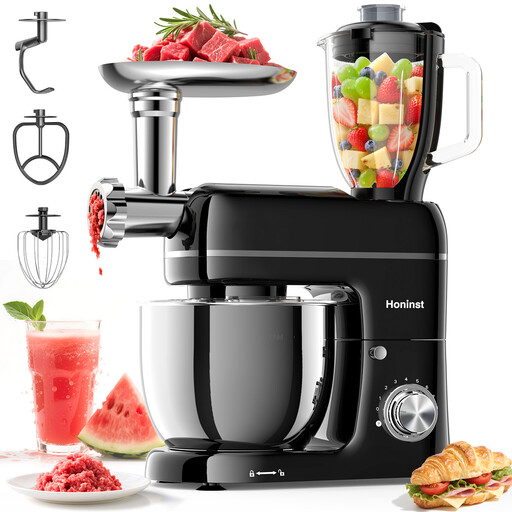
Why it suits this profile: For anyone who wants to combine baking, kneading, chopping and blending in one appliance.
The functions are linked to specific components: a 6 QT bowl, blender jug, meat grinder, dough hook, whisk and beater.
Up to 1,300 watts, eight speeds plus a pulse function and a safety cut-off when the head is raised, according to the product information.
We’ve put together a complete, up-to-date list of products that fully meet these strict selection criteria and the applicable European safety regulations.
Choose a smoothie blender if you mainly process fruit, vegetables, yoghurt, sauces or cold drinks. A blender for smoothies and soups is useful for larger quantities, but always check the permitted temperature.
A hand blender, also known as an immersion blender, takes up less cupboard space. According to the product information, the ROUNY 4-in-1 Hand Immersion Blender has a blending shaft, 700 ml beaker, 500 ml chopper and whisk. This makes it suitable for soups, sauces, eggs and small portions.
A kitchen mixer for baking is a different product category. A model such as the AUCMA 5L stand mixer comes with a whisk, dough hook and beater. This type of appliance is designed for batter and dough, not as a replacement for a powerful blender for ice or smoothies.
Power consumption mainly depends on the wattage and operating time. A higher wattage uses more energy while the appliance is running, but a shorter preparation time may partly offset the difference. So don’t compare wattage alone; also consider portion size and how often you use the appliance.
For soft ingredients and small portions, 500 to 700 watts may be sufficient. For frozen fruit, ice cubes or larger quantities, models of around 800 to 1,300 watts offer more headroom. Always check the pulse function, blades and operating time alongside the wattage.
Glass generally absorbs fewer odours and is less prone to discolouration, but it is heavier and can break. Plastic is lighter and often easier to handle. The right choice depends on your preferences regarding weight, cleaning and storage space.
The service life depends on the materials, motor load, maintenance and usage. An appliance will generally last longer if you respect the maximum fill and operating limits, clean the blades carefully and allow the motor to cool between demanding preparations. In the EU, consumers are also covered by the statutory guarantee of conformity; check the product page and seller information for any additional terms.
