
Vandaag of morgen in huis

Kwaliteit gegarandeerd

Welkomstaanbiedingen ontgrendelen: GRATIS bezorging | Tot 80% korting | Gratis 30 dagen JoyPlus-proefperiode
Download de app
Buying a blender seems simple enough, until you have to choose between a smoothie blender, mini blender, portable blender or a larger model for the whole household. Marketing often focuses on high speeds, powerful motors and handy programmes. But these terms don’t tell you everything about everyday use.
Most disappointing purchases come down to three common pitfalls:
Here’s what to check before choosing a blender for smoothies, shakes, sauces or other recipes.
First, think about where and how often you’ll use it.
A portable blender also works differently from a mains-powered model. A cordless blender gives you the freedom to blend without a socket, but you’ll need to consider charging time, battery life and the amount you can make at once.
A powerful blender is often described as having a higher wattage, but always compare the full package. A 350 W model may be suitable for everyday smoothies, while an 800 to 1,300 W countertop blender offers more capacity and extra features. The stated power doesn’t guarantee that every ingredient can be blended without preparation.
Look out for:
According to the product information, the Tefal BlendForce 2, for example, has 800 W, a 1.25-litre jug, two speeds, a pulse function and an ice-crushing mode. The Ninja Detect Blender Pro lists 1,200 W, a 2.1-litre jug, a 700 ml cup and several automatic programmes.
A capacity of 475 ml or 500 ml is suitable for an individual smoothie. For several people, a larger jug makes more sense. Bear in mind that the maximum fill line isn’t the same as the cup’s total capacity.
Also check the material:
So, a BPA-free blender isn’t automatically suitable for hot liquids. Always follow the instructions; several portable models aren’t designed for hot or carbonated drinks.
A blender that’s difficult to clean is less likely to get used. Check whether the cup, lid and blade unit can be removed, and whether the parts are dishwasher-safe.
Also look for:
With a cordless model, also check the charging port, the supplied USB cable and the instructions for the built-in battery. A sealable lid helps prevent spills while you’re carrying it, but don’t put a blender to go in a bag until you’ve checked that the lid is properly secured.

Why it suits this user: The 500 ml capacity is ideal for one smoothie or shake, and according to the product information, the cup can also be used as a drinking bottle.
The product specifications clearly state 250 W, one speed, a 500 ml capacity and dishwasher-safe removable parts. That means you can see exactly what you’re getting before you buy.
500 ml Tritan cup, BPA-free according to the product information, non-slip base and drinking lid.

Why it suits this user: This model is designed for households that want to make several portions, cold drinks and a range of recipes with one appliance.
With a 2.1-litre capacity, it’s clearly a different choice from a personal blender. The product page also lists a separate 700 ml cup.
1200 W, 14 manual speed settings, four programmes and an ice crusher described as powerful in the product information.
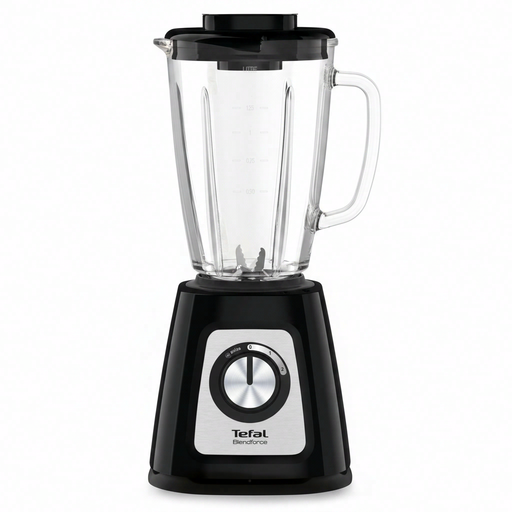
Why it suits this user: The 1.25-litre glass jug and ice-crushing mode make it a good fit for regular use with cold drinks, sauces and larger portions.
The key specifications are clearly listed: 800 W, two speeds, a pulse function, an ice-crushing mode and a glass jug. Do check the maximum running time in the manual.
1.25-litre capacity, glass jug, stainless steel blades and dishwasher-safe parts according to the product information.
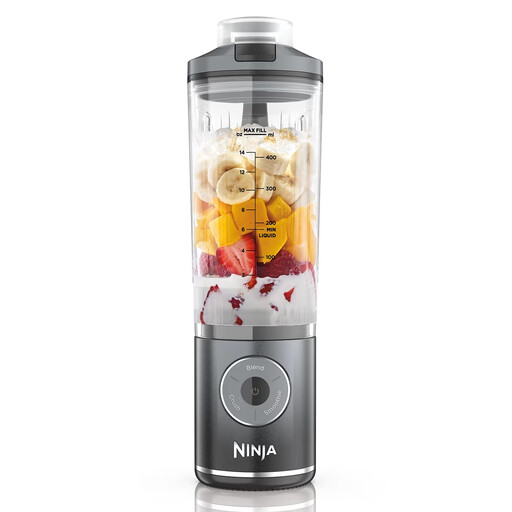
Why it suits this user: The rechargeable battery, compact design and two 530 ml cups are practical for work, exercise and short trips.
The product information specifies battery power, a 150 W motor, a leak-proof design and a clear capacity of two 530 ml cups.
USB charging, one-button operation, two BPA-free Tritan cups and dishwasher-safe parts according to the product page.
For a mains-powered model, energy use per blend is usually limited because a blender only runs for a short time. The exact amount depends on the power and how long you use it. A higher wattage doesn’t automatically mean a smoothie costs more to make if the appliance runs for less time, but it may use more electricity when you blend for longer.
With a cordless or rechargeable blender, pay particular attention to:
A portable blender is handy when there isn’t a power socket available. For everyday use in the kitchen, a countertop model with a larger capacity may be more practical.
We’ve put together a complete, up-to-date list of products that meet these strict selection criteria and current European safety regulations.
For one smoothie, a cup of around 400 to 600 ml is practical. Choose a smoothie blender with enough power, a secure-fitting lid and parts that are easy to clean. If you also want to blend ice or frozen ingredients, check whether an ice-crushing or pulse function is specifically mentioned.
Its lifespan depends on how often you use it, how hard you work it, and how well you clean and maintain it. Don’t run the blender empty, don’t exceed the maximum fill line and follow the maximum running time in the manual. According to the product information and European consumer rules, most of the products mentioned come with at least a two-year legal guarantee.
It depends on what you’re making. A cordless blender is suitable for individual smoothies and shakes if flexibility is important to you. For large portions, extended use or regular ice crushing, a mains-powered countertop blender with a larger jug and more motor power is generally a better choice.
