
Vandaag of morgen in huis

Kwaliteit gegarandeerd

Welkomstaanbiedingen ontgrendelen: GRATIS bezorging | Tot 80% korting | Gratis 30 dagen JoyPlus-proefperiode
Download de app
A blender can prepare smoothies, shakes, soups, sauces and baby food, but not every model is suitable for the same tasks. A compact smoothie blender is convenient for one person, while a kitchen blender with a large jug is a better fit for a family. A hand blender may also be the right choice if you want to purée food directly in a saucepan.
The product name does not always tell the whole story. Pay particular attention to the technical specifications and safety instructions. This will help you avoid buying a blender that is too small, heats up quickly or is mainly intended for softer ingredients.
A high wattage sounds appealing, but it does not by itself indicate how well a blender mixes. The result also depends on the blade design, the shape of the jug, the speed and the maximum operating time. A personal blender rated at 250 to 350 watts may be suitable for soft fruit, while a powerful blender with 800 to 1300 watts offers more scope for frozen ingredients or ice.
Also check whether the stated power refers to the maximum power or the rated power. Some models list these values differently.
A 1.5-litre jug cannot always be filled to the brim. The maximum fill mark and the space needed for circulation determine how much you can actually blend at a time. For a household, a blender of around 1.2 to 1.5 litres is practical. For one smoothie, 400 to 700 ml is often enough.
A portable blender usually has a smaller capacity. This makes it convenient for use on the go, but less suitable for several portions or thick mixtures.
A blender with an ice-crushing function, pulse function or several programmes can be useful, but only if you use those features. For soup, baby food and sauces, a hand blender is often simpler. If you also want to chop herbs, nuts or meat, it is better to look for a blender with a chopper attachment or a 4-in-1 hand blender.
Also consider cleaning. Parts that cannot be removed or are not dishwasher-safe may create extra work in practice.
Consider the power together with the speed settings. A model with two speeds and a pulse function offers basic control; a model with several speeds or automatic programmes gives you more options for different textures.
The maximum continuous operating time is at least as important. Some compact models may only run for short cycles and then need to cool down. Always follow the instructions. Product information for different models may, for example, specify a rest period after intensive blending.
A blender designed for smoothies and shakes is not automatically suitable for hard ingredients. Check specifically whether the manufacturer mentions ice, nuts or frozen fruit.
A glass jug is sturdy and generally does not absorb odours, but it is heavier. Tritan or other BPA-free plastic is lighter and often practical for a personal blender or blender to go. Check:
There are additional safety rules for hot liquids. Only use a jug that is suitable for this purpose and follow the instructions. Several compact models explicitly state that hot liquids must not be blended because pressure can build up.
Stainless steel blades are common. Some brands use a specific coating or blade name. Do not treat a brand’s claim about a longer lifespan or faster blending as a guaranteed result; check the actual specifications first.
Non-slip feet, a locking mechanism and a stable base are important when working at high speed. The motor base must not be immersed in water. Always unplug the appliance before cleaning the blades or accessories.

Why it suits this profile: The compact 0.6-litre jug and 350 W power are suitable for one or two small portions of smoothie or sauce.
The capacity and two speed settings are clearly stated. This makes it clear in advance that this is a mini blender, not an appliance for large family portions.
Two speed settings, pulse function, ice-crushing function and dishwasher-safe removable parts according to the product description.

Why it suits this profile: The glass jug, 1200 W motor and usable capacity of 1.5 litres are a good fit for households that regularly prepare larger quantities.
The stated jug capacity, programmes and cleaning function make it clear which additional features you are buying, rather than focusing only on wattage.
Glass jug, three automatic programmes, touchscreen controls and pulse function according to the product details.

Why it suits this profile: The large 2.1-litre jug, 1200 W power and manual settings are suitable for several portions, hard ingredients and different textures.
The product information mentions both 14 manual speeds and programmes for chopping, grinding and pulse use. This lets you tailor the functions to your recipes.
2.1-litre jug, 1200 W power, 14 manual speeds and four automatic programmes according to the product description.
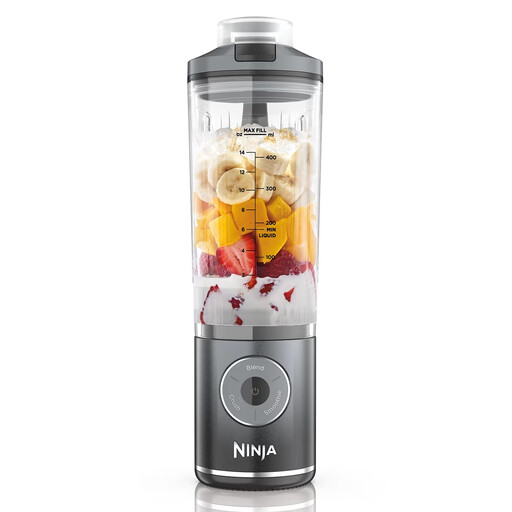
Why it suits this profile: Cordless operation, USB charging and two 530 ml cups are designed for use at the gym, in the office or while travelling.
The capacity, battery power and leak-proof lid are described clearly. This makes it clear that portability is more important than large portions.
150 W motor, rechargeable battery, USB charging, one-button operation and dishwasher-safe parts according to the product details.
We have put together a complete, up-to-date list of products that fully meet these strict selection criteria and the applicable European safety regulations.
A hand blender is practical if you want to purée soup directly in the saucepan. A kitchen blender can produce a smoother result, but hot liquids are not permitted in every model. Always check the instructions and, if necessary, allow the preparation to cool first.
The lifespan depends on how you use and clean the appliance and whether you follow the maximum operating time. Overloading, running the blender empty and not allowing it to cool sufficiently can put strain on the motor. Clean the blades carefully, check the jug and lid for damage, and only use compatible accessories.
Energy consumption depends on the power rating and the length of the blending cycle. A 1200-watt model theoretically uses more energy than a 600-watt model when running for one minute, but actual consumption depends on how long it is switched on and how it is used. For a daily smoothie, the total operating time is usually limited; above all, check that the power suits the ingredients you want to prepare.
