
Vandaag of morgen in huis

Kwaliteit gegarandeerd

Welkomstaanbiedingen ontgrendelen: GRATIS bezorging | Tot 80% korting | Gratis 30 dagen JoyPlus-proefperiode
Download de app
A blender seems simple: motor, jug and blades. Yet many people buy an appliance that does not really suit the way they use it after just a few weeks. A small smoothie blender may struggle with soup or ice, while a large kitchen blender takes up unnecessary space if you only blend fruit in the morning.
The main pitfalls are usually not related to appearance, but to the specifications and accessories.
A higher wattage does not automatically mean that every ingredient will be processed faster or more finely. Also look at the jug capacity, blade type, speed control and recommended operating time. A 600-watt appliance may be suitable for smoothies and sauces, but less suitable for blending heavy ingredients for a long time.
Also pay attention to the difference between rated power and maximum power. Some product descriptions mainly mention the maximum wattage. Therefore, check which value is listed as the power rating in the technical specifications.
A multifunctional blender may seem appealing, but check exactly what is included. A blender with a chopper is useful for herbs, nuts or small portions of vegetables. However, grating, slicing and making dough require specific discs or a dough hook.
If you are looking for a combination of a food processor and blender, it is worth checking the capacity of each bowl separately. A 1.5-litre blender jug tells you nothing about the capacity of the chopping bowl.
Fixed blades and hard-to-reach edges make everyday use less practical. Check whether the parts are removable and dishwasher-safe. The motor base should generally not be immersed in water.
Also pay attention to the recommended operating cycle. Some models, for example, state that you may blend for a maximum of one minute at a time and must then wait. This is particularly important with a powerful blender for thick mixtures, ice or hard ingredients.
For smoothies, milkshakes and soft ingredients, moderate power is often sufficient. For crushing ice with a blender, nuts, frozen fruit or thick sauces, a pulse setting and multiple speeds are more practical. A pulse function lets you work in short intervals, giving you more control over the texture.
A hand blender with variable speed is suitable when you want to blend directly in a pan or bowl. A countertop blender works better for larger quantities and cold drinks. So consider your recipes first, and only then look at the wattage.
A 1.2 to 1.5-litre jug is often suitable for a household that makes a few portions at a time. For families, a capacity of around 2 litres may be more convenient. Bear the maximum fill line in mind: the nominal capacity is not always the usable capacity.
A blender with a glass jug is less prone to discolouration and is less likely to absorb odours. On the other hand, glass is heavier and can break if dropped or knocked hard. Also check whether the jug has measurement markings, a sturdy handle and a securely closing lid.
Check the following before buying:
A CE marking is not a quality rating. It indicates that the manufacturer declares that the product meets the relevant European requirements. Keep the manual and follow the instructions for hot liquids, cleaning and maximum quantities. Consumers are also entitled to at least the statutory conformity protection under EU rules; an additional manufacturer’s warranty may differ from this.
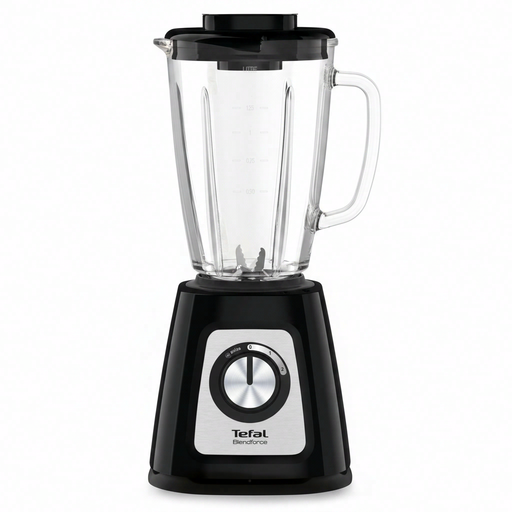
Why it suits this profile: A straightforward countertop blender for smoothies, soups and cold drinks, without a large bundle of accessories.
The specifications state 800 watts, a 1.25-litre capacity, two speeds, a pulse function and an ice-crushing setting. This means you can see in advance exactly which functions you are getting.
Glass jug, measurement markings, non-slip feet, safety lock and dishwasher-safe parts according to the product information.

Why it suits this profile: Suitable for families and users who want larger portions, automatic programmes and plenty of adjustment options.
The product description lists 14 manual speeds, four programmes, a 2.1-litre jug and a 1200-watt motor. You can compare the functions and capacity with your recipes in advance.
Large jug, separate 700 ml cup, automatic programmes and, according to the description, an integrated warning when more liquid is needed.

Why it suits this profile: A hand blender for anyone who regularly makes soup, sauces, purée, chopped ingredients and different textures.
The accessory bundle is clearly specified: 25 speeds, turbo and a chopper with three texture settings. For ice, the instructions specifically require the SizeControl chopper.
1000 watts, 25 speeds, splash-reducing foot and dishwasher-safe parts according to the product information.
We have put together a complete, up-to-date list of products that fully meet these strict selection criteria and the applicable European safety regulations.
Choose a countertop blender if you mainly make smoothies, milkshakes, cold drinks or larger batches of soup. A hand blender takes up less space and is practical for making soup and baby food directly in a pan or tall beaker. A food processor and blender is better suited to keen home cooks who also want to chop, grate, slice or mix dough.
For baby food, small portions, easy cleaning and a suitable beaker are more important than a high maximum power rating. Allow hot ingredients to cool first according to the instructions, and always check the temperature before serving food.
For soft vegetables, fruit and liquids, average power is often sufficient. For frozen fruit, ice and thick mixtures, a pulse function, suitable blades and a clearly stated operating time are at least as important as the wattage.
It depends on your preference. Glass generally absorbs fewer odours and colourants, but it is heavier and fragile. Plastic is lighter and often more practical for everyday use. With both materials, check the maximum temperature and cleaning instructions.
Consumption depends on the power rating and operating time. An 800-watt appliance running for five minutes theoretically uses around 0.067 kWh. In practice, the operating time is often shorter. Multiply the consumption by your electricity tariff to estimate the cost per use. With a blender, the purchase price is usually more significant than electricity consumption, unless you use the appliance very frequently.
