
Vandaag of morgen in huis

Kwaliteit gegarandeerd

Welkomstaanbiedingen ontgrendelen: GRATIS bezorging | Tot 80% korting | Gratis 30 dagen JoyPlus-proefperiode
Download de app
Buying a blender seems straightforward—until you have to choose between a smoothie blender, mini blender, blender with a glass jug or portable blender. Manufacturers often highlight wattage, the number of programmes or terms such as “professional”. This information is useful, but it does not automatically tell you how suitable an appliance is for your everyday needs.
As a Joybuy Product Recommendation Officer, I filter product information based on practical criteria: capacity, power, materials, functions, maintenance and intended use. This helps you avoid paying for features you are unlikely to use.
High wattage sounds appealing, but it does not tell you everything about the blending results. The shape of the jug, blade design, maximum filling level and available speed settings also matter. A compact 350 W blender may be suitable for soft fruit, while frozen ingredients or ice may require a different type of appliance.
Always check:
A 2-litre jug may have a lower maximum fill level in practice. Extra caution is needed when preparing hot food or drinks: not every model is designed to process hot liquids. A large countertop blender is practical for households with several people, while a personal blender with a capacity of 475 to 700 ml is better suited to a single serving.
This claim usually applies only to removable parts, such as the jug, cup, lid or blade unit. The motor base must not be placed in water or in the dishwasher. Also check whether the blade is easy to remove and whether replacement parts are available. An appliance that is difficult to clean is less likely to be used regularly.
For smoothies made with soft fruit, a compact model with lower power is often sufficient. If you regularly want to process nuts, frozen fruit, hard vegetables or ice, it is better to look for a powerful blender with a higher specified wattage and a pulse function.
Examples from the range:
Wattage is not a guarantee of a particular texture. Consider it one factor in the overall comparison.
Choose the capacity based on the number of users:
For a blender to go, consider the weight, lid seal, charging method and how much space it takes up in your bag. A leak-proof lid is more important than a large number of programmes when you take the appliance to the office or gym.
A blender with a glass jug feels robust and is less prone to scratching. Glass is heavier than plastic, however. Tritan or another durable plastic is lighter and often more practical for a personal blender.
Also look for:
Do you mainly want to process nuts, seeds or hard ingredients? Explore our selection of blenders for nuts.

Why This Fits Their Persona: A simple 500 ml blender for one smoothie or shake, without taking up valuable counter space.
The specifications state 250 W, one speed and a limited capacity. This makes it clear from the outset that the model is primarily intended for simple portions.
500 ml Tritan cup, drinking lid, non-slip base and dishwasher-safe removable parts according to the product description.
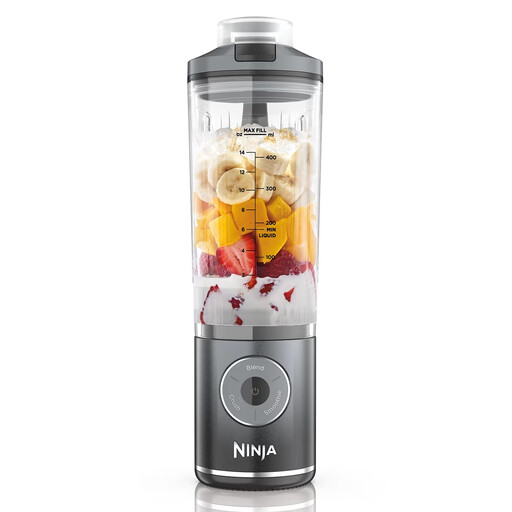
Why This Fits Their Persona: Designed for smoothies and shakes at the office, while travelling or after exercise, without needing a power outlet while blending.
The product information mentions a rechargeable battery, USB charging and a leak-proof lid. Before buying, check the charging time and battery life.
150 W motor, two 530 ml Tritan cups and dishwasher-safe components according to the product information.

Why This Fits Their Persona: A countertop blender with a generous jug for households preparing several smoothies, sauces or other recipes at once.
The stated 2.1-litre jug capacity and 1,200 W motor are suited to larger quantities. Check the MAX marking and the manual for each preparation.
The product information lists 14 manual speed settings, four automatic programmes and a separate pulse function.
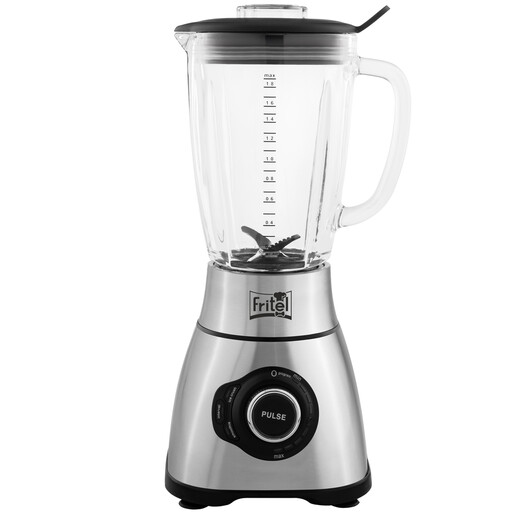
Why This Fits Their Persona: For cooking enthusiasts who regularly prepare smoothies, pesto, dips, purées or iced drinks and want a larger glass jug.
The stated 1.8-litre capacity, three programmes and pulse function make the range of applications clearer than a marketing term such as “high speed” alone.
Glass jug, removable blade unit, dishwasher-safe removable parts and a stated noise level of 75 dB.
Explore our current selection and compare capacity, power, materials and functions based on your intended use.
A hand blender and a countertop blender each have distinct strengths. A hand blender is useful for blending soup directly in a pan, preparing baby food and handling small quantities. A countertop blender is better for larger portions, cold drinks and ice. If you are considering both appliances, first determine which preparations you make on a weekly basis.
For hot soup, choosing a suitable model or using a separate pan is important. Always follow the manual: various personal blenders state that hot liquids must not be processed.
For one person, a personal blender with a capacity of around 475 to 700 ml is practical. Look for a drinking lid if you want to take the cup with you. For several people, a jug of at least 1.2 litres is more convenient. For frozen fruit and ice, check whether the manufacturer explicitly lists these applications.
The lifespan depends on usage, cleaning and workload. Do not run the motor for longer than specified in the manual and avoid overloading it. Regularly check the jug, lid and blade unit for damage. A statutory warranty of at least two years generally applies to consumer products in the EU; additional terms may vary by brand.
Energy consumption depends on both the wattage and the operating time. A 1,200 W blender that runs briefly does not automatically use more energy per preparation than a lower-powered model that needs to run for longer. Compare the operating time, portion size and type of ingredients you plan to process.
