
Vandaag of morgen in huis

Kwaliteit gegarandeerd

Welkomstaanbiedingen ontgrendelen: GRATIS bezorging | Tot 80% korting | Gratis 30 dagen JoyPlus-proefperiode
Download de app
Buying a blender seems straightforward until you have to choose between a smoothie maker, hand blender, portable blender or high-powered blender. Manufacturers often highlight the wattage, number of programmes or an impressive bundle of accessories. But a single specification tells you little about how practical an appliance will be in a British kitchen.
When choosing, focus on how you plan to use it. Will you make a smoothie for one, prepare soup for the family, or blend sauces, baby food and batter too? Below, we cover the main pitfalls, technical details and a few models to suit different needs.
A higher wattage sounds appealing, but it isn’t the only factor that affects the result. The shape of the blades, jug capacity, speed settings and recommended running time all play a part. A compact portable blender, for example, can be handy for soft fruit and shakes, but that doesn’t automatically make it suitable for large quantities or prolonged blending.
As well as checking the power, look at:
A cup of around 400 to 600 ml is suitable for one smoothie or shake. A larger jug is more practical if you’re making drinks for several people. With a cup that’s too small, you’ll have to blend in batches. A large jug, on the other hand, takes up more space and is less convenient if you mainly want to drink on the go.
Think about your storage space too. A portable blender with an integrated cup takes up little room, while a jug blender with a 1.5-litre jug may need a permanent spot on the worktop.
A blender with accessories can replace several kitchen gadgets, but only if you’ll actually use them. A whisk, chopper and beaker are useful for different recipes, but they also add parts you’ll need to store and clean.
Check in advance whether:
A compact model may be enough for simple smoothies and soft ingredients. For frozen fruit, ice cubes or hard vegetables, a more powerful model with a suitable blade set is more practical. However, stated power isn’t directly comparable between brands. Check the speed, available settings and product instructions too.
A smoothie maker with multiple settings gives you more control over the texture. A hand blender with variable speed control is particularly useful for soups and sauces, as you can adjust the speed while blending.
Choose the capacity to suit the way you’ll use it:
Check the material used for cups and jugs. Tritan and BPA-free plastic are often used for drinking cups; glass is heavier, but can be a good choice for use on the worktop. The motor base must not be submerged in water. Always check the cleaning instructions for each part.
Check that the cup or jug locks securely into place and that the appliance only operates when its parts are fitted correctly. Some products display a CE mark, but also check the manual, warnings and information about the EU-based responsible manufacturer.
Don’t blend hot liquids in an appliance that isn’t designed for them. Steam can build up pressure inside sealed cups. Product information for several models also states a maximum running time of around one minute per cycle. Let the motor cool afterwards if the manual advises you to do so.
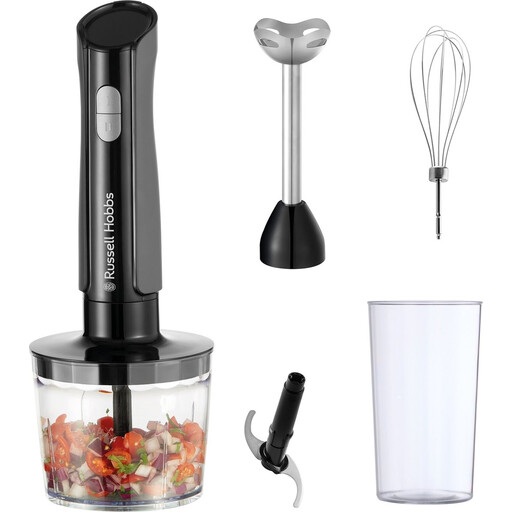
Why it suits this type of user: This hand blender combines blending, chopping and whisking in one compact package. It’s well suited to smaller kitchens and everyday use, without the need for a large jug on the worktop.
The product information lists 500 watts, two speeds, a 500 ml chopper and a 600 ml beaker. This tells you exactly what you’re getting, rather than leaving you to rely on marketing claims.
Removable parts and dishwasher-safe components; two speeds for blending and chopping.

Why it suits this type of user: The 1000-watt motor, 25 speeds and turbo setting give you plenty of control for sauces, soups, smoothies and chopping.
The specified number of speeds gives you a clear idea of how it works. The included chopper has three texture settings, so you’re not relying solely on a general power claim.
PowerBell VPlus blade system, according to the product description; EasyClick attachments and dishwasher-safe accessories.
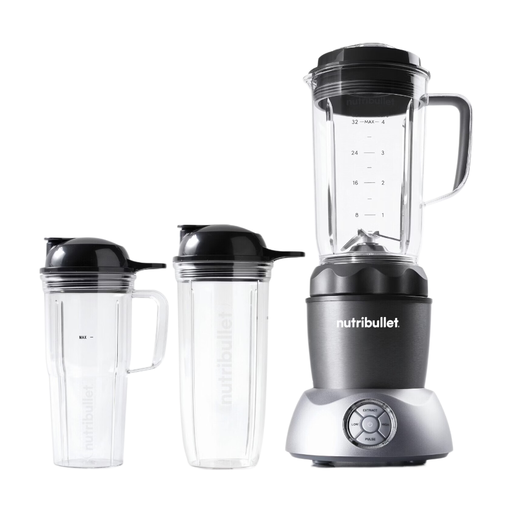
Why it suits this type of user: This blender has a 0.9-litre capacity, 1000 watts of power and settings for cold preparations. According to the product information, it can also handle warm ingredients.
The four settings — low, high, pulse and extract — tell you more than the motor power alone. Be sure to check the manual before blending hot liquids.
1000 watts; 0.90-litre capacity; dishwasher-safe parts, except for the base and blade, according to the product information.
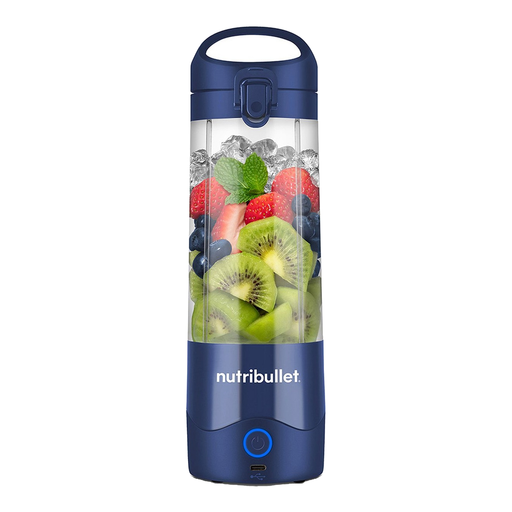
Why it suits this type of user: This cordless blender is designed for a single serving on the go, whether you’re at the office, on a train journey or heading home after a workout.
The product information lists a 475 ml capacity, USB-C charging, a charging time of around one hour and more than 15 blends per charge. This gives you a clear idea of what its portability means in practice.
17,000 revolutions per minute according to the product specifications; leakproof drinking lid and removable parts that can be rinsed clean.
We’ve put together a complete, up-to-date list of products that meet these strict selection criteria and current European safety requirements.
A hand blender is useful when you want to purée soup directly in a saucepan or tall bowl. A jug blender can handle larger portions, but you should only use hot liquids if the manufacturer explicitly says it’s safe to do so. Always follow the safety instructions and let ingredients cool first if necessary.
Lower power is often enough for soft ingredients. If you regularly want to blend frozen fruit or ice, look for a model with a higher stated wattage, a suitable blade set and a pulse function. Don’t compare wattage alone: capacity, speed and running time also help determine whether an appliance is right for your recipes.
Energy use depends on the wattage and the short running time for each blend. A 600-watt appliance running for one minute uses a theoretical 0.01 kWh. The actual cost depends on your electricity tariff and how often you use it. With cordless models, you’ll also need to factor in the cost of charging the battery.
