
Vandaag of morgen in huis

Kwaliteit gegarandeerd

Welkomstaanbiedingen ontgrendelen: GRATIS bezorging | Tot 80% korting | Gratis 30 dagen JoyPlus-proefperiode
Download de app
Buying a new blender or mixer seems simple—until you look at the specifications. You're bombarded with hundreds of watts, dozens of functions, and endless marketing terms. Many appliances promise to do it all but end up as unused 'cabinet clutter'. As a Joybuy Product Recommendation Officer, I'm here to help you cut through the noise so you can choose an appliance you'll actually use.
Before you make a choice, it's wise to understand the most common pitfalls that lead to buyer's remorse.
smoothie maker, 300-500 watts is more than enough. A device with 1000+ watts is unnecessary for light tasks and consumes more electricity.food processor that promises to blend, knead, chop, and juice often doesn't perform any of these tasks particularly well. For example, the motor might be too weak for heavy dough, or the blending function is subpar.To avoid a bad purchase, it's best to base your choice on objective specifications that match your needs. These are the most important points to consider.
The power, expressed in watts, determines the motor's strength. But more isn't always better. Match the wattage to what you plan to prepare:
blender for smoothies or an immersion blender often falls into this category.stand mixer for dough needs a powerful motor that can run for extended periods. Think 1000 watts or more.The durability of your appliance heavily depends on the materials used.
Not every appliance is a blender. The different types each have their own specialty:
personal blender is a compact version with a drinking cup as the jug.mixer with a bowl is a prime example.Based on these criteria, we have selected a few popular choices that suit different user profiles.

Why This Fits Their Persona: Ideal for those who want to make a fresh smoothie quickly every day without any hassle. Its compact size fits in any kitchen, and the operation is very straightforward. Perfect for one or two people.
This model has an efficient 350W motor, enough for smoothies without unnecessary power consumption. The removable parts are dishwasher-safe, thus avoiding the cleaning obstacle.
According to Philips, the ProBlend technology ensures a smooth, lump-free result. Its compact design and two speed settings make it a practical and focused appliance.
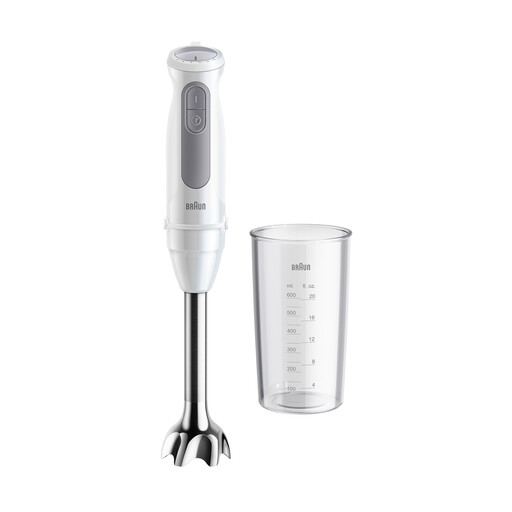
Why This Fits Their Persona: For the chef who loves making soups, sauces, and dips. An immersion blender lets you work quickly and directly in the pot, which saves on washing up. This model from Braun offers great control and power for various tasks.
This is a specialised tool that excels at its job, unlike a mediocre 'all-in-one' machine. The SplashControl technology prevents splashing, a common annoyance.
The powerful 1000W motor and 21 speed settings give you complete control over the texture. The EasyClick Plus system makes swapping accessories simple.
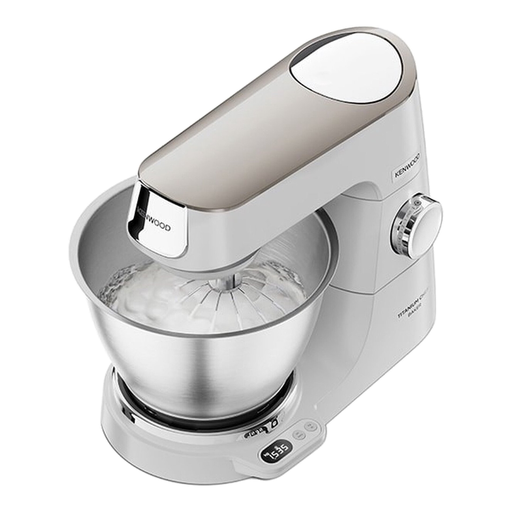
Why This Fits Their Persona: For those who are serious about baking and need a reliable machine for kneading heavy dough and mixing large quantities. The built-in scale is a major advantage for precision baking.
This is a true `stand mixer for dough`, not a blender with a weak dough hook. The 1200W motor is designed for heavy, prolonged tasks, avoiding the disappointment of an underpowered 'all-in-one' machine.
The built-in scale saves time and washing up. The LightLift head makes it easy to add ingredients during mixing. A durable investment for the serious baker.
We have compiled a complete, up-to-date list of products that fully meet these strict selection criteria and safety regulations.
This depends entirely on your use case. For daily smoothies and puréeing cooked vegetables, 300-650 watts is sufficient. If you plan to regularly crush ice cubes, frozen fruit, or hard nuts, opt for a model with 600 watts or more and a pulse or ice-crush function. For kneading heavy dough in a stand mixer, 1000 watts or more is recommended.
Most standard immersion blenders are not designed for this. The blades and motor can be damaged. There are more powerful models, such as a Braun immersion blender, with special accessories that can handle it, but for regular ice crushing, a countertop blender with a strong motor and a sturdy jug is a better and safer choice.
A blender specialises in liquefying and puréeing ingredients in an enclosed jug, ideal for drinks and soups. A stand mixer is a more versatile appliance with an open bowl and various attachments (like a dough hook, whisk, and flat beater) for tasks like kneading, mixing, and whipping. Although some stand mixers have a blender attachment, their primary function is heavier mixing and kneading work.
