
Making a smoothie with limited worktop space
You make berry smoothies in a small kitchen and want to know whether the blender, cup and separate parts will fit on your worktop and in your cupboard.


If you usually make one smoothie at a time, a personal blender with a blending cup is often a better fit; if you regularly make larger batches, compare a compact jug blender. Measure the space needed for the complete set, and assess frozen berries separately: the Consumentenbond warns that many budget blenders struggle with frozen fruit, and wattage alone won’t predict the results.
You make berry smoothies in a small kitchen and want to know whether the blender, cup and separate parts will fit on your worktop and in your cupboard.
You regularly use frozen fruit and want to know how a blender performs for this task, rather than simply comparing motor power.
You usually make one portion and want to blend, take it with you and clean up with as few separate steps as possible.
When choosing a blender for berry smoothies in a small kitchen, space, using frozen fruit, portability and portion size can all be deciding factors.
| What to consider | What should you check? | Who is this important for? |
|---|---|---|
| Worktop and storage space | Compare the appliance’s dimensions and height with the space available; include the cup, jug and any separate parts. | I want the blender and all its parts to fit in my small kitchen. Around 36% of consumers put space at the top of their list. |
| Frozen berries | Look for a review that tests blending frozen fruit, and read the instructions for the ingredients and use of the exact model. | If I often use frozen berries, I want to know how the model handles them. Around 29% of consumers give this their highest priority. |
| Taking it with you and cleaning | Check whether a drinking lid is included and which parts the manufacturer says are dishwasher-safe. | I want to take my smoothie with me straight away and put everything away without a complicated clean-up. This is a top priority for around 21% of consumers. |
| Portions and other uses | Compare the usable capacity of the jug or cup with your usual serving size, and check which accessories are included. | If I often make several portions or want to use the blender for other things, that matters more than a small footprint. Around 14% of consumers prioritise larger portions or versatility. |
Power alone doesn’t tell you how well a blender makes a smoothie with frozen fruit. The Consumentenbond notes that many budget blenders struggle with frozen fruit; this doesn’t apply to every individual model.
Compare a review that tests frozen fruit, and check the instructions for the exact model.
The motor base isn’t the whole set: cups, a jug and lids also take up space.
Measure the space available and compare it with the dimensions of the appliance and the parts included with the model you choose.
Cleaning instructions can vary by part. For the NB603DG, nutribullet says the cup can go on the top rack, while the blade should be cleaned with soap and water.
Read the cleaning instructions for every part of your own model.
The Blend & Go 3000 Series, including the HR2670/01, is designed for making a single smoothie in a portable cup.
The Original 600 NB603DG is a personal blender supplied with a 700 ml cup; check which bundle you’re choosing.
The PowerBlend 1 JB1051BK is a compact jug blender for anyone who also wants to use a larger blending jug.
The Blend Up BL19H4F0 is designed for anyone looking for a compact model with automatic programmes and two bottles to take away.
This selection features personal blenders with a cup for making a smoothie and taking it with you.
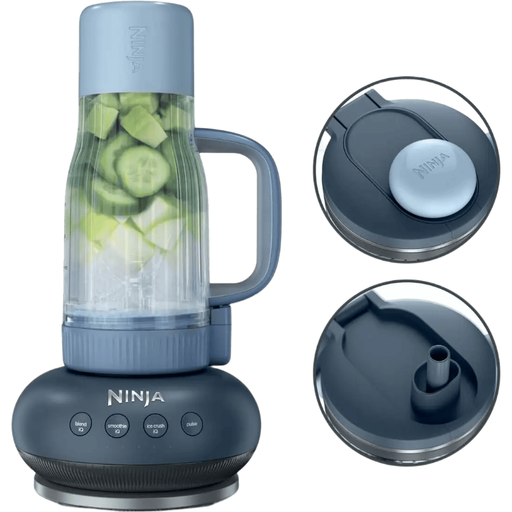 No image available
Suitable if you want to make a smoothie in the included cup and take it with you; the product name also mentions crushing ice.
710 ml travel cup with lid; 3 automatic programmes; according to the product name, the separate parts are dishwasher-safe.
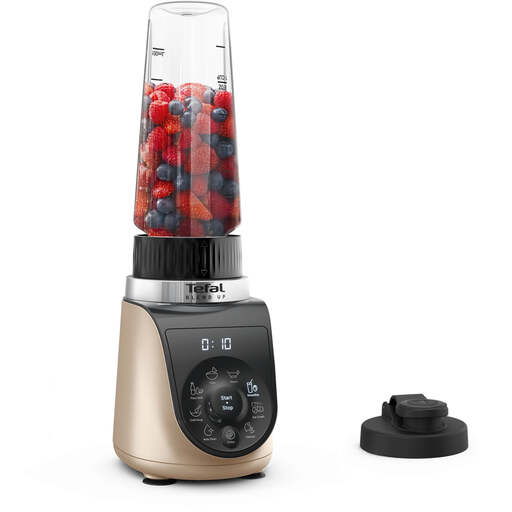 No image available
A personal smoothie maker for anyone looking for a compact model; the product description mentions frozen fruit as a use.
The product description lists programmes and blade technology; this isn’t an independent assessment of its results with frozen berries.
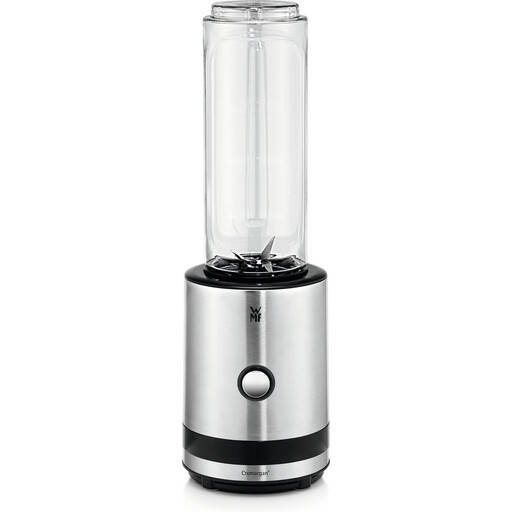 No image available
Suitable if you want to make a smoothie and take it with you in a drinking bottle; the product description mentions two bottles.
Two 600 ml drinking bottles; the product name mentions stainless steel.
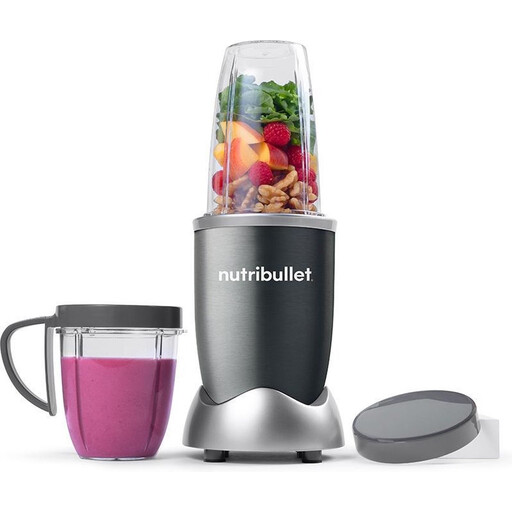 No image available
Suitable if you want to make a smoothie and drink it straight from an included cup; the product description mentions strawberries as a smoothie ingredient.
The product name lists two drinking cups and a stay-fresh lid; the product description gives the cup capacity as 700 ml.
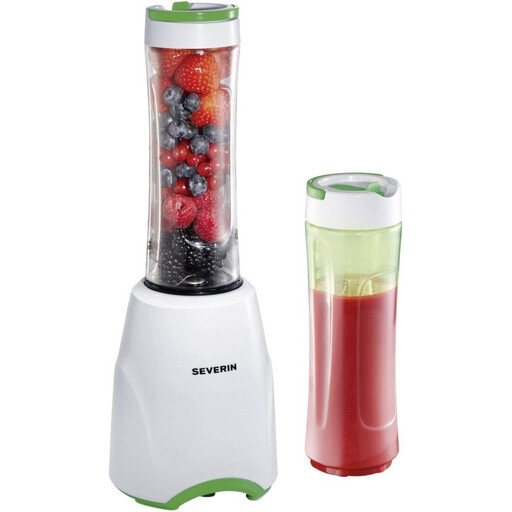 No image available
Suitable if you want to make a smoothie and take it with you; the product description mentions two removable drinking cups.
300 W; two Tritan drinking cups. The stated dimensions are 13,3 × 13,3 × 36,4 cm.
No, wattage alone won’t predict how a blender handles frozen fruit. The Consumentenbond tests smoothies with frozen banana and blueberries, among other things, and reports that many budget blenders struggle with frozen fruit; this isn’t a judgement on every individual model.
Measure your worktop and storage space and compare them with the dimensions of the model you’re considering. Also allow for the height, cup or jug, lid and any extra parts: the motor base isn’t the whole set.
That depends on the model and the part. For the NB603DG, nutribullet says the cup can go on the top rack of the dishwasher; the brand says the blade should be cleaned with soap and water. Follow the instructions for your own model.
A personal blender with a blending cup suits anyone who usually makes one portion and wants to take it with them straight away. A compact jug blender is worth comparing if you regularly make larger quantities; also check that the jug and any extra cup will fit in your kitchen.