
Small portions
You’re making a modest amount of thick dressing for a meal and don’t want to rely on a large blender jug.


For a modest amount of thick avocado dressing, you could start with a hand blender or compact blender. For larger quantities to serve several people, a jug blender may be a better fit. Before you choose, check the smallest quantity the exact model can process according to its instructions, and which parts are safe to clean in which way. The maximum capacity won’t tell you whether it can blend a small portion well.
You’re making a modest amount of thick dressing for a meal and don’t want to rely on a large blender jug.
You’d prefer to make your usual quantity for everyone in one go, and are considering using the appliance for larger preparations too.
You want to be able to take the parts apart and clean them easily after your meal. Check the instructions for the parts that come into contact with food.
Start with the quantity in your usual recipe. Then decide whether you’d rather blend the dressing in a separate beaker, use a compact blending cup or have the extra space of a jug.
A good fit if: you usually want to blend a smaller portion in a suitable beaker and have limited storage space.
Bear in mind: you hold the blender yourself, so check which attachment and beaker are included with the model.
A good fit if: you’re looking for a smaller blending cup or also want to use the appliance for individual drinks.
Bear in mind: the cup’s capacity doesn’t tell you the smallest suitable quantity of thick dressing it can blend.
A good fit if: you regularly make a larger portion for several people or want to blend larger quantities too.
Bear in mind: a larger jug takes up more space and may mean more parts to clean.
| What to consider | What to check before buying | Who is this important for? |
|---|---|---|
| Blending a small, thick portion | Check the minimum quantity stated in the instructions for the exact model, and whether the included beaker or attachment is intended for your recipe. | I usually make a small, thick portion and want to blend it in a suitable beaker. Around 36% of consumers give small portions top priority. |
| Making enough for everyone | Compare the volume of your usual recipe with the usable capacity of the specific cup or jug. | When I’m cooking for several people, I’d prefer to blend my usual recipe in one go. Around 29% of consumers prioritise making enough for everyone. |
| Cleaning after use | Check the instructions for each part to see which are dishwasher-safe. | After a meal, I don’t want to be left with lots of unnecessary loose parts, so I check which ones can actually go in the dishwasher. Around 21% of consumers put cleaning first. |
| Storage space and other uses | Check the dimensions, included cups and features of the exact version. | If my kitchen has limited storage space, I’m looking for a compact appliance I can use for other preparations too. Around 14% of consumers prioritise space and versatility. |
The stated capacity tells you how much room there is for blending, but not the smallest quantity of thick dressing the model can process.
Compare your usual recipe with the instructions for the specific cup or jug.
If the quantity doesn’t suit the model, you may need to blend in several batches or use a different suitable cup.
Cleaning instructions can vary by part and version. Cleaning parts incorrectly may damage them.
Before using the appliance for the first time, check which removable parts the manufacturer says are dishwasher-safe.
In the Netherlands, your statutory guarantee rights apply alongside any commercial warranty.
Compare any extra cover with the rights you already have. ACM ConsuWijzer explains that statutory guarantee rights exist alongside the seller’s warranty.
MultiQuick hand blenders are worth considering if you want to blend dressing in a separate beaker. The MQ10.201MWH is one example designed for sauces.
The Original 600 NB603DG is an example of a personal blender for smaller preparations.
The VitaPower MMB6141B is a jug blender to compare if you’re looking for more blending space.
The Blend Up BL19H4F0 is a compact blender supplied with two cup sizes.
The HR3020/20 is a jug blender to compare if you’re also considering making larger preparations alongside dressing.
This selection includes blenders for sauces, dressings and other preparations, from compact models to jug blenders. Before use, check that the parts which come into contact with the dressing meet the applicable Dutch requirements for food-contact materials. The Netherlands Food and Consumer Product Safety Authority explains these requirements.
 No image available
An option to compare if you want to make larger preparations as well as dressing.
The product name lists a 1.500 ml blending jug, a 600 ml travel bottle and a 300 ml chopper cup.
 No image available
Worth comparing if you’re looking for a jug blender for sauces and larger preparations.
The product name lists a capacity of 1,5 l and three speeds.
 No image available
A compact blender option to compare if you’re looking for a smaller blending cup.
The product name lists a capacity of 0,6 l and a power rating of 350 W.
 No image available
A jug blender to compare if you want to make a variety of preparations as well as dressing.
The product name lists a capacity of 1,9 l and a power rating of 450 W.
 No image available
A jug blender to compare if you also want to make purées or larger preparations.
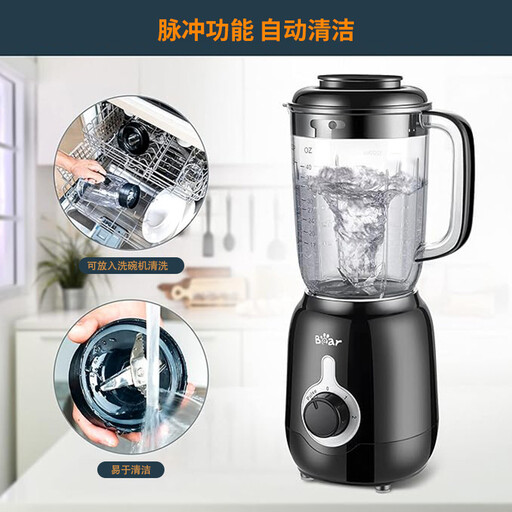
The product name lists two speeds and a pulse function. According to the product information, you must add at least 300 ml of liquid during use; check whether that suits your recipe.
For a modest quantity, a hand blender is a sensible place to start; for larger quantities, a blender jug may be a better fit. First work out the volume of your recipe, then check the instructions for the cup or jug supplied with the exact model.
It varies by model and part. For the MQ10.201MWH, Braun refers you to the manual for details of dishwasher-safe parts; Bosch lists dishwasher-safe parts for the MMB6141B. Check the instructions for your version before cleaning any parts.
Follow the storage advice for the ingredients you’ve used. The Netherlands Nutrition Centre advises keeping leftovers covered in the fridge for up to two days; the exact ingredients in the dressing may require extra care.
You don’t need extra cover to have statutory guarantee rights: these apply alongside any seller’s or manufacturer’s warranty. ACM ConsuWijzer advises treating statutory guarantee rights as a separate right alongside the seller’s warranty.
In the Netherlands, articles intended to come into contact with food must meet the applicable requirements for food-contact materials. The Netherlands Food and Consumer Product Safety Authority explains these requirements; check the product information for the parts supplied with the specific model.