
Vandaag of morgen in huis

Kwaliteit gegarandeerd

Welkomstaanbiedingen ontgrendelen: GRATIS bezorging | Tot 80% korting | Gratis 30 dagen JoyPlus-proefperiode
Download de app
A dark, quiet bedroom is the foundation for a good night's sleep. Yet, the search for the right blackout curtains is often unnecessarily complicated. Many products make grand promises but don't always deliver what you expect. As a Joybuy Product Recommendation Officer, I'll help you cut through the marketing claims and focus on what really matters.
Before you make a decision, it's wise to know the most common pitfalls buyers encounter.
insulating curtains depends on measurable factors, not marketing jargon.To avoid a bad purchase, it's better to focus on a few objective characteristics. These specifications provide a much clearer picture of a curtain's quality and performance.
Not every blackout curtain is created equal. Most models fall into the 'dimout' category. These typically block 85% to 95% of light, which is sufficient for most people for a bedroom curtain. They are often made with a triple-weave technique: three layers of fabric interwoven, with a black, light-blocking thread in the middle layer.
If you want to make a room truly pitch-black, for instance, for a nursery or if you work shifts, you're looking for 100% blackout. These curtains usually have an extra coating or a sewn-in liner that stops all light. Note: lighter colours naturally block slightly less light than darker colours, unless they have a special blackout lining.
The effectiveness of thermal curtains and noise-reducing curtains is directly linked to the density and weight of the fabric. A heavier fabric, for example, 230 g/m? (grams per square meter), creates a better barrier against cold, heat, and outside noise. The aforementioned triple-weave construction also contributes significantly to this. It forms a buffer of still air between the window and the room, which helps to keep the temperature stable and reduce energy costs.
Most ready-made curtains with eyelets are easy to install. The metal grommets slide smoothly over almost any standard curtain rod. The most important thing is to choose the right size. For beautiful draping and optimal light-blocking at the sides, the total width of the curtains should be approximately 1.5 to 2.6 times the width of your window or curtain rod. Measure the length from the top of the rod to the point where the curtain should end, for example, the windowsill or the floor.
Based on these objective criteria, we have selected a number of products that suit different needs and situations.
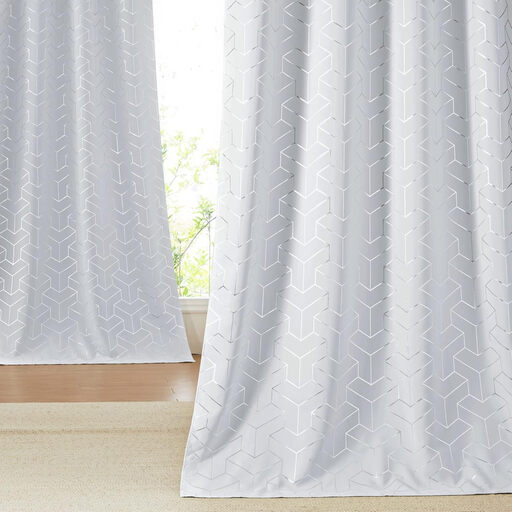
Why This Fits Their Persona: This curtain combines a high degree of light-blocking with a subtle, modern geometric pattern. Ideal for those who don't want to sacrifice ambiance for functionality in their living room or bedroom.
The manufacturer claims a realistic light-blocking capability of 85-95%, not an unrealistic 100%. The triple-weave technology provides a transparent basis for its performance.
Stylish design with silver foil print; simple installation with metal eyelets.
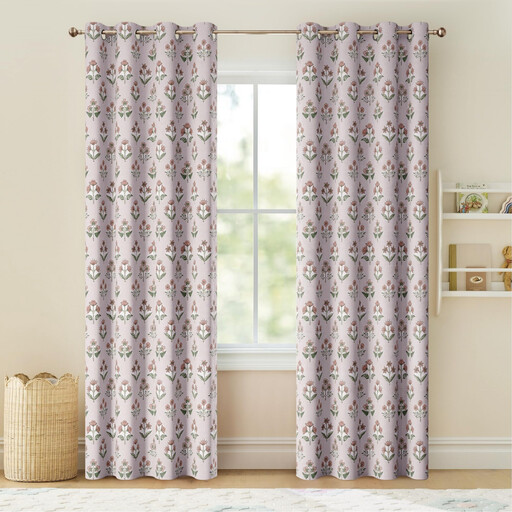
Why This Fits Their Persona: Specifically designed for complete darkness, ideal for a nursery or for people who are extremely sensitive to light. The soft, floral print prevents a look that is too clinical.
According to the manufacturer, this curtain is designed with a special layer that blocks 100% of light. This directly addresses the 'near-blackout' pitfall.
Offers 100% blackout according to specifications; soft, atmospheric design suitable for bedrooms or nurseries.
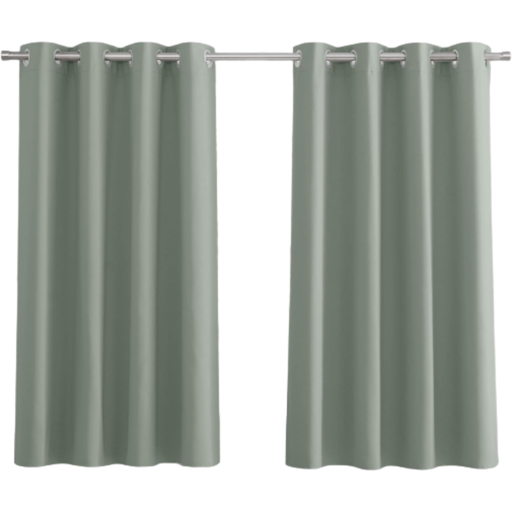
Why This Fits Their Persona: The heavy fabric (230 g/m?) and triple-weave construction make this a strong contender for thermal insulation. This helps reduce heating costs in the winter and keep heat out in the summer.
The claim of insulation is backed by an objective specification: the high fabric weight of 230 g/m?. This is a measurable indicator of quality, not a vague marketing term.
Heavy fabric (230 g/m?) for effective thermal insulation; made with recycled materials (GRS-certified).
We have compiled a complete, up-to-date list of products that fully meet these strict selection criteria and safety standards.
First, measure the width of your curtain rod (not the window itself). Multiply this measurement by 1.5 to 2.6 for the total width of the curtains you need. For the length, measure from the top of the rod to where the curtain should fall (e.g., the windowsill or 1-2 cm above the floor).
'Dimout' means the curtains block 85% to 95% of the light, making the room significantly darker but not completely pitch-black. '100% blackout' means the fabric, often thanks to a special lining or coating, lets no light pass through. For absolute darkness, this is the best choice.
Yes, thermal curtains can make a noticeable difference. The thick, heavy fabric acts as an insulating layer in front of the window. It creates a buffer of still air that helps reduce heat loss in the winter and keep heat out in the summer. The effect is greatest with single-pane or older double-pane windows.
