
Vandaag of morgen in huis

Kwaliteit gegarandeerd
Download de app
Categorieën

It's an easy mistake to make: you order curtains described as 'blackout', only to find the first rays of sun still lighting up your bedroom. The distinction between light-filtering and true blackout fabrics is crucial. This guide will help you make an informed decision based on product features, ensuring you find the perfect blackout curtains for your needs.
When selecting ready-made curtains, several key parameters determine their effectiveness and functionality.
The degree of light blocking is often expressed as a percentage. Many effective blackout curtains use ‘triple weave’ technology. This means the fabric is constructed from three layers: a front and back layer with a densely woven black yarn sandwiched in between. This middle layer is responsible for blocking the light. Fabrics with this technology typically block 85% to 98% of light, depending on the curtain's colour (darker colours often perform better).
The same density that blocks light also contributes to thermal and acoustic insulation. Dense polyester fabrics can help keep heat out in the summer and retain it in the winter. This makes them effective insulating curtains or thermal curtains, which can contribute to a lower energy bill. While no curtain is completely soundproof, high-density noise-reducing curtains can help muffle ambient sounds like traffic.
A popular and practical hanging system uses metal rings (eyelets). Eyelet curtains are easy to install: you simply slide the curtain rod directly through the rings. This ensures smooth movement when opening and closing and creates a clean, modern drape. Always check the inner diameter of the rings and the diameter of your curtain rod to ensure a proper fit.
Most ready-made blackout curtains are made from 100% polyester. This material is durable, more wrinkle-resistant than natural fibres, and relatively easy to maintain. Always check the care label. Many models can be machine-washed at a low temperature, but some may require hand washing.
Below is a selection of products, analysed based on their specifications and functionality.
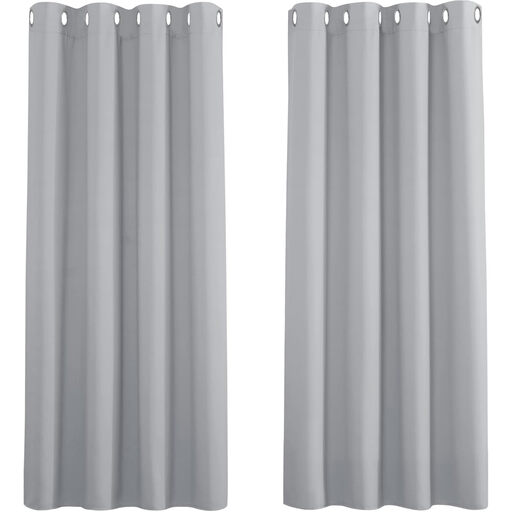
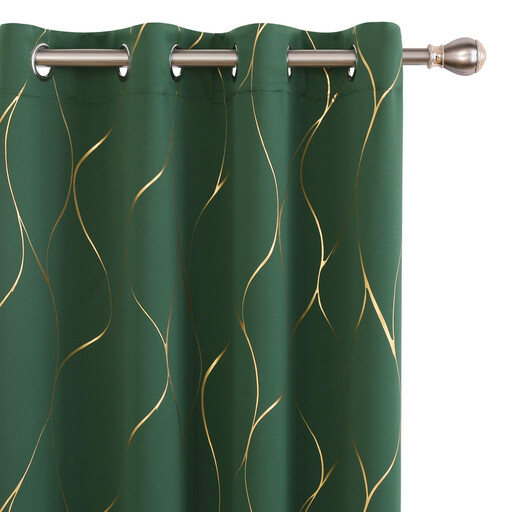
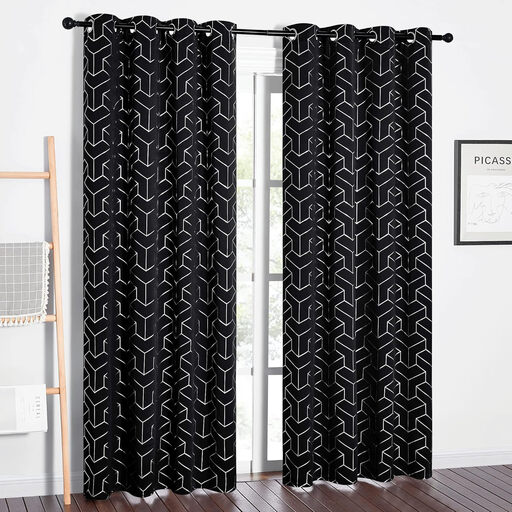
Ready-made curtains offer great convenience, but sometimes a window requires a custom solution, or you may have a specific fabric or hanging method in mind. In that case, you might consider making or assembling your own curtains. A crucial component for this is the curtain rings. For a durable and smooth operation, you can browse our selection of metal curtain rings. With these, you can transform any suitable fabric into a functional eyelet curtain.
The terms are often used interchangeably, but there is a technical difference. Blackout typically means that 85-99% of light is blocked. This is sufficient for most bedrooms. 100% blackout is achieved with special coatings or linings and lets absolutely no light through. These are often used in photo studios or for people who need to sleep in complete darkness.
Blackout curtains can help dampen outside noise, improving a room's acoustics. The dense, heavy fabric absorbs sound waves better than thin curtains. However, they are not fully soundproof and cannot replace a professional acoustic solution. They primarily reduce high and mid-range frequencies, such as voices or light traffic.
Always check the care label on the specific product. Most polyester blackout curtains can be machine-washed on a cold, delicate cycle (maximum 30°C). Do not use bleach and do not put them in the dryer, as high heat can damage the fabric or any coating. Hang them immediately after washing to minimise wrinkles. Curtains with foil prints are best washed inside out or by hand to protect the design.