
Vandaag of morgen in huis

Kwaliteit gegarandeerd

Welkomstaanbiedingen ontgrendelen: GRATIS bezorging | Tot 80% korting | Gratis 30 dagen JoyPlus-proefperiode
Download de app
Whether you need a dark bedroom for better sleep or want to keep your living room cool during a heatwave, the demand for blackout curtains is clear. However, the market is flooded with products that over-promise and under-deliver. Many curtains are sold as "blackout" but still let in a frustrating amount of light. Others claim to be "insulating" but do little to regulate your home's temperature.
As a Product Recommendation Officer at Joybuy, I see the challenges consumers face every day. In this guide, we'll discuss the most common pitfalls and provide practical tips to help you make the right choice.
Before you invest in new window treatments, it's crucial to be aware of a few common misconceptions.
To avoid the pitfalls above, focus on three concrete specifications. These determine whether a curtain truly performs its function.
Look beyond the generic term "blackout." Search for products that explicitly state 100% blackout. These curtains are typically made with a special, densely woven black middle layer or a coated backing that lets no light through. This is a non-negotiable requirement for anyone seeking absolute darkness, such as night-shift workers or light sleepers. A room-darkening curtain might suffice for a living room curtain, but for the bedroom, 100% blackout is the superior choice.
The insulating performance of a curtain depends on the thickness and composition of the fabric.
A perfect blackout curtain loses its effectiveness if it doesn't fit properly. Measure the width of your curtain rod and multiply it by 1.5 to 2 for beautiful fullness. For the length, measure from the rod to your desired height (floor or windowsill). Also, check the hanging system: grommets, tabs, or a pleat tape require different installation methods and affect the final look.
To help you with your choice, we have selected a few products that suit different needs and interior styles.
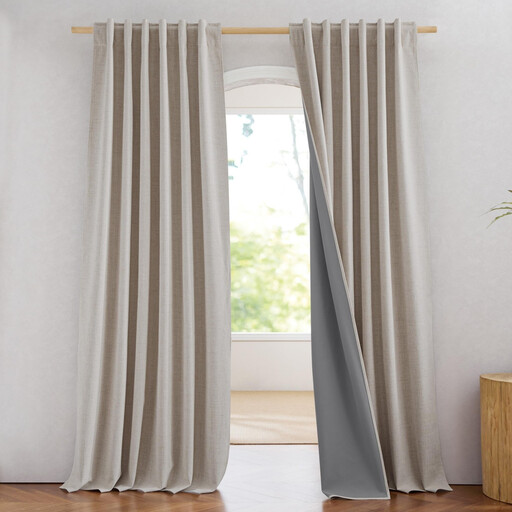
Why This Fits Their Persona: This person seeks the warm, natural look of linen curtains for their living room or bedroom but is unwilling to compromise on functionality. Style and practicality must go hand in hand.
This curtain is explicitly 100% blackout, thus avoiding the "room-darkening" trap. The thermal lining provides a concrete insulating function, rather than a vague promise.
Combines the aesthetic of linen with complete light-blocking and thermal insulation. The fabric feels heavy and high-quality.
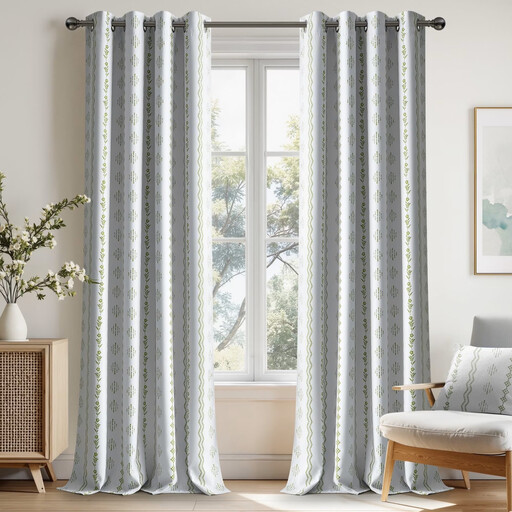
Why This Fits Their Persona: For those who love to incorporate the latest trends, like a Boho style, into their interior. A printed curtain makes a statement, but the functional requirements of blackout and insulation remain just as important.
This is not a case of 'style over substance.' The trendy zigzag and floral pattern is combined with a guaranteed 100% blackout function and thermal properties.
Offers a distinct Bohemian style without sacrificing the core functions of light-blocking and insulation. The sage green color is modern and versatile.
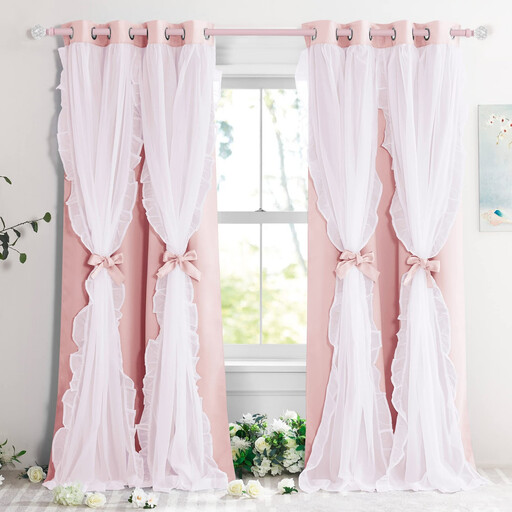
Why This Fits Their Persona: Parents looking for a functional yet playful and charming kids' curtain. Complete darkness isn't always desirable; a softly dimmed effect can be more comforting for a child.
This product is honestly described as "Room Darkening," not 100% blackout. This manages expectations correctly and avoids the pitfall of a misleading claim.
The double-layer design with a sheer voile overlay creates a dreamy and decorative effect, while the back layer makes the room dark enough for a nap.
We've curated a complete, up-to-date list of products that fully meet these strict selection criteria.
Check the product description for the specific term 100% blackout or a description of its construction, such as an "interwoven black liner" or a "coated backing." Products that only mention "blackout" or "room-darkening" likely do not offer complete light blockage.
Yes, thermal curtains can make a noticeable difference. According to manufacturer measurements, they can reduce heat loss through windows in the winter and limit heat gain in the summer. The effect is greatest with single-pane or older double-pane windows. The savings depend on your heating habits, the insulation of the rest of your house, and how consistently you keep the curtains closed.
