
Vandaag of morgen in huis

Kwaliteit gegarandeerd

Welkomstaanbiedingen ontgrendelen: GRATIS bezorging | Tot 80% korting | Gratis 30 dagen JoyPlus-proefperiode
Download de app
A dark, quiet bedroom isn't a luxury; it's a necessity for a good night's sleep. Blackout curtains seem like the perfect solution, but the market is filled with pitfalls. Many products over-promise and under-deliver, leaving you with curtains that bleed light, insulate poorly, or lose their elegant drape after just a few months.
As a Product Recommendation Officer at Joybuy, I see where things go wrong every day. To help you make the right choice, I've compiled the most common mistakes and the key factors to consider. This way, you can invest in comfort that will last for years.
Before you spend a dime, be aware of these common missteps. They can be the difference between a restful oasis and a source of frustration.
To avoid the pitfalls above, focus on the following three specifications. These determine the actual performance of your curtains.
The effectiveness of a blackout curtain depends on its weaving technique. Many high-quality curtains use triple-weave technology. This means a black, light-blocking thread is woven into the middle of the fabric, sandwiched between two coloured layers.
The blackout level is often expressed as a percentage:
Good insulating curtains do more than just block light. The dense, heavy fabric of thermal curtains acts as a barrier. In winter, it keeps the heat in, and in summer, it keeps the heat out. This can make a noticeable difference on your energy bill.
A fabric weight of 230 GSM or higher is a good benchmark for effective thermal and sound-dampening curtains. While they can't replace professional soundproofing, they do muffle ambient noise from outside, contributing to a quieter bedroom environment.
Check which system you have at home: a rod or a track.
For the correct size, measure the width of your window (or the track/rod) and multiply it by 1.5 to 2.5 for a beautiful, full drape. The length depends on your preference: to the windowsill, below it, or to the floor. Many ready-made curtains are available in standard sizes.
Here are a few options that score well on the above criteria, matched to different lifestyle needs.
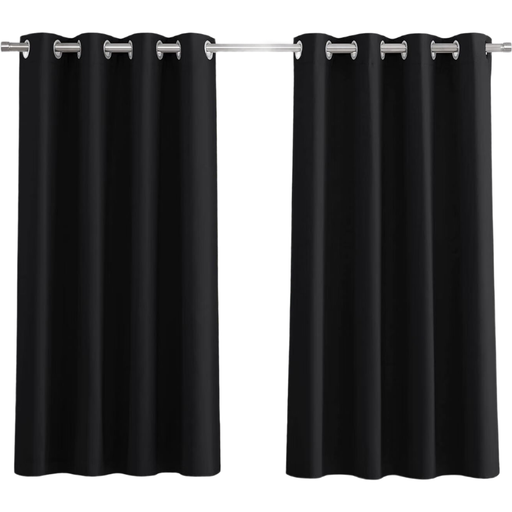
Why This Fits Their Persona: For those who need absolute darkness. Ideal for shift workers, light sleepers, or for a home cinema setup. The black colour maximises the light-blocking effect.
This curtain bypasses the "100% blackout" myth by specifying a realistic and high blackout level of 85-95%, thanks to its dark colour and triple-weave fabric.
The heavy fabric (230 GSM) ensures maximum light blockage and also offers good thermal and sound-dampening properties. Made with at least 50% recycled material.
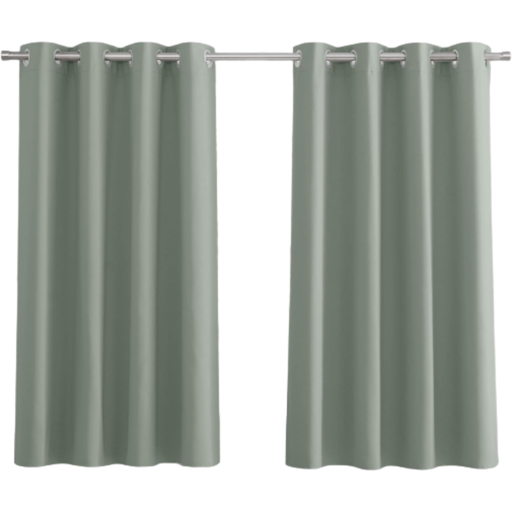
Why This Fits Their Persona: Perfect for anyone looking to lower their energy bill. These curtains are designed to regulate room temperature, meaning the heating in winter and the air conditioning in summer don't have to work as hard.
This curtain doesn't just focus on blackout capabilities but emphasizes the quality of the fabric. The high weight of 230 GSM is a concrete specification that avoids the pitfall of a fabric that is too thin and non-insulating.
The thermal properties are its greatest asset. The triple-weave fabric effectively blocks both heat and cold. Additionally, the product is certified with OEKO-TEX STANDARD 100 and the Global Recycled Standard.
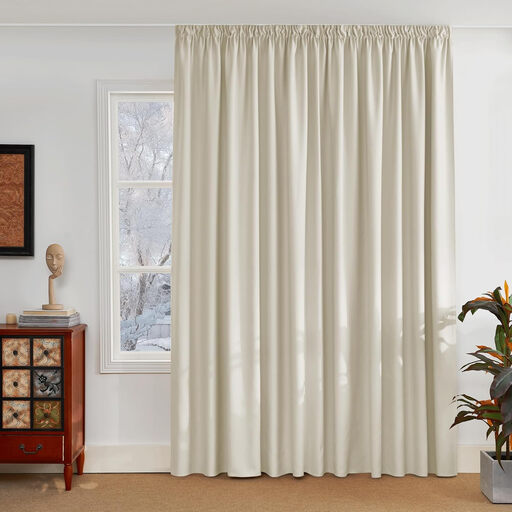
Why This Fits Their Persona: Ideal for renters with non-standard window sizes or uncertain hanging systems. This extra-wide curtain (300 cm) covers large windows, and the pencil pleat header is compatible with both tracks and rods.
This product avoids the pitfall of the wrong hanging system. The pencil pleat header is universally compatible, so you won't face any surprises when hanging it in a new home.
The flexibility and width are its main advantages. A single panel can cover a large window, making it a cost-effective solution. The heavy fabric (230 GSM) also provides good insulation.
We have compiled a complete, up-to-date list of products that fully meet these strict selection criteria and local standards.
Darker colours absorb more light. A black curtain made of the same fabric and thickness as a white one will always be more effective at blocking light. For example, where a light beige curtain might block 60-75% of light, a black or navy blue curtain can achieve up to 85-95% light blockage. For the darkest possible room, a dark colour is the recommended choice.
Measuring is simple. For the width: measure the total width of your curtain track or rod and multiply it by 1.5 to 2.5. A factor of 2 provides a nice, full pleat. For the length: measure from the top of the track or rod to the point where you want the curtain to end (e.g., the windowsill, 15 cm below it, or 1-2 cm above the floor).
Yes, to a certain extent. While they are not dedicated acoustic panels, heavy, dense sound-dampening curtains act as a muffling layer. They absorb sound waves and can help reduce street noise, echo within the room, and sound from neighbours. Don't expect miracles, but it certainly contributes to a quieter environment.
