
Vandaag of morgen in huis

Kwaliteit gegarandeerd

Welkomstaanbiedingen ontgrendelen: GRATIS bezorging | Tot 80% korting | Gratis 30 dagen JoyPlus-proefperiode
Download de app
A toaster may seem simple, but small differences can have a big impact on how convenient it is to use every day. A model with narrow slots may struggle with thick slices of sourdough, while an appliance with lots of features won’t necessarily suit the way you use it. A glossy casing can also show fingerprints easily.
So when choosing a toaster, don’t just focus on the colour or power. Pay particular attention to the slot size, number of slices, browning settings and the features you’ll actually use.
The term toaster with wide slots sounds appealing, but check the length and shape of the slots too. Wide slots are suitable for thicker slices of bread, bagels or rolls, but a long-slot model may be more useful for a large slice or a piece of baguette.
Also check whether the bread is automatically centred. Without proper centring, one side may come out darker than the other.
A toaster with 7 browning settings gives you more options, but the result also depends on the type of bread, its thickness and its moisture content. A thin slice reacts differently from a thick slice of wholemeal bread. So think of the settings as an adjustment range, rather than a guarantee of a particular shade.
A toaster with a defrost function can be useful for bread from the freezer. A toaster with a reheat function warms toast that has already been toasted without running the same programme again. Do check that the buttons are easy to understand and that the bun warmer sits securely on the appliance.
A removable crumb tray is more important than many buyers realise. Without one, crumbs collect at the bottom of the appliance, making it harder to clean.
A 2-slice toaster is usually enough for one or two people. Two short slots take up little space and are well suited to everyday breakfasts. In a household where several people eat toast at the same time, a 4-slot toaster can save time.
Check the difference between four separate slots and two extra-long slots. A long-slot model can accommodate different bread sizes, but it won’t always offer four independent settings.
Choose a model with wide or variable-width slots if you regularly toast thick slices of bread, bagels or rolls. Standard slots are often sufficient for thin, square sandwich bread. If you mainly use long slices or baguette, consider a long-slot model.
A toaster for bagels and thick slices of bread needs more than just wide slots. Check whether it also has a high-lift function, so small pieces of bread don’t get stuck deep inside the appliance.
The power ratings of the models listed range from 800 to 1800 watts. A higher wattage can help the toaster heat up quickly, but it doesn’t in itself tell you how evenly it will toast. So compare the power rating alongside the capacity and features.
Also look for:
According to the manufacturers’ product information, several of the models listed come with a statutory warranty of at least two years under the applicable EU consumer rules. Always check the latest warranty information for the product and seller when you buy.
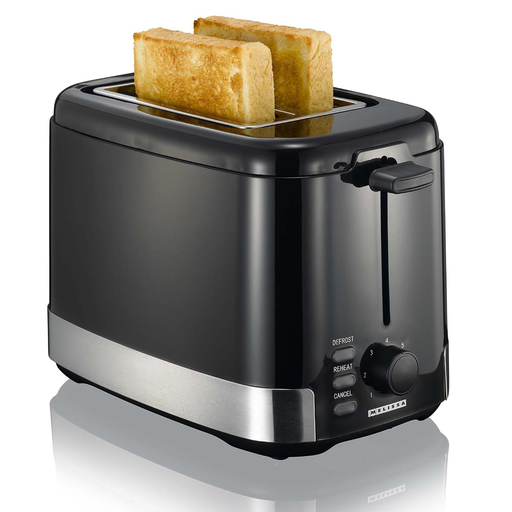
Why it suits this profile: This compact model is designed for everyday use, with a two-slice capacity, seven browning settings and 800 watts of power.
The specifications clearly state that it has a two-slice capacity, seven settings and a crumb tray. So you won’t pay for extra capacity you may not use.
Reheat, cancel and defrost functions, plus a bun warmer and cord storage included.
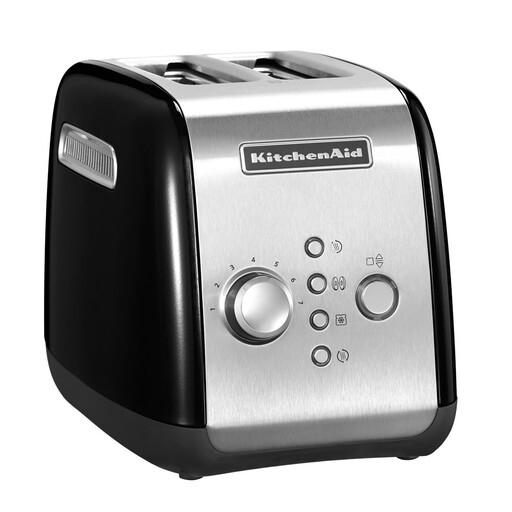
Why it suits this profile: The black metal design combines a two-slice capacity with extra-wide slots and seven browning settings to choose from.
The slot width and seven browning settings are clearly specified, so you don’t have to judge it by its black design alone.
1100 watts, extra-wide slots and a metal casing; the product information also lists a cancel function.
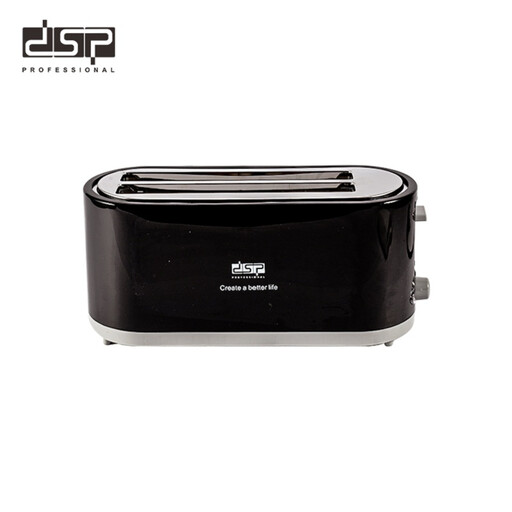
Why it suits this profile: This model is designed for households that want to prepare several portions at once and use different types of bread.
The capacity, power and seven settings are clearly specified. The anti-jam function also addresses a practical safety risk.
Four-slot design, 1400 watts, automatic pop-up, cord storage and a removable crumb tray.
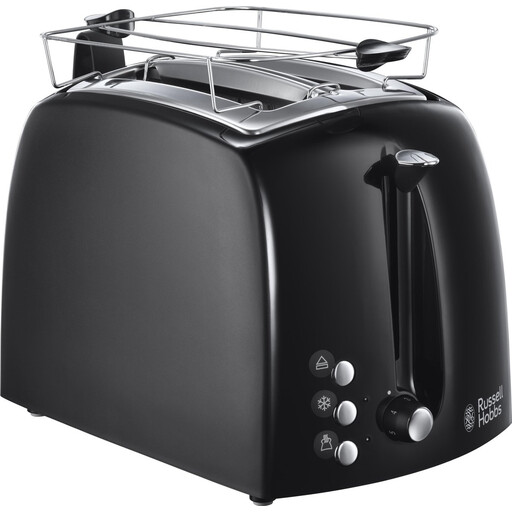
Why it suits this profile: The extra-wide and long slots are ideal for households that regularly toast thick slices of bread, rolls or bagels.
The product description specifically mentions both wide and long slots. This makes it a better match for different bread sizes than a standard model.
Defrost, reheat and cancel functions, a crumb tray and a warming rack; power is 850 watts.
We’ve put together a complete, up-to-date list of products that meet these strict selection criteria and the applicable European safety regulations.
First, unplug it and let it cool down completely. Remove the crumb tray, empty it into the bin and wipe it clean. Use a soft, slightly damp cloth to clean the casing. Never immerse a toaster in water or use metal objects to remove stuck bread.
Its lifespan depends on how often you use it, how well you clean it and the quality of its components. Emptying the crumb tray regularly helps prevent crumbs from building up. Check the cord and casing too. If the appliance is damaged or isn’t working as it should, replacing it is safer than opening it yourself.
Energy use depends on the wattage and the length of each cycle. An 800-watt model uses around 0.04 kWh during a three-minute cycle; a 1400-watt model uses around 0.07 kWh. The actual cost depends on your electricity tariff and how often you use the toaster.
