
Vandaag of morgen in huis

Kwaliteit gegarandeerd

Welkomstaanbiedingen ontgrendelen: GRATIS bezorging | Tot 80% korting | Gratis 30 dagen JoyPlus-proefperiode
Download de app
An extra freezer is a smart addition, especially if you live in a smaller space or simply want to keep more food in stock. A black tabletop freezer is a popular choice for this, offering a blend of style and compact design. However, the market is flooded with models that seem perfect at first glance but prove disappointing in practice. Before you make a decision, it's wise to understand the common pitfalls.
Many buyers fall for the same marketing traps. They choose a model based on its low price, only to discover later that the freezer is impractical, noisy, or unexpectedly drives up their energy bill. We'll discuss the three most common problems.
To avoid a bad purchase, it's crucial to look beyond the sales pitch. Focus on the objective specifications that determine whether a compact black freezer is right for your needs.
Always look at the net capacity in litres, not the gross capacity. This is the actual usable space. For a one or two-person household, an 85-litre freestanding freezer is often a good sweet spot. The layout is just as important. A black freezer with drawers offers far better organisation and ease of use than a model with awkward flaps or fixed shelves, where items can get lost in the back. Transparent drawers are a clear advantage.
Your energy bill is a recurring expense. A small, energy-efficient freezer is therefore a wise investment. Pay attention to the energy label, which ranges from A (very efficient) to G (very inefficient). A model with a C rating consumes significantly less power than a model with an E or F rating. The annual energy consumption, expressed in kWh per year, provides the clearest indication of the expected costs.
Will the freezer be placed in your living or sleeping area? Then the noise level is a critical factor. A quiet tabletop freezer produces less than 40 dB (decibels). This noise level is comparable to a soft whisper and is generally not considered disruptive. A freezer rated at 42 dB or more can quickly become too loud in a quiet environment.
Not every freezer is suitable for everyone. We have selected a few models that fit different user profiles, based on objective specifications.
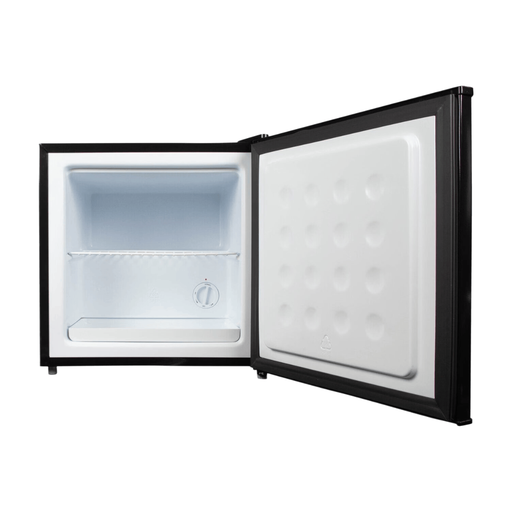
Why This Fits Their Persona: Ideal for a student dorm or as a first small black freezer in a compact apartment. It offers just enough extra freezer space for pizzas, ice cream, or leftovers without taking up much floor space.
This model is transparent about its compact size. With a 31-litre net capacity, you know exactly what you're getting, with no surprises about 'lost' space.
Very compact (49.2 cm high), it fits easily on or under a desk or countertop. The door is reversible for flexible placement.
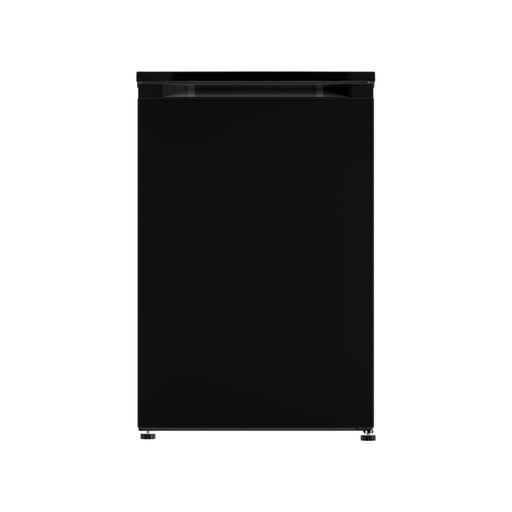
Why This Fits Their Persona: Perfect for couples or small families looking for a great balance of capacity, performance, and design. The 85-litre capacity is spacious enough for weekly groceries.
This model avoids the pitfalls of high energy costs and noise pollution. Its C energy rating and low noise level of 39 dB make it a responsible choice.
An excellent balance between a generous 85-litre capacity, low energy consumption (105 kWh/year), and a quiet design. The three transparent drawers provide a clear overview.
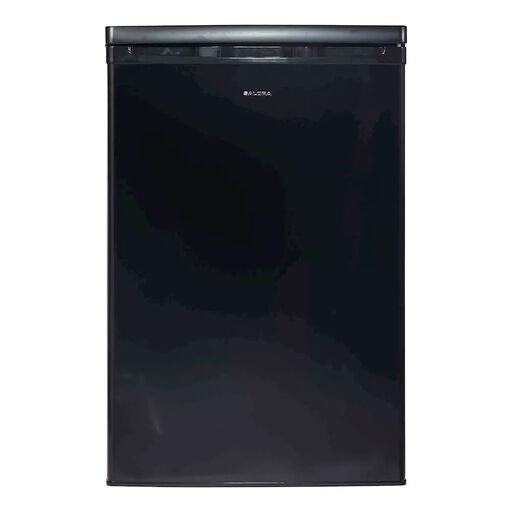
Why This Fits Their Persona: Suitable for those who need serious extra freezer space, for instance, in a pantry, garage, or office. The focus is on maximum, well-organized storage capacity.
The four transparent drawers ensure the 91-litre capacity can be fully and efficiently utilized. No unreachable corners; you can see what you have at a glance.
Offers a very generous 91-litre capacity in a standard tabletop size. The four drawers make it one of the most practical models for organization.
We have compiled a complete, up-to-date list of products that meet these strict selection criteria and comply with local regulations.
Most tabletop freezers do not have a 'No-Frost' feature and must be defrosted manually. A good rule of thumb is to do this 2 to 4 times a year, or as soon as the ice layer is about 5 millimetres thick. Regular defrosting ensures the freezer continues to operate efficiently and doesn't consume unnecessary energy.
The cost depends on the energy rating and your current electricity price. A relatively efficient C-rated model of around 85 litres (like the Exquisit GS581-051CB) consumes about 105 kWh per year. With an electricity price of €0.30 per kWh, this amounts to roughly €31.50 annually. A comparable F-rated model could easily cost double that.
Place the freezer on a flat, stable surface. Keep it away from direct sunlight and heat sources like an oven, radiator, or hob. Ensure there is sufficient ventilation space around the unit (usually 5 to 10 cm on the sides and back) to allow heat to dissipate properly. This is always specified in the user manual.
