
Vandaag of morgen in huis

Kwaliteit gegarandeerd

Welkomstaanbiedingen ontgrendelen: GRATIS bezorging | Tot 80% korting | Gratis 30 dagen JoyPlus-proefperiode
Download de app
A black sports backpack works well in many situations: cycling to the office, going to the gym, attending classes or taking a short trip. However, models often look more practical in photos than they are in everyday use. A bag may appear spacious but be awkward to open. Or the shoulder straps may feel comfortable when the backpack is empty, but less so once it is filled with books, clothes and a laptop.
The following points will help you distinguish marketing language from verifiable product information.
A black backpack has a clean, understated look and is easy to match with different outfits. However, that tells you nothing about its organisation. Check whether it has a front pocket, side pocket or separate protective compartment in addition to the main compartment. Without designated storage spaces, keys, chargers and sports accessories can quickly become mixed up.
A 24-litre backpack offers noticeably more space than a 13-litre model, but its shape and compartment layout are equally important. If you carry books, a lunch box and clothing every day, you will often get more from a spacious backpack with several compartments than from a compact model with one large compartment.
Also pay attention to the dimensions. A bag measuring 45 cm in height may be suitable for school or work, but could be too large for young children.
‘Comfortable’ is not a standardised technical term. Look for adjustable shoulder straps, padded straps, a padded back panel and, where applicable, ventilation. A backpack for the gym or commuting is often worn for extended periods. In that case, a good fit may be more important than extra decorative details.
For everyday use, these are practical guidelines:
The stated capacity is based on the product information. Before buying, also check the exact dimensions and compare them with what you usually carry.
A backpack for school or work does not need as many compartments as possible, but the compartments should be positioned logically. A zipped front pocket is practical for small items. A mesh side pocket can be suitable for a drinks bottle. If you carry a laptop, specifically look for a laptop backpack or a model with a protective sleeve. Not every sports backpack has one.
Polyester is used in several models in this selection. Some product descriptions mention polyurethane reinforcement or a PU coating. This may contribute to the construction and ease of care, but it does not automatically mean that a bag is waterproof. Therefore, do not rely on a waterproofing claim unless it is explicitly stated in the product information.
According to the product description, the PUMA Phase II uses at least 90% recycled material. For the PUMA Academy, the product information states that the figure is at least 70%. These are manufacturer product specifications and do not constitute a general guarantee of quality.
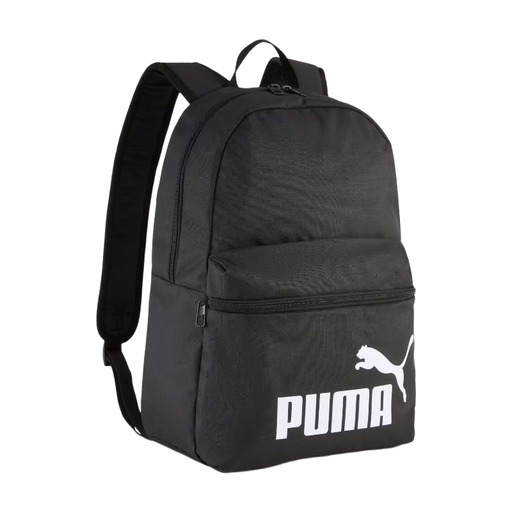
Why it suits this profile: An organised model for everyday use, with a 22-litre capacity and a low weight of 300 grams. Suitable for anyone looking for a simple unisex backpack for school, work or sport.
The dimensions of 30 × 43 × 14 cm and the 22-litre capacity make the available space clearer than a general description alone.
Main compartment with two-way zip, zipped front pocket, mesh side pocket, padded back and adjustable shoulder straps.
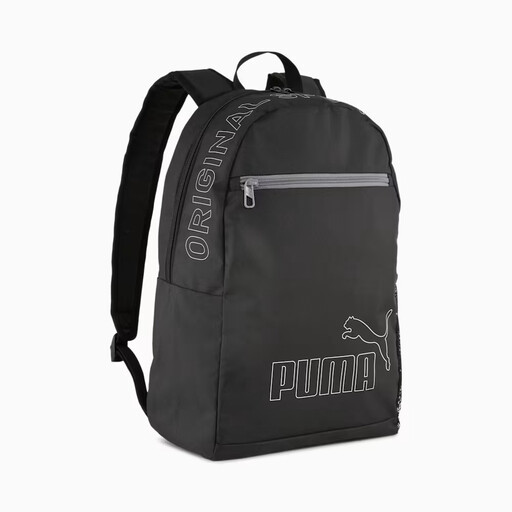
Why it suits this profile: For users who want to carry technology and everyday essentials in an organised way. The bag has a soft-lined sleeve, several compartments and a padded back panel.
The product description mentions more than just a sporty appearance: it also specifies a sleeve, front pocket and side pocket. This makes the layout easy to verify.
Dimensions of 44 × 30 × 14 cm, approximately 20 litres of capacity, padded straps and, according to PUMA, at least 90% recycled material.
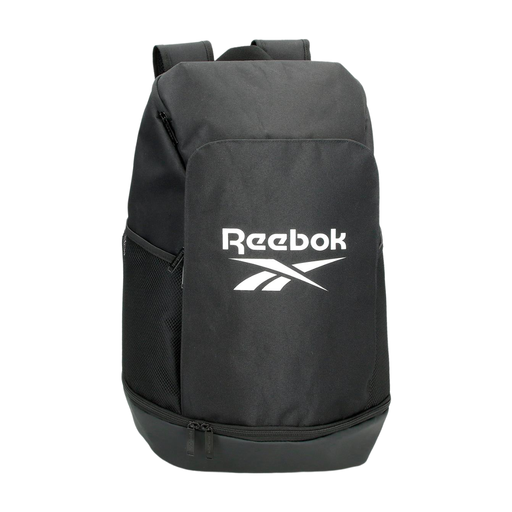
Why it suits this profile: The 50 cm height and spacious main compartment are well suited to users who carry sportswear, books and accessories together.
The description mentions both the spacious main compartment and additional pockets. This means the model has not been selected on appearance alone.
Plenty of storage space, additional pockets, adjustable shoulder straps and a design for school, work, the gym and short trips.
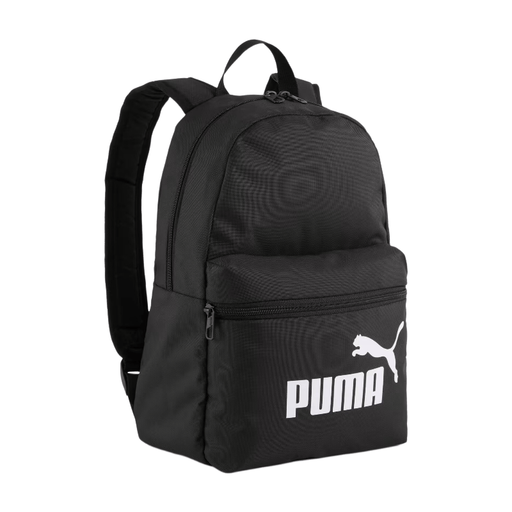
Why it suits this profile: With a 13-litre capacity and dimensions of 12 × 25 × 37 cm, this is a more compact model for children or anyone carrying only a few items.
The smaller dimensions help prevent children from buying an unnecessarily large backpack. The adjustable, padded straps make it easier to achieve a good fit.
Main compartment with two-way zip, zipped front pocket, padded back panel and, according to PUMA, at least 90% recycled material.
Choose a gym backpack with enough room for clothing and shoes. For everyday commuting, a work backpack with an organised main compartment and protective sleeve makes more sense. A school backpack should primarily accommodate books, lunch and, if necessary, a device.
A 20- to 24-litre model is often a useful compromise for adults and older children. For younger children, a more compact bag is usually easier to carry. Also check whether the shoulder straps are long enough and whether the back provides sufficient support.
We have put together a complete, up-to-date list of products that fully meet these strict selection criteria and the applicable European safety regulations.
Yes, provided its capacity and compartment layout suit what you carry. Pay particular attention to a protective laptop compartment or sleeve, sufficient space for accessories and padded shoulder straps. Not every sports model has a separate laptop compartment.
That depends on the child’s age and how much they need to carry. A model of approximately 20 to 24 litres is suitable for many adult users and older schoolchildren. For children who carry less, 13 litres may be more practical. Always compare the dimensions with the user’s height and the items that need to be carried every day.
Follow the product’s care instructions. For the PUMA models mentioned, wiping with a damp cloth is recommended and detergent should not be used. Remove wet items from the bag straight away and allow the backpack to dry completely before using it again.
