
Vandaag of morgen in huis

Kwaliteit gegarandeerd

Welkomstaanbiedingen ontgrendelen: GRATIS bezorging | Tot 80% korting | Gratis 30 dagen JoyPlus-proefperiode
Download de app
A sleek, black cooker hood can be the centrepiece of a modern kitchen, instantly adding a touch of elegance and design. But the search for the perfect model can be frustrating. Marketing promises of "whisper-quiet" operation and "professional-grade" performance are everywhere, but the reality is often different. As a Joybuy Product Recommendation Officer, I'll help you cut through the noise, so you can make a choice that fits your kitchen and cooking style, without any hidden drawbacks.
Before you make a decision, it's important to recognise the most common pitfalls:
To avoid buyer's remorse, focus on a few key specifications. This objective data tells you more than any marketing text ever will.
The extraction rate, expressed in cubic metres per hour (m?/h), indicates how much air the hood can move. A simple rule of thumb for the required capacity is: length x width x height of your kitchen (in metres) x 10. For an open-plan kitchen, multiply by 12.
Always look at the capacity in combination with the noise level (dB) on the highest setting. A model that achieves 600 m?/h at 59 dB is significantly quieter than one that reaches the same capacity at 65 dB.
Your choice depends on the structural layout of your home.
An A+++ energy-efficient cooker hood consumes significantly less power than a model with a B or C rating. You'll notice this on your annual energy bill. Also, consider the controls: are you looking for simple push buttons, a sleek touchscreen, or even a smart cooker hood with Wi-Fi that you can operate via an app or voice assistant?
Below are some recommendations, linked to specific user profiles and how they avoid the pitfalls mentioned.
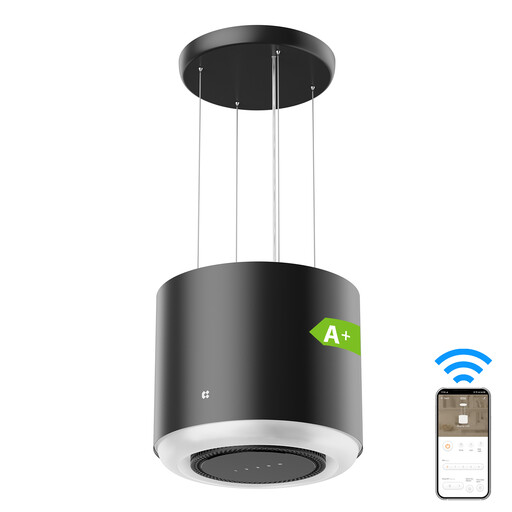
Why This Fits Their Persona: Perfect for the open-plan kitchen in a modern apartment. This black island hood functions as a design object and is specifically designed for recirculation, which is often the only option in new-builds or rental properties.
Bypasses the 'design over function' trap. Its unique suspended design is combined with a solid 550 m?/h recirculation capacity and convenient Wi-Fi control.
Smart Control: Can be operated via an app for extra convenience. Energy Efficient: Features an A+ energy label and efficient LED lighting.
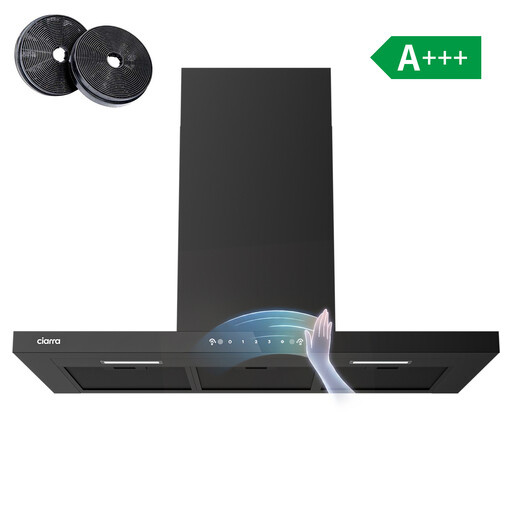
Why This Fits Their Persona: A powerful and highly efficient solution for larger kitchens. This 90 cm wall-mounted hood is ideal for homeowners who cook daily and value low operational costs and reliable performance.
Tackles the 'silent myth' and 'hidden costs'. With a maximum noise level of 59 dB at 650 m?/h, the ratio is excellent. The A+++ energy label minimises long-term costs.
Extremely Energy Efficient: One of the most efficient models on the market. Hygienic Operation: Wave & Touch control allows for operation with a simple hand gesture.
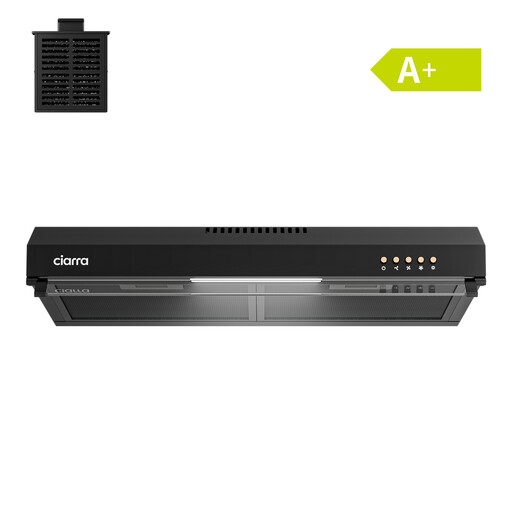
Why This Fits Their Persona: For those seeking an invisible solution in a compact kitchen. This 60 cm integrated hood is fully built into a kitchen cabinet, preserving the clean lines of the kitchen.
This is a no-nonsense product. It focuses purely on the basic function: extraction in a small space. No exaggerated design claims, just a practical, space-saving solution.
Space-Saving: Blends seamlessly into the kitchen cabinetry. Flexible: Suitable for both ducted and recirculating installation, making it a fit for almost any kitchen.
We have compiled a complete, up-to-date list of products that meet these strict selection criteria and UK safety regulations.
This depends on your cooking habits. For daily, intensive use (frying, searing), replacement every 3 to 4 months is recommended. If you cook less frequently or mainly prepare light meals, every 6 months will suffice. Some modern hoods have an indicator that tells you when the filter is saturated.
Not necessarily. The price is also determined by the brand, design, materials, and extra features like Wi-Fi. A more expensive hood may have a quieter motor, but it's not a guarantee. Always compare the maximum dB value in the specifications. A model from a lesser-known brand can sometimes offer a better price-to-performance ratio in terms of noise.
Yes, and it's actually recommended. A cooker hood that is wider than the hob captures cooking vapours more effectively, especially those that rise along the sides of the pans. A 90 cm wall-mounted hood over a 60 cm hob ensures better air quality and often looks more visually balanced. The reverse is strongly discouraged.
