
Vandaag of morgen in huis

Kwaliteit gegarandeerd

Welkomstaanbiedingen ontgrendelen: GRATIS bezorging | Tot 80% korting | Gratis 30 dagen JoyPlus-proefperiode
Download de app
A black cooker hood can look great in a modern kitchen, but an attractive finish tells you little about how well it performs in practice. In an open-plan kitchen, a compact rental home or a busy household, unrealistic expectations can quickly lead to extra costs and frustration.
The most common pitfalls:
Measure your hob, the available wall space and the cupboard opening before comparing models. Many households look for a 60 cm cooker hood, while a wider hob or more intensive use may be better suited to a 90 cm cooker hood.
Also consider the mounting type:
The hood should adequately cover the cooking area. Also check the minimum distance from an electric or gas hob in the manual, as this can vary by model.
Capacity is usually measured in m³/h. A higher figure may be useful if you often stir-fry, deep-fry or have an open-plan kitchen, but always consider it alongside the noise level in dB.
For example, a model with 650 m³/h may be powerful on its boost setting, but that setting may also be noisier. So check:
A quiet cooker hood is especially useful in an open-plan kitchen, where you may want to chat or watch television while cooking. Terms such as “quiet” are not measurements in themselves, so check the stated decibel rating.
A metal grease filter needs regular cleaning. Some models have a removable, washable aluminium filter. If you use recirculation, you’ll also need a cooker hood with a carbon filter. Check whether the filter is included or needs to be bought separately.
An energy-efficient cooker hood has a stated energy rating and annual consumption in kWh. Compare both figures, as the letter rating alone doesn’t always tell you how much electricity a particular model uses.
Finally, check:
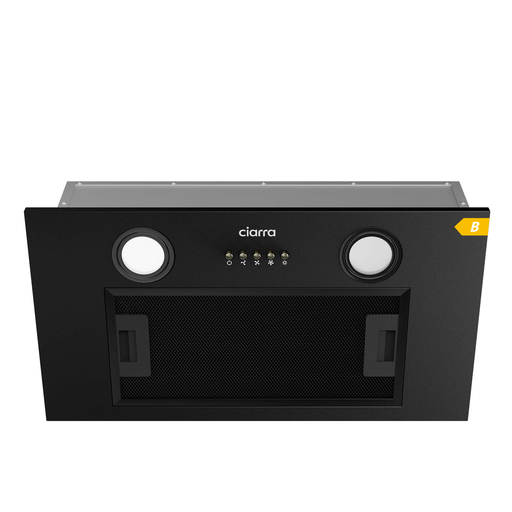
Why it suits this type of buyer: Its compact size is designed to fit into a wall cupboard, making it a good choice for smaller kitchens or a hob around 52 cm wide. Simple push-button controls make it easy to use.
The specifications list both ducted extraction and recirculation. Recirculation requires CBCF005 carbon filters, which are sold separately according to the product information.
52 cm wide, washable aluminium grease filter, three settings and a stated maximum noise level of 62 dB.
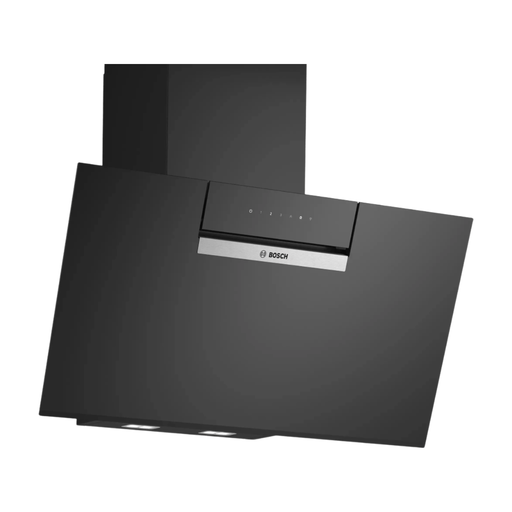
Why it suits this type of buyer: This black angled cooker hood is around 80 cm wide and is aimed at buyers who value touchscreen controls, LED lighting and smart connectivity.
The product information lists separate performance figures for standard and intensive extraction, so you can compare the everyday setting with the temporary boost setting.
According to the product specifications: 431 m³/h on the highest standard setting, 768 m³/h on intensive mode, a dishwasher-safe filter and Home Connect.
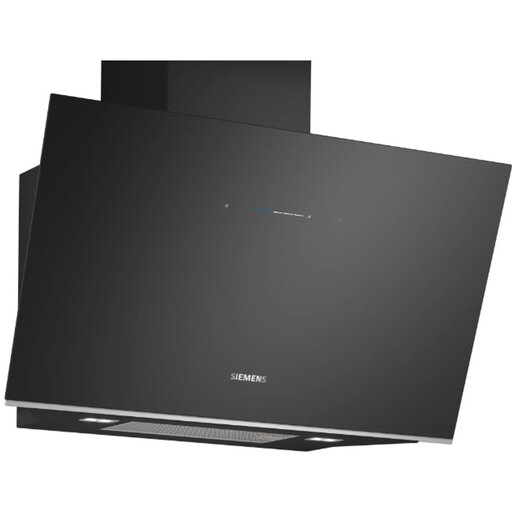
Why it suits this type of buyer: At around 90 cm wide, it suits a spacious cooking area, an open-plan kitchen or households that often use several pans at once.
The stated extraction capacity and maximum noise level are listed separately. Before buying, check whether the required recirculation kit is included; according to the product information, it is not.
Around 1007 m³/h according to the product listing, A+ energy rating, LED lighting and control via Home Connect.
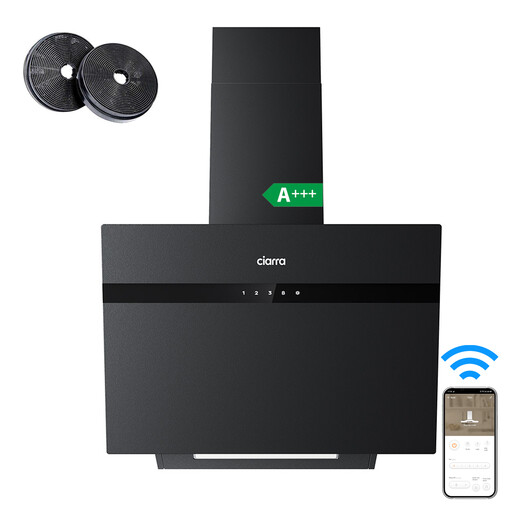
Why it suits this type of buyer: This model pairs an angled black glass panel with Wi-Fi and app controls. It’s a good fit if you want to adjust the lighting and extraction from your smartphone.
The product specifications state both the maximum extraction capacity and maximum noise level, helping you assess the balance between performance and comfort.
650 m³/h, up to 58 dB according to the stated specifications, two brightness settings, A+++ rating and support for ducted extraction or recirculation.
We’ve put together a complete, up-to-date list of products that meet these strict selection criteria and the applicable European safety regulations.
It depends on your home. A ducted cooker hood sends air outside and doesn’t need a carbon filter, but it does require a suitable duct. Recirculation is more practical in flats or kitchens without an external vent. Bear in mind the cost of carbon filters and how often they need replacing.
Always follow the instructions for your specific model. Many product guides recommend replacing the filter roughly every three to six months with regular use. You can usually clean the metal grease filter more often, for example every two to four weeks, depending on how you cook.
It can suit a standard 60 cm hob, provided the hood is positioned properly above the cooking area. A model measuring 80 or 90 cm may cover more of the cooking area if you have a wider hob, often deep-fry or have an open-plan kitchen. Check the exact dimensions and installation requirements before buying.
