
Vandaag of morgen in huis

Kwaliteit gegarandeerd

Welkomstaanbiedingen ontgrendelen: GRATIS bezorging | Tot 80% korting | Gratis 30 dagen JoyPlus-proefperiode
Download de app
A black angled cooker hood is a great fit for a modern kitchen, giving you extra headroom above your hob. However, a sleek design doesn't tell you much about its performance. Choosing the wrong size, an unsuitable installation type, or a model with expensive filter maintenance can lead to disappointment after just a few months.
This buyer's guide will help you objectively compare models based on size, extraction rate, noise level, energy consumption, controls and filtration.
Brands often state a maximum capacity in m³/h. This is usually the value for the intensive or boost setting. In everyday use, the actual capacity can be lower. A long, narrow, or winding ducting pipe will also reduce airflow.
Therefore, check the following beforehand:
A model with a stated capacity of 650 m³/h might be appealing for intensive cooking, but only if your chosen installation and filter configuration can support it.
A 60cm angled cooker hood is typically designed for a hob of around 60cm. For a wider hob, a 90cm angled cooker hood can provide better capture of steam and odours around your pans. You should also measure the available wall space and the height of the chimney.
Also, pay attention to the distance from the hob. The exact minimum distance varies by model and hob type. Always follow the installation manual and the specific guidelines for a gas or electric hob.
A stated noise level applies to a specific speed setting. For example, a hood might be rated at 50 to 60 dB on a normal setting, but it will produce significantly more noise during intensive extraction. Always compare the values at a similar setting.
When looking at energy consumption, don't just consider the energy class; also check the stated annual consumption in kWh. An energy-efficient cooker hood with low annual consumption can be cost-effective for daily use, but you should also factor in the purchase price and the cost of charcoal filters.
A black wall-mounted cooker hood with an angled front helps prevent you from bumping your head. Black glass looks sleek, but fingerprints and cooking splashes are often more visible than on matte black metal. Therefore, check how easy the surface is to clean with a soft cloth.
Measure at a minimum:
For normal cooking, the highest m³/h rating isn't the only thing that matters. A practical hood will have multiple speed settings, allowing you to use less power and generate less noise when simmering, and temporarily switch to a higher setting when frying or wok cooking.
With recirculation, the air passes through a grease filter and a charcoal filter before being released back into the kitchen. A charcoal filter needs to be replaced regularly, as specified in the product manual. With external ducting, cooking fumes are vented outside, but the ducting must be installed correctly. Recirculation is practical in flats or kitchens without an existing duct, while external ducting doesn't require replacement odour filters.
A quiet cooker hood is especially pleasant in an open-plan kitchen. Compare the minimum and maximum noise levels in dB(A), and pay attention to the intensive setting. Useful features include:
Smart controls don't automatically make a hood a better choice. You should also check if the app, hob connectivity, and any account requirements are a good fit for your kitchen.
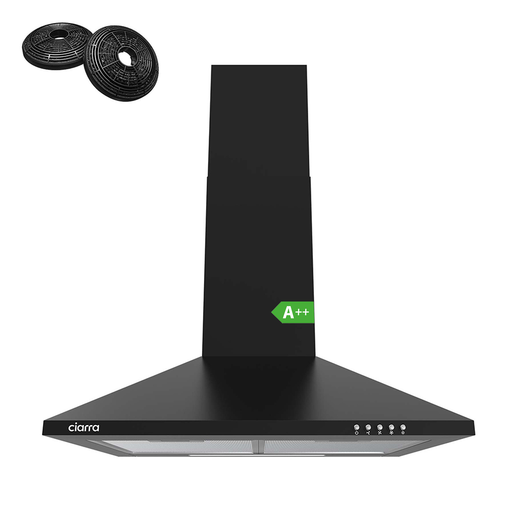
Why it fits this profile: This 60cm model has simple push-button controls and supports both external ducting and recirculation.
The specifications list the ventilation method, three speed settings, and a maximum rate of 367 m³/h, so you don't have to rely on a vague marketing claim.
60cm wide, A++ energy class, washable aluminium filters, and integrated lighting.
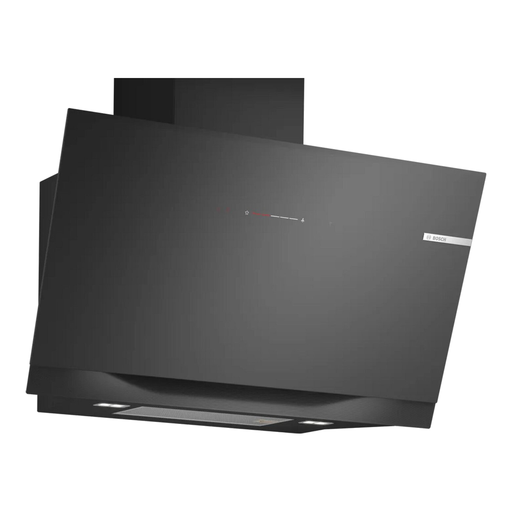
Why it fits this profile: Its 90cm width is suitable for a wide cooking zone, and the controls are aimed at users who want extra features.
The product data distinguishes between normal extraction and the intensive setting: 441 m³/h for normal use and up to 1007 m³/h on intensive. The maximum noise level of 70 dB applies to intensive use.
90cm wide, A+ energy class, five speeds, DirectSelect touch controls, and a dishwasher-safe filter.
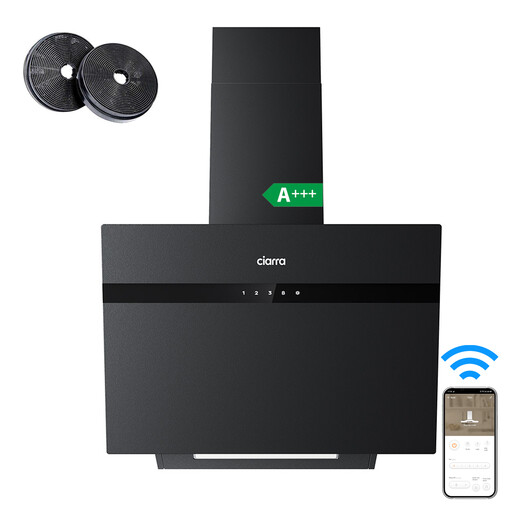
Why it fits this profile: This model is aimed at those who frequently fry or wok cook and want to use app or Wi-Fi controls.
According to the product description, the maximum airflow is 650 m³/h and the maximum noise level is 58 dB(A). Be sure to check if these values apply to your chosen installation type.
650 m³/h, A+++ energy class, two brightness levels for the LED lighting, and support for both ducting and recirculation.
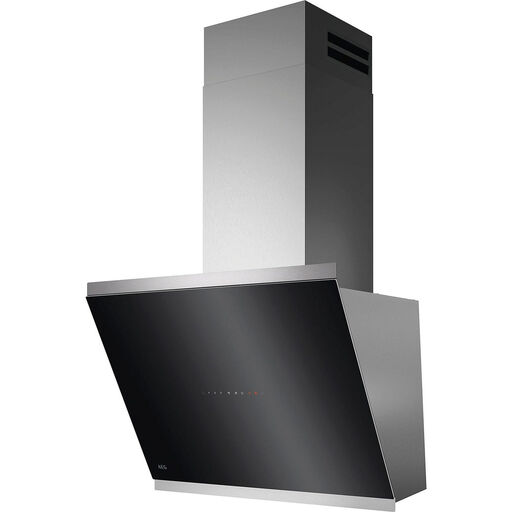
Why it fits this profile: This model fits a standard hob and offers touch controls, multiple speeds, and a choice between ducting and recirculation.
The data provides separate values for ducting and recirculation: a maximum of 445 and 440 m³/h, respectively. This allows you to better match the installation type to your home.
A+ energy class, SilenceTech according to the product description, five speeds, and a dishwasher-safe aluminium grease filter.
We've compiled a complete, up-to-date list of products that fully meet these strict selection criteria and comply with current European safety regulations.
Clean the metal grease filters regularly according to the manual. This may be required more often with intensive cooking than with limited use. A dishwasher-safe filter is practical, but check if the manufacturer recommends a specific programme or cleaning agent.
If you're using recirculation, make a note of when the charcoal filter was installed. The replacement frequency varies depending on the model and your cooking habits. Mount the cooker hood securely to a suitable wall, and ensure any electrical connections or adjustments to the ducting are carried out in accordance with current regulations. Keep flammable materials away from the hob and never leave cooking unattended.
That depends on the model. Many wall-mounted models support both external ducting and recirculation, but recirculation requires compatible charcoal filters. Check whether these are included and what the replacement costs are.
There's no universal value that fits every kitchen. Consider the size of the room, your cooking habits, and whether you can duct to the outside. A model with 650 m³/h offers a generous maximum capacity according to the product specification, but its actual performance also depends on the filters, pipes, and bends in the ducting.
The lifespan depends on its usage, cleaning, and installation. Regularly cleaning the grease filters, replacing charcoal filters on time, and ensuring proper ventilation will help maintain its performance. Keep the manual and check the warranty and service conditions of your chosen model before you buy.
