
Cake bakers who want to check Fairtrade status specifically
If Fairtrade cocoa or chocolate is a condition of your purchase, check the claim for the product you choose. A supermarket’s general sustainability claim is not enough.


Choose biscuits for your cake’s base, crumb layer or decoration, and select cocoa or chocolate separately if you want the chocolate ingredient to be Fairtrade. Check the Fairtrade claim for the specific ingredient: a general claim about certified cocoa does not automatically mean it is Fairtrade. Make sure the chocolate also suits your recipe, and check the allergens in all the ingredients you use.
If Fairtrade cocoa or chocolate is a condition of your purchase, check the claim for the product you choose. A supermarket’s general sustainability claim is not enough.
For a biscuit base, crumb layer or decoration, choose biscuits according to their role in the recipe. Lotus Bakeries uses Biscoff products in a traybake recipe; check the Fairtrade status of any chocolate you add separately.
If someone eating the cake has a food allergy, check the up-to-date ingredients and allergen information for the biscuits, chocolate and decorations. A Fairtrade claim does not replace this check.
Decide what role the biscuits and chocolate will play in your recipe. Then check the Fairtrade claim and the allergens in the ingredients you’re actually buying.
| What to consider | What to check when buying | Who it matters to |
|---|---|---|
| Fairtrade status | Look for a Fairtrade claim for the cocoa or chocolate you’ve chosen on the current packaging or product page. Check whether the claim applies to the product or to specific ingredients. | If Fairtrade is my main requirement, I want to know whether the chocolate in my cake meets it. This is the top priority for around 40% of consumers. |
| Role in the recipe | Use biscuits for the base, crumbs or decoration, and choose the type and quantity of chocolate called for in the recipe. | I need something different for my cake base than for the chocolate mixture; the role of each ingredient guides my choice. For around 30% of consumers, suitability for the recipe matters most. |
| Allergens | Read the current ingredients and allergen information for every ingredient, including crumbs and decorations. Check for warnings about possible traces where relevant. | If someone eating the cake has a food allergy, I need to be able to assess every ingredient I use. This is the main concern for around 30% of consumers. |
Albert Heijn says its own-brand cocoa is Fairtrade or Rainforest Alliance certified; Lidl and ALDI also refer to several certification schemes. That doesn’t mean every individual product is Fairtrade.
Check the Fairtrade claim on the packaging or product page for the cocoa or chocolate you choose.
Fairtrade chocolate says nothing about the status of the biscuits or other ingredients. A biscuit base and a chocolate ingredient are separate choices.
Describe your cake as made with Fairtrade chocolate unless you can substantiate a broader claim about the other ingredients too.
A biscuit or type of chocolate that seems suitable may still not be right for someone with an allergy you need to consider. The Netherlands Food and Consumer Product Safety Authority explains which allergens must be listed on the labels of pre-packed foods.
Before buying, read the current packaging for all ingredients, including toppings and biscuit crumbs.
Speculoos products for a biscuit base, crumb layer or decoration.
Own-brand products containing cocoa, for which the supermarket refers to various certifications.
Cocoa and chocolate with product-specific information you can compare with your baking recipe.
Own-brand cocoa and seasonal chocolate with different product and range claims.
Chocolate ranges for which ALDI makes a Fairtrade claim, alongside own-brand cocoa with other certification schemes.
This bar is a relevant option if you’re looking for dark chocolate for your cake. Choose biscuits separately for a biscuit base or crumb layer; check the bar’s current Fairtrade claim and make sure the variety suits your recipe.
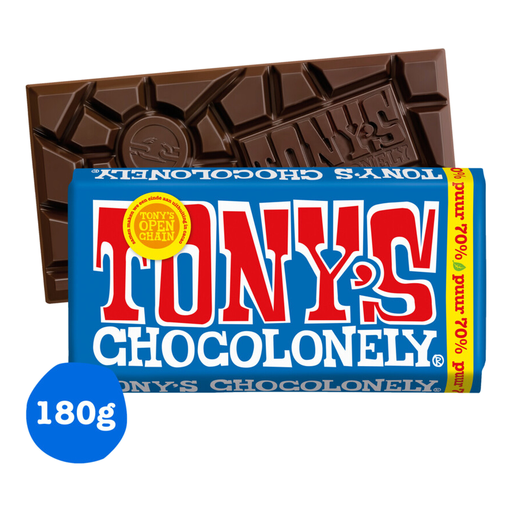 Image unavailable
For a cake recipe that calls for dark chocolate, not for the biscuit base. The pack contains 180 g; check the cocoa percentage, Fairtrade claim and allergens on the current packaging.
Look for a Fairtrade claim on the current packaging of the specific chocolate or cocoa you’re buying. For example, Jumbo says its Organic 85% Extra Dark Chocolate contains Fairtrade-certified cocoa and vanilla; check which ingredients are covered by a claim like this.
No. In their general statements about cocoa, Albert Heijn, Lidl and ALDI also mention other certifications, including Rainforest Alliance or organic certification. Check the individual product if Fairtrade is a condition of your purchase.
Only if you want to make that claim about the biscuits too. Biscuits can be used for the base or decoration while you choose the chocolate separately. In that case, describe the result as a cake made with Fairtrade chocolate rather than calling the whole cake Fairtrade without checking the other ingredients.
Check the current ingredients and allergen information for every product that goes into the cake, including the decorations. The Netherlands Food and Consumer Product Safety Authority explains that 14 allergens must be listed on labels for pre-packed foods; also look out for warnings about possible traces if these are relevant to the people eating the cake.