
Office teams looking for a strict limit on sugar
If you’re looking for a sugar-free option to share over coffee, you’ll need a clear claim and the amount of sugars per 100 g to compare products.


Choose a biscuit labelled ‘sugar-free’ if that is a requirement for the office tin. If naturally occurring sugars are acceptable, ‘no added sugars’ may be suitable; ‘reduced sugars’ describes a comparison and does not mean the same as sugar-free. Then check the nutritional information, ingredients, allergens and storage instructions: a low sugar content says nothing in itself about the rest of the nutritional profile.
If you’re looking for a sugar-free option to share over coffee, you’ll need a clear claim and the amount of sugars per 100 g to compare products.
A biscuit with no added sugars may suit these teams, even if the product contains naturally occurring sugars.
When several colleagues help themselves from the same supply, clear ingredient and allergen information, portion sizes and airtight storage all matter.
First decide which sugar claim is right for the office supply. Then compare the full nutritional information and consider how the biscuits will be shared and stored once opened.
| What to consider | What to check when buying | Who it matters to |
|---|---|---|
| Sugar claim | Read the full claim and compare ‘of which sugars’ per 100 g. ‘No added sugars’ is not the same as ‘sugar-free’. | If I’m looking specifically for sugar-free biscuits for the office, I don’t want to rely on the word ‘zero’ alone. Around 33% of consumers prioritise a sugar claim they can verify. |
| Other nutritional information | Compare energy, fat and fibre per 100 g; check the portion size separately. | When choosing biscuits for a coffee break, I also want to know what a portion contains besides sugars. Around 27% of consumers give this broader nutritional information top priority. |
| Sharing and storage | Check the pack size and storage instructions. The Netherlands Nutrition Centre recommends storing biscuits in a cool, dry, dark place in an airtight container. | When colleagues regularly help themselves from the same tin, I want to keep the supply organised and well sealed. This is the main concern for around 20% of consumers. |
| Ingredients and allergens | Read the ingredients list and allergen information, and check for any warning about polyols; keep the packaging by the tin. | If colleagues need to be mindful of certain ingredients or allergens, I want to be able to identify which biscuit is in the tin. This clarity matters most to a further 20% of consumers. |
These claims are not interchangeable. Albert Heijn labels Verkade San Francisco zero as both ‘0% added sugar’ and containing naturally occurring sugars.
Decide in advance which claim the office is looking for, and also check the amount of sugars per 100 g on the pack.
A sugar claim does not describe the full nutritional profile. Albert Heijn lists AH Digestive 0% sugar as containing 465 kcal and 20 g of fat per 100 g.
Compare the nutritional information per 100 g, then check how many biscuits make up a portion.
According to the Netherlands Nutrition Centre, large amounts of polyols can cause intestinal discomfort. Products containing more than 10% added polyols carry a warning about a possible laxative effect if consumed in excess.
Read the ingredients and any warning, and make sure colleagues can find the product information next to the shared tin.
Once biscuits are loose in a shared tin, it’s no longer easy to check their ingredients, allergens or storage instructions.
Keep the packaging or current product information by the tin. Seal opened biscuits securely and follow the storage instructions on the pack.
These examples show the differences you may find on product labels; a brand name alone doesn’t tell you which sugar claim applies to a biscuit.
Offers biscuits with different sugar claims, including ‘sugar-free’ and ‘reduced sugars’.
AH Digestive 0% suiker is a sugar-free biscuit in a 400 g pack.
San Francisco zero is an example for anyone looking to avoid added sugars without requiring the biscuits to be sugar-free.
Jumbo product pages feature Céréal varieties with different sugar claims.
ALDI offers a general range of biscuits to enjoy with coffee.
This Organix biscuit is worth considering if the office is looking at biscuits with no added sugars. It is not suitable if the requirement is for strictly sugar-free biscuits; check the claim and nutritional information on the pack.
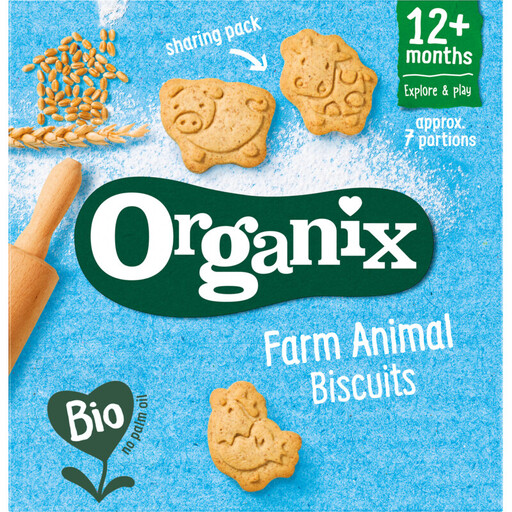 Image unavailable
For anyone who accepts naturally occurring sugars but wants to avoid added sugars. Before adding these to the office tin, check the sugar claim, ingredients and allergens on the pack; these biscuits are not a strictly sugar-free option.
The product description is aimed at children aged 12 months and over. Consider whether that product purpose is right for the intended office supply.
No. The Netherlands Food and Consumer Product Safety Authority treats ‘sugar-free’ as a nutrition claim, while a product with no added sugars may still contain naturally occurring sugars. Albert Heijn states this explicitly for Verkade San Francisco zero, for example.
No. You’ll need to check the energy value in the nutrition table. Albert Heijn lists AH Digestive 0% suiker as containing 465 kcal per 100 g; also compare the rest of the nutritional information and the portion you plan to offer.
The warning may relate to added polyols. According to the Netherlands Nutrition Centre, large amounts of polyols can cause intestinal discomfort, and the warning appears on foods with more than 10% added polyols. If you’re sharing biscuits, check the ingredients and warning for the product you choose.
Store them in a cool, dry, dark place in an airtight container, as recommended by the Netherlands Nutrition Centre. Also follow the best-before date and any additional storage instructions on the pack.
Keep the information for the exact biscuits in the tin to hand. The product examples mentioned have different ingredients and allergens, so keep the original packaging or place current product information next to the supply.