
Study group organisers
You want to put out biscuits for several people at once. Knowing the number of individual biscuits is at least as useful as knowing the pack’s weight.


Choose loose biscuits if everyone can help themselves from a bowl or tin during the study session. Choose individually wrapped portions if you want to hand out biscuits in advance or give them to people to take away. In either case, check the number of biscuits, the nutritional information per 100 g and the current packaging for ingredients and allergens.
You want to put out biscuits for several people at once. Knowing the number of individual biscuits is at least as useful as knowing the pack’s weight.
You’re setting something aside for each participant or taking biscuits to the library. Individual bags can be more practical than a shared pack that’s already been opened.
You check the ingredients, allergens and nutritional information before buying, so participants with relevant dietary needs can assess the current label for themselves.
First decide whether the biscuits will be put out on the table or portioned out for each person in advance. Then check how many biscuits are in the pack and which label information matters to the group.
When to choose them: Choose this option if everyone can help themselves from a bowl or tin during one session.
Things to consider: You’ll need to portion out the biscuits yourself and store any leftovers according to the pack’s storage instructions once it’s opened.
When to choose them: Choose this option if participants are taking their biscuits with them or taking breaks at different times.
Things to consider: You can hand them out in advance, but there’s more individual packaging. Jumbo lists ten bags of two biscuits each for Lotus Biscoff XL.
| What to consider | What to check | Who it matters to |
|---|---|---|
| Easy to share straight away | Check the number of biscuits and whether they’re loose or individually wrapped. Jumbo lists approximately 32 biscuits for Lotus Biscoff 250 g. | If everyone is taking a break at the same time, I want to be able to put enough individual biscuits on the table. For around 36% of consumers, being able to share them straight away is the top priority. |
| Taking portions with you | Check how many bags there are and how many biscuits each bag contains. | For a break away from the study room, I want to be able to set aside one portion in advance. Around 29% of consumers prioritise portioning them out. |
| Planning several sessions | Compare the net weight with the number of biscuits or portions, and read the storage instructions for after opening. | If the pack will be put out again at a future study session, I want to know how many will be left and how to store them. This is the main concern for around 21% of consumers. |
| Checking the label | Read the ingredients and allergens on the current pack. For similar biscuits, compare sugars, saturated fat, salt and fibre per 100 g. | If nutritional information or an allergen matters to our group, I want to be able to check the pack before handing out the biscuits. For around 14% of consumers, this check comes first. |
The weight doesn’t tell you how many biscuits you can share among the participants. That makes it harder to plan how many packs you’ll need for a group.
As well as the net weight, check the number of biscuits or portions and how they’re arranged in the pack.
Products in the same category can contain different ingredients and allergens. For example, Jumbo lists wheat and soya for the Lotus Biscoff 250 g product we looked at.
Ask participants for whom allergens are relevant to check the current label before sharing the biscuits.
Manufacturers set their own portion sizes, so figures per portion aren’t always directly comparable across different packs.
First compare similar products per 100 g, as recommended by the Voedingscentrum, then use the portion information to help you hand them out.
With a shared pack, there may be biscuits left after the first break that you want to save for later.
Only put out what you need at the time and follow the storage instructions on the pack. For AH Theebiscuits, Albert Heijn recommends storing them in a sealed tin after opening.
Jumbo describes a 250 g pack of loose speculoos biscuits containing approximately 32 biscuits, as well as an XL pack with ten bags of two biscuits each.
Albert Heijn lists AH Theebiscuits in a 300 g pack.
Jumbo’s range includes Lotus Biscoff and 300 g packs of Pally Theekoekjes.
Lidl describes the Sondey range as including cookies and biscuits.
ALDI Nederland lists 300 g packs of tea biscuits among its Biscotto products.
These biscuits are worth considering if you want to hand out portions in advance or serve them with tea or coffee during a break. Before choosing for a group, check the number of biscuits in each pack and how they’re packaged.
 Image unavailable
An option if you want to set out biscuits for participants in advance. Check how many individual portions the pack contains, and read the ingredients, allergens and nutritional information on the current label.
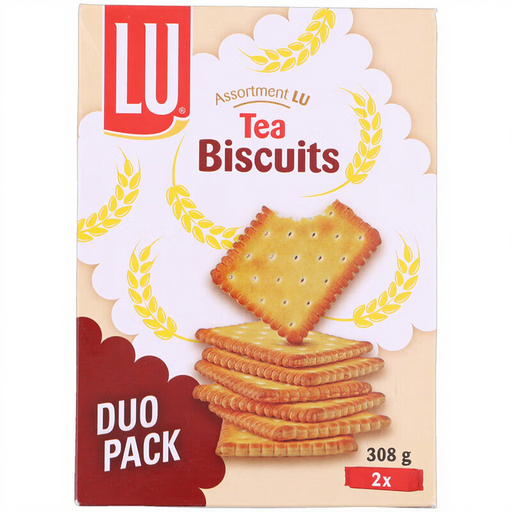 Image unavailable
Tea biscuits for a break with tea or coffee. If you want to hand them out to a group in advance, check how many biscuits there are and how they’re packaged. Also read the current label.
Yes, especially if the ingredients or allergens matter to anyone in the group. The Netherlands Food and Consumer Product Safety Authority explains that labels list 14 allergens. Ask anyone affected to check the current pack rather than relying only on an online description.
First compare similar biscuits per 100 g. According to the Voedingscentrum, manufacturers set their own portion sizes. You can then use the portion size to work out how many biscuits to hand out.
Follow the storage instructions on the pack you choose. For AH Theebiscuits, Albert Heijn recommends storing them in a cool, dark, dry place and putting them in a sealed tin after opening. For other products, check the instructions on the pack.