
Snackers looking to cut down on sugar
You’re looking for a biscuit to enjoy late in the evening and want to understand what ‘less sugar’, ‘no added sugar’ and ‘sugar-free’ each say about a product.


Choose a biscuit for a late-night snack by checking the ingredients list and the sugar content per 100 g, not just a name such as ‘zero’ or ‘Less Sugar’. A sugar-free biscuit may contain polyols and still provide energy; ‘less sugar’ does not mean a product is sugar-free. Decide on your portion in advance, too, and check the current packaging if ingredients or allergens are important to you.
You’re looking for a biscuit to enjoy late in the evening and want to understand what ‘less sugar’, ‘no added sugar’ and ‘sugar-free’ each say about a product.
You want to know which sweeteners a biscuit contains and whether the packaging warns that excessive consumption may have a laxative effect.
You’ll only choose a biscuit if the ingredients and allergen information on the current packaging meet your requirements.
Start by checking the exact sugar claim. Then look at the sweeteners, how much you plan to eat and any ingredients that matter to you.
| What to check | What to look for when buying | Who it matters to |
|---|---|---|
| Sugar claim | Compare ‘of which sugars’ per 100 g and per portion. If the claim says ‘less sugar’, also check which product it is compared with. | If I have a biscuit late at night, I don’t want to confuse ‘no added sugar’ with ‘sugar-free’. For an estimated 36% of consumers, the distinction between sugar claims is the main priority. |
| Sweeteners | Check the ingredients list for polyols such as maltitol, and look out for a warning about excessive consumption. | If a biscuit is sugar-free, I want to know whether it contains polyols before I have several. Around 29% of consumers give the choice of sweeteners the highest priority. |
| Portion and energy | Check the energy content per portion and per 100 g, and decide how many biscuits you actually want to eat. | With a larger pack, I want to choose a portion in advance rather than relying only on the sugar claim. Portion size and energy content are estimated to matter most to 21% of consumers. |
| Ingredients and allergens | Check the current packaging for ingredients, allergens and any statements about traces. | If I need to avoid certain ingredients, the information must match the biscuit I’m going to eat. For around 14% of consumers, this check comes first. |
According to Albert Heijn, Céréal’s sugar-free Chocolate Chip Cookie contains 0 g of sugars, but also 414 kcal per 100 g. So the sugar claim doesn’t tell you how much energy a portion provides.
Check both figures in the nutrition information and decide how many you want to have.
Jumbo says its Jumbo Minder Suiker-ontbijtkoek contains at least 30% less sugar than Jumbo ontbijtkoekreep naturel, while the product contains 22,7 g of sugars per 100 g. This spiced breakfast cake isn’t a biscuit, either.
For a biscuit with a similar claim, use both the stated comparison and the ‘of which sugars’ figure to assess the product.
The packaging for Céréal’s Chocolate Chip Cookie warns that excessive consumption may have a laxative effect; the product contains 26 g of polyols per 100 g.
Read the ingredients and warnings, and decide on a portion that suits you before you start eating.
Albert Heijn notes that ingredients, nutritional values and allergen information may change.
Read the current packaging before eating the biscuit, especially if you need to avoid certain ingredients or allergens.
The sugar-free Chocolate Chip Cookie is a useful example if you’re comparing biscuits by their sugar claims.
Albert Heijn describes San Francisco zero as a crunchy biscuit with a mildly sweet flavour and no added sugar.
Albert Heijn has a ‘Sugar-conscious biscuits’ category, which includes AH Digestive 0% suiker.
Jumbo also uses the ‘less sugar’ claim for sugar-conscious products, including a spiced breakfast cake. This is a different product category from biscuits.
Lotus Bakeries describes Biscoff as a crunchy biscuit with a caramelised flavour.
This cookie bar could suit you if you’re considering one as a late-night snack. Assess the ‘Less Sugar’ claim using the current nutrition information, and choose your own portion.
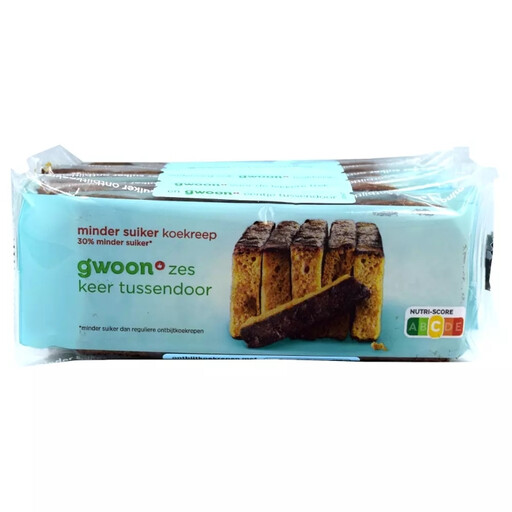 Image unavailable
An option if you’re looking for a cookie bar for a late-night snack and want to assess the sugar claim for yourself.
‘Less Sugar’ appears in the product name. Check the sugar content per 100 g and per bar, what the claim is compared with, and the allergens listed on the current packaging.
No. Albert Heijn lists 0 g of sugars and 414 kcal per 100 g for Céréal’s sugar-free Chocolate Chip Cookie. So check the energy per portion, too, and consider how many biscuits you plan to eat.
No. ‘No added sugar’ doesn’t, by itself, rule out sugars that are naturally present; ‘sugar-free’ refers to the amount of sugars in the product. For the variant you choose, check both the ingredients list and the ‘of which sugars’ figure.
The warning may be related to polyols such as maltitol. The packaging for Céréal’s Chocolate Chip Cookie lists polyols and warns that excessive consumption may have a laxative effect. Check the warning and decide on your portion before having several biscuits.
Decide in advance how many you want to have, then check the nutrition information for that amount. Put the rest of the pack away so your chosen portion doesn’t grow without you noticing.
Yes, especially if ingredients or allergens matter to you. Albert Heijn notes that product information may change and advises you to check the current packaging.