
Taking wide shots
You want to capture the decorated tin and the objects on display together in a way that makes them easy to recognise. The Consumentenbond highlights factors such as your subject and ease of use when choosing a camera.


For a wide shot, start by choosing a camera setup that lets you frame the whole scene from where you’ll be sitting at the table. If you also want to capture small decorations in close-up, pay particular attention to the focusing and magnification capabilities of the specific lens or macro mode. A compact camera keeps your kit simple; a mirrorless camera gives you more choice of lenses, but you’ll need to check what’s included in the kit and give extra thought to lighting and reflections.
You want to capture the decorated tin and the objects on display together in a way that makes them easy to recognise. The Consumentenbond highlights factors such as your subject and ease of use when choosing a camera.
You want to show patterns, texture or small objects individually in close-up. Compare the magnification and minimum focusing distance of the specific lens or fixed-lens mode.
You photograph the tin regularly and want consistent framing and colour. Adobe and Canon recommend controlled lighting, a simple background and a stable composition for product photography.
Choose this option: if you mainly need a wide shot and your current device can achieve the framing and sharpness you want.
Bear in mind: for very small decorations, check whether the device can focus closely enough.
Choose this option: if you want to photograph small details without changing lenses; OM SYSTEM says the TG-7’s microscope mode can focus from 1 cm.
Bear in mind: the fixed lens limits your choice of lenses later on, and the focusing distance alone doesn’t tell you how large a detail will appear in the frame.
Choose this option: if you regularly switch between the whole scene and larger parts of your setup.
Bear in mind: a standard zoom isn’t automatically suitable for filling the frame with the smallest details; check the magnification of the lens supplied with the camera.
Choose this option: if small subjects or textures are often your main focus and you want to use a suitable lens and a stable setup.
Bear in mind: a separate macro lens means choosing an additional lens, and at very short distances it can be harder to keep a subject with depth in focus.
| What to consider | What should you check? | Who is this important for? |
|---|---|---|
| Framing the whole scene | Check with the actual space available on your table that the lens can capture the tin and the objects together; see whether you need a zoom or a different focal length. | If I want to show the tin and all the objects on display clearly, I prioritise getting the framing right. Around 33% of consumers make the whole scene their priority. |
| Magnifying small details | Compare the maximum magnification and minimum focusing distance of the specific lens or fixed-lens mode. | If I want to photograph texture or small decorations individually in close-up, I focus on what the specific lens can actually capture. Around 27% of consumers prioritise magnifying details. |
| Light, shine and colour | Leave space for lighting and a background; review test shots of the shiny tin and pay attention to white balance. | If I want the decorations and colours to stand out clearly, I first want to see how my lighting setup performs. Around 27% of consumers prioritise lighting and colour. |
| A complete setup you can repeat | Check which lens is included in the kit and whether you’ll need another lens or a stable setup for your detail shots. | If I want to recreate the same composition regularly, I want to know what’s included in the set I’ve chosen. Around 13% of consumers prioritise simplicity and a complete kit. |
A camera may be able to focus up close, while a small ornament still takes up very little space in the frame.
To get the framing you want, compare both the focusing distance and the maximum magnification of the specific lens. You can also try the close-up mode with an object of a similar size.
A standard zoom and a separate macro lens are different lenses. Check the exact kit contents and lens mount.
You may need to buy a separate compatible lens for the macro shots you want.
Lighting, the background and white balance all affect how the decorations and colours look; the lighting setup may need extra attention when photographing a shiny tin.
First, take some test shots with a simple background and adjusted lighting. Then see whether there’s a camera feature you still need.
The TG-7 is a fixed-lens option for close-up photography without changing lenses.
The EOS R50 with RF-S standard zoom is an option for wide shots; a compatible macro lens is available as a separate upgrade.
The Z50II kit with NIKKOR Z DX 16–50mm VR includes a standard zoom for framing your setup in different ways.
The ZV-E10 II kit is worth considering if you want to make product videos as well as take photos.
These Joybuy cameras are options to consider for table-top shots of your decorated tin and the objects on display. Check each model to make sure the framing, lens and kit contents are right for the wide shots and close-ups you want.
 No image available
The zoom may be useful if you want to adjust the framing of your table setup; check how it handles the close-up you want using the actual objects.
 No image available
This camera may be worth considering if you want to shoot video as well as stills; check whether the listed combo suits your table-top photography.
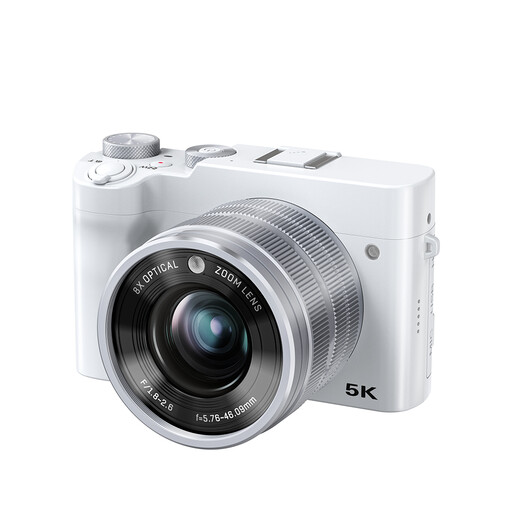 No image available
The optical zoom may help you adjust the framing of the tin and the objects on display; check separately whether it can show the small details you want clearly enough.
 No image available
The supplied zoom lens is useful if you want to adjust the framing between the whole scene and its individual parts.
 No image available
The supplied zoom lens may be useful if you want to switch between different framings of your table setup.
Not necessarily. First check whether your current camera or a standard zoom can frame the whole scene from the space available at your table. A separate macro lens is mainly an option if you want small details to appear large in the frame.
Set up your table in a consistent way and use a tripod if needed. A stable setup helps keep the composition and background the same from shot to shot.
First, try adjusting the composition and focus. If you need more depth of field, you can combine a series of shots taken at different focusing distances; check which feature or software your setup supports for this.
According to the Dutch government, the seller must provide a solution if a product is faulty. The Netherlands has no fixed statutory guarantee period for all products; a manufacturer’s guarantee is in addition to your statutory rights.
Radio equipment is covered by an EU regulatory framework. CE marking is mandatory when the applicable harmonised EU rules require it; check the product information for the specific version, and don’t treat CE marking as proof of photo quality.