
Occasional baker with limited space
You want to make a biscuit base, but don’t have much room to store an appliance. First consider whether the manual method will do the job for your occasional baking.


If you only need a small amount of biscuit crumbs now and then, you don’t necessarily need a food processor: BBC Good Food describes using a sturdy, clean bag and a rolling pin as a manual method. If you also want to chop, slice or grate ingredients regularly, compare mini choppers and food processors by their attachments, usable capacity, storage requirements and cleaning effort.
You want to make a biscuit base, but don’t have much room to store an appliance. First consider whether the manual method will do the job for your occasional baking.
You want to do more than just crush biscuits: you also want to chop, slice or grate ingredients. Check the usable bowl capacity and which parts come with the exact model.
You expect to process larger quantities more often and have space for a bigger appliance and its accessories.
Best for: crushing biscuits now and then, without needing to store an extra appliance.
The trade-off: the manual method takes some effort; BBC Good Food describes using a sturdy, clean bag and a rolling pin.
Best for: chopping small quantities, when storage space is limited.
The trade-off: a mini chopper won’t necessarily offer the same slicing and grating options as a food processor.
Best for: if you regularly want to chop, slice or grate ingredients as well as make crumbs.
The trade-off: extra discs mean more parts to store and clean. Kenwood lists a 1.3 l bowl and a dry working capacity of 0.75 l for the FDP22.130GY.
Best for: if you’re planning to prepare larger quantities and tackle a range of food-preparation tasks.
The trade-off: Bosch states that the MCM3200W measures 375 × 220 × 260 mm, so check your available storage space first.
| What to consider | What to look for when buying | Who should consider this? |
|---|---|---|
| Crumbs and attachments | Check whether the model you’re considering has a chopping blade and what the manual says about dry biscuits. | If I mainly want to crush biscuits, I want to use the right attachment and check the crumbs as I go. Around 36% of consumers prioritise the crumb result. |
| Storage space | Compare the appliance dimensions, count any separate parts and measure your cupboard, drawer or worktop. | In a small or shared kitchen, I want to know whether the appliance and its parts will actually fit. Around 29% of consumers give storage space top priority. |
| Batch size and other tasks | Compare the dry working capacity, where stated, and check which blades and discs are included with the exact model. | If I want to use the appliance for other preparations too, I’m looking for a suitable working capacity and the functions I’ll actually need. Around 21% of consumers prioritise batch size and versatility. |
| Cleaning and use | Check the cleaning instructions for each part and weigh up extra functions against the parts you’ll need to clean after use. | If I only use an appliance occasionally, I want to avoid ending up with extra washing-up and storage needs. Around 14% of consumers prioritise easy cleaning and avoiding an unnecessary purchase. |
For the Kenwood FDP22.130GY, Kenwood lists a 1.3 l bowl and a dry working capacity of 0.75 l. These figures therefore don’t mean the same thing when you’re planning a batch.
Look up the dry working capacity for the exact model and compare it with your recipe.
If your batch is larger than the working capacity, you may need to process it in several rounds.
Kenwood recommends the chopping blade for crushing biscuits; the slicing and grating disc is intended for other tasks.
Before buying, check which attachments are included with the exact model.
A larger food processor needs space for both the appliance and its accessories. BBC Good Food also describes a manual method for crushing biscuits.
Only choose a larger model if you’ll make use of its other functions and have the space to store it.
For a single biscuit base, a large appliance takes up more storage space than a bag and rolling pin.
Philips describes the HR1393/00 as a compact mini chopper for smaller chopping jobs.
According to Kenwood, the MultiPro Go FDP22.130GY combines a chopping blade with a slicing and grating disc.
The MultiTalent 3 MCM3200W is a larger food processor with chopping, slicing and grating accessories.
According to its brand page, Braun offers both the MultiPractic 3 mini chopper and PurEase food processors.
This selection focuses on mini choppers and food processors for chopping tasks in a small kitchen. For dry biscuits, always check the manual for the exact model.
 Image unavailable
The chopping function suits anyone who wants to chop other ingredients as well as make crumbs; check the manual to see whether this model is suitable for dry biscuits.
The product listing specifies 750 W, a capacity of 1.8 l and slicing and grating discs. The description also mentions chopping and removable parts.
 Image unavailable
The separate 0.6 l bowl may suit small preparations; check the manual to see whether this model is suitable for dry biscuits.
The Joybuy product listing specifies two glass bowls of 2 l and 0.6 l, two speeds and 300 W. The bowl and lid are not heat-resistant; avoid sudden temperature changes of more than 50 °C and do not put them in the microwave.
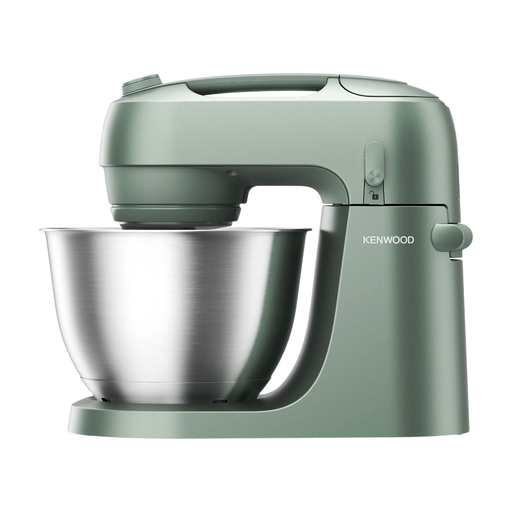 Image unavailable
The stated bowl capacity suits anyone looking to chop small quantities; check the manual to see whether this model is suitable for dry biscuits.
The product name specifies 350 W, three speeds, a removable blade and a 0.5 l bowl.
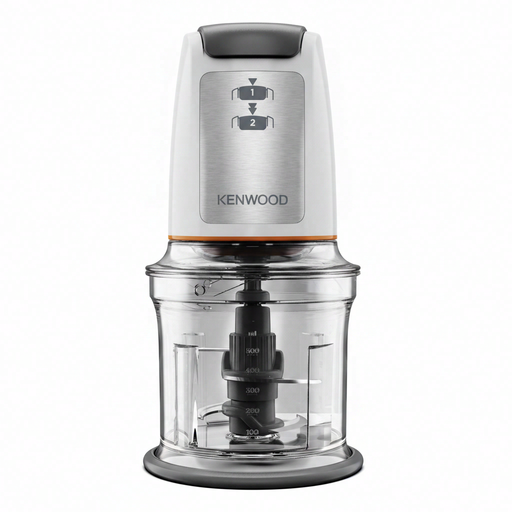 Image unavailable
This compact mini chopper is designed for small quantities; check the manual to see whether this model is suitable for dry biscuits.
The product listing specifies a 0.5 l bowl, a maximum fill quantity of 225 g, four blades and two speeds. After using the mini chopper for a maximum of 30 seconds, leave it to cool for 2 minutes.
 Image unavailable
This food processor suits anyone who wants to crush biscuits and slice or grate other ingredients too. Kenwood recommends the chopping blade for biscuits; follow the instructions for this model.
Kenwood lists a 1.3 l bowl, a dry working capacity of 0.75 l and a reversible 4 mm slicing and grating disc. The chopping blade is sharp, so handle it carefully when assembling, dismantling and cleaning.
Put the biscuits in a sturdy, clean bag and crush them with a rolling pin, as described by BBC Good Food. Briefly pulsing them in a food processor is another option; check the crumbs as you go.
Kenwood recommends using a food processor’s chopping blade to crush biscuits. Check the manual for your exact model: a slicing or grating disc is a different attachment.
No. Philips says the accessories are dishwasher-safe, but the motor unit and plug must not go in the dishwasher. For other models, follow their own cleaning instructions.
No. According to the Dutch Government, there is no fixed statutory warranty period in the Netherlands: a product must last as long as you can reasonably expect it to. If something goes wrong, contact the retailer; a manufacturer’s warranty is in addition to your statutory rights.
CE marking is mandatory for electrical appliances covered by the applicable rules. Parts that come into contact with food must meet the relevant requirements for food contact materials. The Netherlands Food and Consumer Product Safety Authority explains these requirements; check the information for the exact model and don’t treat a product listing as an independent inspection of a specific item.