
Crumb maker with limited space
You want to crumble biscuits for something like a tart base, but have little room for the appliance and its parts. Compare how much space it takes up both when in use and when stored away.


For small batches of biscuit crumbs, a mini chopper is the obvious choice. If you also want to slice or grate regularly, opt for a compact food processor. Compare the usable chopping capacity and check the manual to make sure biscuits are suitable: the bowl capacity doesn’t tell you how many biscuits you can process at once. A larger appliance and extra attachments give you more options, but they also take up more space and require more cleaning.
You want to crumble biscuits for something like a tart base, but have little room for the appliance and its parts. Compare how much space it takes up both when in use and when stored away.
You process only a few biscuits at a time and want to control how fine the crumbs are without using a large bowl. Look for pulse control and check the difference between the stated bowl capacity and the usable chopping capacity.
You want one appliance for making crumbs as well as regular slicing or grating. Compare the included attachments with the space they take up.
Start with the space you have available and the size of the batches you make. Extra features and cleaning are mainly considerations if you also want to use the appliance for other jobs.
Choose this if: you mainly want to crumble small batches and have limited storage space.
Bear in mind: a small usable capacity may mean processing the biscuits in several batches.
Choose this if: you want to chop, slice or grate as well as make crumbs.
Bear in mind: separate discs and other parts need extra storage space and cleaning.
Choose this if: you regularly process larger quantities and use other functions too.
Bear in mind: a larger bowl doesn’t guarantee that a particular quantity of biscuits will process properly in one go.
Choose this if: you only need crumbs occasionally and would rather not store an appliance.
Bear in mind: this method doesn’t offer the extra chopping, slicing and grating functions of a food processor.
| What to consider | What should you check? | Who is this important for? |
|---|---|---|
| Set-up and storage | Compare the appliance’s dimensions with the space available, and allow for the parts you want to store. | I want the appliance, including the parts I need, to fit in my small kitchen. Around 40% of consumers mainly consider set-up and storage space. |
| Small batches and crumb texture | Check the manual to make sure biscuits are suitable, and look at the usable chopping capacity of the exact model. | I make small batches and want to check the crumbs as they’re chopped. Around 30% of consumers prioritise batch size and control over the crumbs. |
| Larger batches or more functions | Compare the included slicing and grating attachments, and check the quantity that can be processed at a time. | I want to use the appliance for other jobs too, or make larger batches more often. Around 20% of consumers prioritise these extra functions or a larger bowl. |
| Cleaning | Check which parts you use and follow the cleaning instructions for each one. | For a small job, I don’t want to clean lots of separate parts unnecessarily. Around 10% of consumers consider cleaning effort their main concern. |
For the Philips HR1393/90, Philips lists a bowl capacity of 0.7 l and a chopping capacity of 0.5 l. Neither figure tells you the weight of biscuits it can handle.
Check the usable capacity and ingredient limits for the exact model; don’t use the number of litres to estimate how many biscuits it can process.
A lower usable capacity may mean processing the biscuits in several batches.
An appliance designed mainly for mixing or whisking won’t necessarily have the chopping blade you need to make crumbs.
First decide whether you want to crumble biscuits, make a batter or do both. Then check that the model comes with the right attachment.
Dimensions, attachments and cleaning requirements vary between models. The Consumentenbond notes that cleaning a food processor can take longer than doing a comparable job by hand.
Measure the space you have for using and storing the appliance, and consider which parts you actually need for making crumbs.
Attachments you rarely use take up space and may mean more cleaning.
According to the Dutch government, the Netherlands has no fixed statutory guarantee period. Any manufacturer’s guarantee is separate from your rights against the seller.
If a product is faulty, contact the seller. Consider an extended guarantee only in light of the rights it genuinely adds.
The MultiPro Go FDP22.130GY is worth considering if you want to make other things as well as crumbs.
The 5KFC3516EER mini chopper is worth considering if you mainly want to tackle small chopping jobs.
The MultiTalent 3 MCM3201B is worth comparing if you want to slice and grate as well as make crumbs.
The Daily Collection HR1393/90 is an example of why usable chopping capacity matters alongside bowl capacity.
These products are suited to small chopping jobs and compact kitchens. There’s also a food processor for anyone looking for a larger bowl or extra functions.
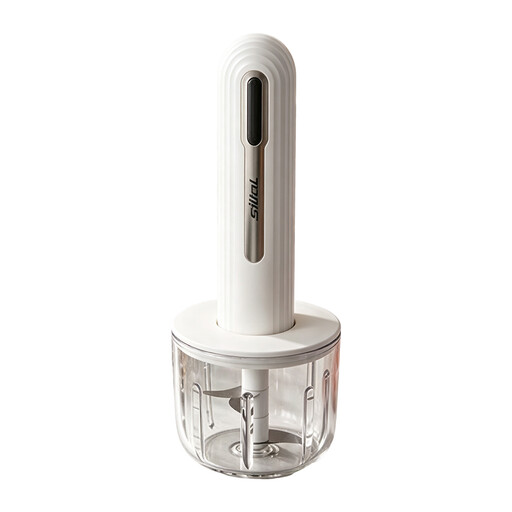 No image available
Worth considering if you’re looking for a compact chopper for small batches.
The product name specifies a transparent bowl. According to the product restrictions, the appliance isn’t designed for bones, ice or hot ingredients.
 No image available
The two bowl sizes may suit anyone considering different batch sizes; check what usable quantity of biscuits is permitted.
The product name specifies glass bowls of 2 l and 0.6 l, and a power rating of 300 W. According to the product restrictions, the bowls and lids aren’t heat-resistant, and temperature changes of more than 50 °C should be avoided.
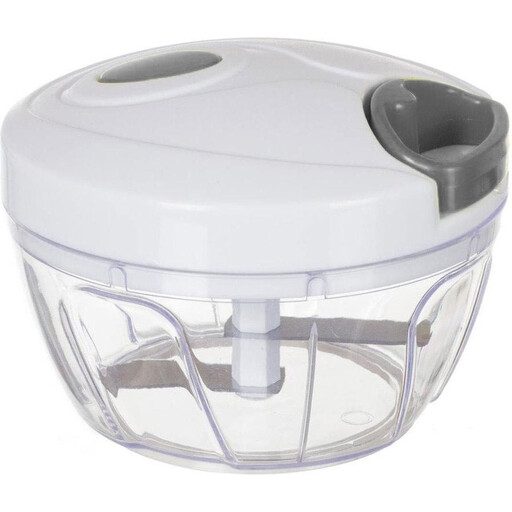 No image available
A small bowl capacity may be useful if you mainly prepare limited quantities.
The product name specifies a 400 ml capacity and a white and grey design. Check the product information and manual to make sure the ingredients and batch sizes you have in mind are suitable.
 No image available
This food processor is worth comparing if you want to make other things as well as crumbs.
The product name specifies a power rating of 800 W and a 2.3 l bowl. This stated capacity doesn’t tell you how many biscuits you can chop at once; check the dimensions and included functions too.
 No image available
A compact food processor worth comparing if you want to make other things as well as crumbs.
Check the exact model, included attachments and manual for use with dry biscuits; bowl capacity alone doesn’t determine the usable biscuit batch size.
Use the food processor’s chopping blade if the model’s manual says it’s suitable. Kenwood lists crumbling biscuits as a use for its food processor blade, but that doesn’t tell you how many biscuits other models can handle.
You can crumble biscuits in a bag with a rolling pin instead, without needing to store an appliance. This manual method doesn’t offer the extra functions of a food processor.
Follow the manual when assembling the appliance, and check that the bowl and lid are securely in place. When handling and cleaning a chopping blade, hold it by the handle and keep away from the cutting edges. Check whether each part is dishwasher-safe.
An extended guarantee isn’t a condition of your statutory rights in the Netherlands. According to the Dutch government, there’s no fixed statutory guarantee period in the Netherlands; if a product is faulty, contact the seller. Consider an extended guarantee based on the rights it adds.
Electrical equipment must meet EU safety requirements within the applicable voltage limits. CE marking is required when the relevant harmonised rules prescribe it. Rules on food-contact materials apply to parts that come into contact with food. The Netherlands Food and Consumer Product Safety Authority states that manufacturers and importers are responsible for product safety, and that not every product is checked before sale. A statement on a sales page doesn’t, by itself, prove that a specific item complies.