
Baking for a large potluck
You want to fit several dough logs or sliced biscotti into each batch, so the usable baking tray is your main consideration.


Start with the usable baking tray and the size of your dough logs, not just the oven’s capacity in litres. Biscotti are baked as logs first, then sliced and baked again. A compact freestanding fan oven is a good fit if worktop space is limited and you don’t mind baking in extra batches. Consider a larger model if you want to bake more dough at once and have a safe place for it. Before you buy, check the tray size, installation instructions and conformity information for the exact model.
You want to fit several dough logs or sliced biscotti into each batch, so the usable baking tray is your main consideration.
You’re looking for a freestanding oven that fits the available space with the clearances specified in the instructions, even if that means baking extra batches. Inventum and Tristar describe compact freestanding oven models supplied with a baking tray.
You want to consider the controls and energy use across multiple batches, without relying on the wattage alone to work out consumption. Milieu Centraal recommends comparing ovens by their energy use per cycle or per year.
A compact oven can save worktop space, while a larger model may offer more room for dough. The usable baking tray and the space available for the oven will help you decide what’s right for your potluck.
A good fit if: worktop space is limited and you don’t mind baking smaller batches.
Consider: the capacity in litres doesn’t tell you how many dough logs will fit on the baking tray.
A good fit if: you want to bake larger quantities at once and have enough safe space to position the oven.
Consider: check the external dimensions and usable baking tray. A larger capacity doesn’t prove that you’ll get all the potluck baking done faster.
| What to consider | What should you check? | Which shoppers is this for? |
|---|---|---|
| Usable baking tray | Compare the tray size with your recipe, dough logs and desired portions. | I want to fit enough dough logs and slices on the tray for the potluck, and plan how many batches I’ll need. Around 33% of shoppers prioritise a suitable baking tray size and capacity. |
| Space for the oven | Measure the available space and check the door clearance and required clearances in the manual. | If my worktop space is limited, I want to know whether the oven can be positioned there in line with the manual; I’m happy to bake extra batches if needed. Around 27% of shoppers prioritise a suitable place to position the oven. |
| Energy use across multiple batches | Where possible, compare energy use per baking cycle on the same measurement basis and factor in the number of batches required. | I want to take the energy use of repeated batches into account without treating wattage as the same thing as total consumption. Around 20% of shoppers prioritise energy use across multiple batches. |
| Controls for both baking stages | Check that the model has a fan setting, temperature control and timer to suit your recipe. | I want to set the temperature and time accurately for both the logs and the slices. Around 20% of shoppers place particular importance on being able to control both baking stages. |
The dough logs and, later, the slices need to fit on the baking tray; the oven’s capacity doesn’t tell you the tray size.
Compare the dimensions of the supplied baking tray with your recipe before choosing a compact or larger model.
A smaller tray may mean extra batches. If the supplied tray doesn’t fit, you may need to find a suitable one.
The door needs room to open, and the oven must be positioned in accordance with the manual.
Check the manual for the exact model before deciding where to put it.
Wattage indicates power, not the measured energy use of a full baking cycle with two stages and any additional batches.
Where possible, compare energy use per baking cycle on the same measurement basis, and take the number of batches required into account.
Inventum describes the OV207B as a 20-litre freestanding fan oven and the OV457B as a 45-litre model; both are listed with a baking tray.
According to Tristar, the OV-1437 is a compact 19-litre fan oven supplied with a baking tray.
Severin describes the TO 2068 as a compact oven with a capacity of around 20 litres, fan cooking and interior lighting.
Princess describes model 112754 as a 45-litre freestanding fan oven supplied with a baking tray.
This selection includes air fryer ovens and freestanding mini ovens with a stated baking function or convection. Check that the usable baking tray or trays suit your recipe and that you can position the exact model safely. RVO explains that a required CE mark is the manufacturer’s declaration of conformity, not an independent safety certification.
 No image available
The product description mentions baking and two cooking compartments that can be used independently; check that the supplied trays suit your recipe.
The title lists a capacity of 23 L and dual zone. The description mentions 15 programmes.
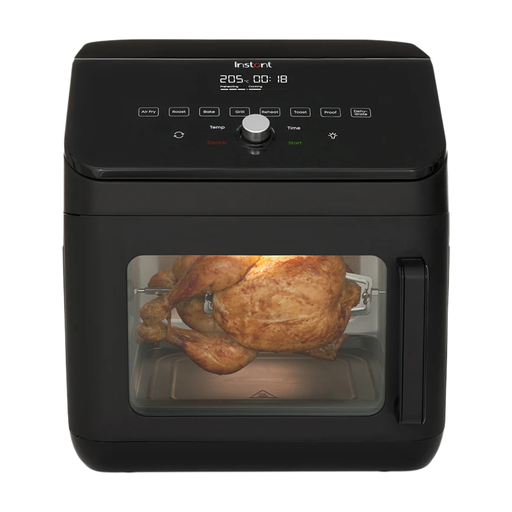 No image available
The product description mentions baking with fan circulation; compare the supplied trays with the dimensions in your recipe.
The title lists a capacity of 13 L. The description mentions adjustable time and temperature and multiple trays.
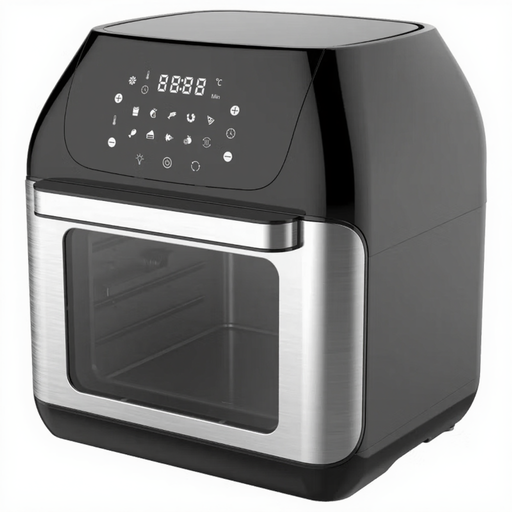 No image available
The product description mentions baking with convection; check that the supplied baking accessories are the right size for your dough.
The title lists 12 L and 1500 W. The description mentions adjustable temperature and a timer.
 No image available
The description lists a freestanding mini oven with a convection function; check the baking tray size before estimating how much dough it can hold.
The title lists 45 L and 2000 W. The description mentions six functions, including convection.
 No image available
The description mentions fan settings and a supplied baking and roasting tray; check its dimensions against your recipe.
The description lists a capacity of 22 litres, five heating settings, temperature control up to 230 °C and a timer. It also mentions a baking tin of up to 25 cm.
You can’t tell from the capacity in litres alone. For example, a recipe from Koken met Kennis makes two 25 cm dough logs, then places the sliced pieces back on a baking tray to bake again. Compare those dimensions with the usable tray in your oven and plan for multiple batches if necessary; quantities and sizes vary from recipe to recipe.
Don’t assume that you can. Before setting it up, check the manual for the exact model to see where it can be placed and how much ventilation space it needs. Remember to allow room for the door to open.
Stay nearby while baking, don’t overload a multi-socket adaptor and don’t connect extension leads to each other, advises the Fire Service. Follow the manufacturer’s cleaning instructions; for the OV207B, Inventum recommends using a soft, damp cloth with a little washing-up liquid.
No. ACM ConsuWijzer explains that your statutory guarantee applies alongside any manufacturer’s or retailer’s guarantee. If a product breaks sooner than you could reasonably expect under normal use, the retailer is responsible for providing an appropriate free solution, subject to the applicable terms.
No. According to the Netherlands Enterprise Agency, the required CE marking is the manufacturer’s declaration that the product meets the relevant EU requirements; the logo is not an independent certification or a safety guarantee. Check the conformity information for the exact oven being offered in the Netherlands.