
Analyst with a cramped desk
You process counts alongside a keyboard and have very little room to move a mouse.


If you have limited room to move a mouse, a stationary trackball is a sensible option. If you’re used to navigating tables and maps with a conventional mouse, a compact one could work well if you still have room to move it. A vertical mouse is worth considering if you’d like to try a different hand position, but it still needs space and must fit your hand. None of these designs guarantees that discomfort will disappear, so consider your workspace and the fit, and vary your tasks.
You process counts alongside a keyboard and have very little room to move a mouse.
You regularly analyse data and want to consider hand position, fit and variety, without treating a mouse as a remedy.
You review count data or maps and want to switch between precise pointing and scrolling.
In its 2025 Screen Work factsheet, published via Arboportaal, TNO notes that mouse use can contribute to the risk of discomfort in areas including the shoulders, arms, wrists and hands. A mouse’s shape alone therefore cannot guarantee comfort. Consider the fit too, and break up long periods of work.
| What to consider | What to look for | Who is this important for? |
|---|---|---|
| Room to move | Measure the clear space beside your keyboard and allow for the space taken up by the mouse itself. | If there’s barely any room to slide the mouse, I want to move the cursor without moving the mouse itself; around 36% of consumers prioritise limited room to move. |
| Comfort during extended use | Try the grip, hand orientation and button controls. Also check whether you can position the mouse close to your keyboard. | For long analysis sessions, I want a grip and hand position that suit me, and I want to be able to vary my tasks; around 29% of consumers prioritise comfort over extended periods. |
| Navigation | Test whether the scroll wheel or scroll ring feels comfortable to use for both count data and maps. | When I’m looking at lots of rows or maps, I want to point precisely and scroll through data; around 21% of consumers prioritise navigation. |
| Connection and power | Check Bluetooth, available USB ports, any receiver and the power supply for the version you’re considering. | To avoid connection surprises, I want to know in advance which connection and power options my computer and workspace can support; around 14% of consumers make this their top priority. |
A compact conventional mouse still needs to slide across the desk. A smaller body doesn’t automatically make it suitable for a cramped space.
Measure both the space for the mouse and the clear room you have to move your hand and arm.
The shape alone doesn’t tell you whether the mouse will fit your hand or feel comfortable at your workstation. TNO’s 2025 Screen Work factsheet, available via Arboportaal, identifies mouse use as a factor in the risk of discomfort.
Try the grip and hand orientation, and break up long periods of computer work with a different task or a break.
Logitech states that the MX Anywhere 3S is supplied without a Logi Bolt receiver.
Before buying, check whether Bluetooth is available or whether you already have the right receiver.
Logitech offers different types of mouse for a range of workspaces: a stationary trackball, a compact conventional mouse and a vertical mouse.
The wired, symmetrical Orbit trackball with scroll ring is an option if you have little room to move a mouse or want to use a trackball with your left hand.
The Ozaa Compact is a rechargeable, compact conventional mouse with a choice of Bluetooth or a USB receiver.
This selection includes trackballs, compact conventional mice and vertical mice for analysing count files, maps and tables at a small desk.
 No image available
Worth considering if you have little room to move a mouse: the trackball moves the cursor while the body stays in place.
Right-handed version; check that it suits your hand.
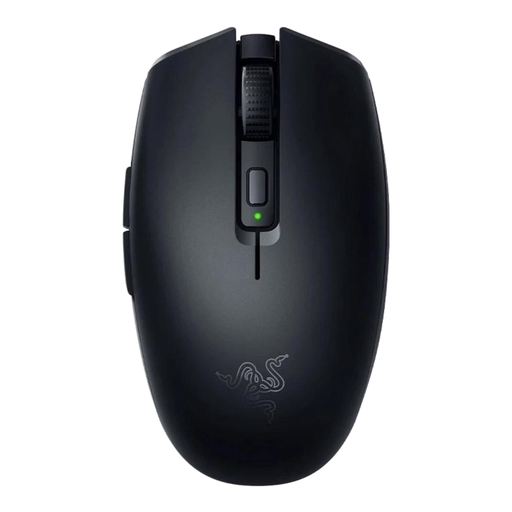 No image available
A compact conventional wireless mouse to consider if you still have room to move it across the desk.
The product name lists an optical sensor and 18,000 DPI.
 No image available
A vertical mouse to consider if you’d like to try a different hand position and still have room to move it.
Check that the right-handed version suits you.
 No image available
This vertical mouse is worth considering if you’d like to try a different hand position. Bear in mind that you’ll still need room to move it.
Logitech recommends the Lift for small to medium-sized hands. Also check that the version for your preferred hand is available.
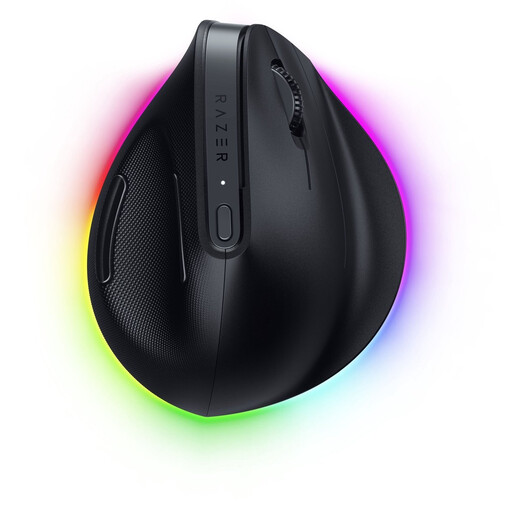 No image available
A vertical version to consider if you’re looking for a different hand position and have enough room to move the mouse.
Check that the right-handed version suits you.
Don’t automatically opt for a higher DPI; focus on whether you can adjust the cursor speed for the tables and maps you use. Controls that are easy to adjust are more important than the number alone.
Check whether you have Bluetooth or a spare USB port, and which receiver comes with the exact version you’re buying. Logitech says the MX Anywhere 3S can connect via Bluetooth and is supplied without a Logi Bolt receiver; the wired Kensington Orbit uses a USB cable.
Check the ball and its housing for dirt, and follow the cleaning instructions for your model. Kensington says a build-up of dust and debris can make the cursor move less smoothly.
For an online purchase, you generally have 14 days from delivery to change your mind, although exceptions may apply. Your statutory rights for a faulty product are separate from any manufacturer’s warranty: ACM ConsuWijzer states that the seller must offer an appropriate solution free of charge, such as a repair, replacement or refund.
Arboportaal says that computer work should be alternated at regular intervals with another task or a break. How this applies in your workplace depends on your work and employment relationship; the guidance does not prescribe a particular type of mouse.