
Map and table analyst
You compare distribution maps or trends with count data and want to decide how much detail should be visible on each screen. Sovon Vogelonderzoek Nederland provides data by area, including indices and counts.


If you need maps and count data visible at the same time, two QHD screens are a good fit if your desk and computer can accommodate them. A compact Full HD screen is more practical when the second screen is mainly for data entry or reference information and space is limited. Dell Netherlands lists a resolution of 2560 × 1440 pixels for the P2725D and 1920 × 1080 pixels for the more compact P2425H. A 27-inch 4K screen may suit you if fine map detail on one screen is your priority, but it won’t automatically replace a two-screen setup.
You compare distribution maps or trends with count data and want to decide how much detail should be visible on each screen. Sovon Vogelonderzoek Nederland provides data by area, including indices and counts.
You regularly connect a laptop and want to know whether it supports two external screens and whether the chosen connection can also charge it. Apple Support notes that the number of screens depends on the exact Mac model and display settings.
You want to place a second screen beside your main display without taking up too much workspace. Size and adjustability help you work out what will fit on your desk; Dell Netherlands and LG Netherlands describe adjustable models in a range of sizes.
A good fit when: your main screen displays the map and you mainly need a separate screen for count data or references, with limited desk space.
Bear in mind: a Full HD screen has fewer pixels than a QHD screen; Dell Netherlands specifies 1920 × 1080 for the P2425H and 2560 × 1440 for the P2725D.
A good fit when: you regularly want to view maps, charts and count data at the same time, and your computer supports two external screens.
Bear in mind: you’ll need space for both monitors and will need to arrange a connection for each one; a standalone QHD monitor doesn’t, by itself, provide laptop docking.
A good fit when: you often connect and disconnect a compatible laptop and want to use a hub or daisy-chain your monitors.
Bear in mind: USB-C or a DisplayPort output doesn’t guarantee that your computer supports two external screens; also check video output and the required charging power.
A good fit when: you want to view fine map detail on one screen and your computer supports the resolution you need.
Bear in mind: more pixels don’t automatically mean larger or more legible text; check the text scaling and the space available on your desk.
Start by deciding how you’ll divide tasks between the screens. Then check that your computer can support the setup you want and that both monitors will fit in your workspace.
| Consideration | What to look for when buying | Who should prioritise this? |
|---|---|---|
| Map detail and space for tables | Compare the resolution of both screens with the map and table windows you want to use at the same time; also check that they’re easy to read from your usual viewing distance. | If I want to compare maps, trends and count data at the same time, I prioritise detail on each screen. Around 36% of consumers put map detail and space for tables at the top of their list of buying concerns. |
| Connecting two screens | Check your exact computer model, how many external screens it supports, video over USB-C and the charging power required. | I want to connect my laptop and be sure both external screens will work, even if I change where I work. Around 29% of consumers prioritise connecting two screens. |
| Adjustability for long working sessions | Check the height adjustment, tilt and any rotation available on each screen; also consider how the two screens will sit side by side. | For long analysis sessions, I want to be able to adjust the position of both screens to suit my workspace. Around 21% of consumers put adjustability at the top of their list of buying concerns. |
| Desk space and total purchase cost | Measure the space required, including monitor stands, and allow for any extra cables or adapters. | If I want two screens but have limited space, I factor in their size and the connections they require when making my choice. Around 14% of consumers prioritise desk space and the total purchase cost. |
A USB-C port may only transfer data, so it may not support video or laptop charging. Dell lists a USB-C downstream port for data at up to 15 W on the P2425H.
Check which functions each port supports: video signal, data transfer and the charging power your laptop requires.
The number of external screens may depend on your computer model and the chosen resolution and refresh rate. A hub won’t automatically change that limit.
Before buying, look up the specifications for your exact computer and check that it supports the two screens you plan to use at the same time.
Dell Netherlands lists both standalone QHD monitors and a QHD model with a USB-C hub.
LG Netherlands lists the 27UP850K-W as a 27-inch 4K option for anyone prioritising detail on a single screen.
Lenovo positions the ThinkVision T27h-30 as a 27-inch QHD monitor with USB-C docking.
BenQ lists the GW2790QT as a 27-inch QHD screen with USB-C and DisplayPort output.
Philips lists the 27E1N5600HE/00 as a 27-inch QHD option with a built-in webcam.
This selection of Joybuy products includes screens for map and table work in QHD, 4K and ultrawide formats. Before buying, check that your computer supports the screen setup you want and that the version on offer meets the applicable EU requirements, including the required CE marking; the European Union describes CE marking as part of the rules for products that require it.
 No image available
A standalone QHD screen for viewing map and table windows on separate monitors.
27 inches; 2560 × 1440 pixels; adjustable stand; HDMI and DisplayPort connections.
Check that your computer supports the resolution you want and the use of two external screens.
 No image available
A standalone QHD screen for viewing map and table information side by side.
27 inches; 2560 × 1440 pixels; 2 × HDMI 2.0 and 1 × DisplayPort 1.4.
Check your computer’s video capabilities if you want to use this screen alongside a second external monitor.
 No image available
An ultrawide screen for viewing multiple windows side by side; it’s one screen, not two separate monitors.
34 inches; 3440 × 1440 pixels; 21:9 aspect ratio; curved 1800R screen.
Consider whether the wide format will fit on your desk and whether you’d prefer one ultrawide screen or two separate screens.
 No image available
An option if fine map detail on one screen is your priority; check that your computer can handle the chosen resolution.
27 inches; IPS panel; 3840 × 2160 pixels.
A 4K monitor won’t automatically replace the two-screen setup you want.
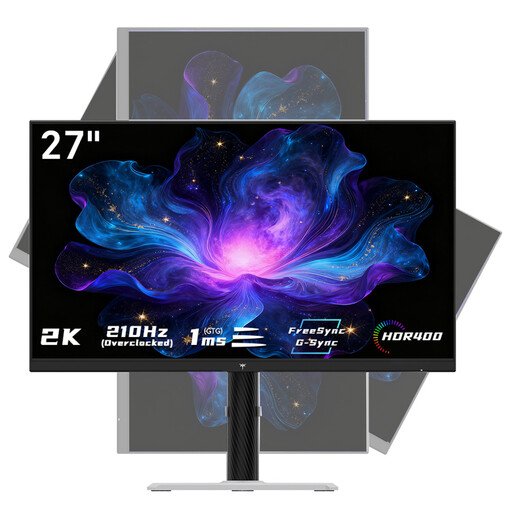 No image available
A standalone QHD screen for viewing maps and tables on separate monitors.
27 inches; 2560 × 1440 pixels; adjustable stand; HDMI and DisplayPort connections.
Check that your computer supports two external screens through the connections you plan to use.
No, it depends on the exact computer model and the chosen resolution and refresh rate. Apple Support, for example, notes that a hub won’t increase the screen limit of a MacBook Air. So check your computer’s documentation before choosing a DisplayPort output or MST setup.
Open Display settings, identify the screens and drag them into the positions they occupy on your desk. If a connected screen isn’t showing, use the option there to detect a display; Microsoft Support describes these steps for Windows.
Yes, your statutory rights are separate from any manufacturer’s warranty. The Dutch government states that the Netherlands has no fixed statutory warranty period. If a product is faulty, the retailer is your point of contact, and your specific rights depend on the circumstances.
For employees who work with a screen for more than two hours a day, Arboportaal states that the screen and keyboard must not be attached to one another. This is a conditional workplace requirement, not a universal buying specification for private users.