If you practise at a computer while seated and want to listen back to your recording, a wired USB headset with an adjustable microphone boom suits this way of working. Check that the USB version and fit are right for your device and where you sit. If you want to practise through the venue sound system, choose a headset microphone with the right input, or a complete wireless system with a receiver. Shure, Sennheiser and the Dutch Authority for Digital Infrastructure (RDI) provide product and frequency information to help you check your chosen stage setup.
Who is this guide for?
Practising at home while seated
You record both language versions on a computer and listen back to them. Check the connection, the position of the microphone boom and whether the headset feels comfortable. Logitech describes these features for the H390.
Speaker at online rehearsals
You practise remotely and want to listen, speak and mute yourself during the call. Jabra’s guide warns that not every mobile USB-C device or app supports the audio connection, so check the exact headset variant.
Speaker rehearsing in a venue
You want to practise with a sound setup like the one at the event. Shure describes the WH20XLR as a standalone microphone with an XLR connection; Sennheiser describes the XSW 1-ME3-BC as a headset microphone, transmitter and receiver.
What should you look for when choosing?
First decide whether you’ll practise only on a computer or also speak through the venue sound system. Then check the connection and microphone position. Fit and ease of use matter most if you often rehearse while seated.
Wired USB computer headset
Suitable for: recording, online practice or listening back straight away on a computer, provided the USB version matches the port available.
Keep in mind: USB does not automatically make a headset suitable for an XLR input on a venue sound system.
Wireless computer headset
Suitable for: online practice when you don’t want to be tethered by a cable, as long as the connection to your recording device has been confirmed.
Keep in mind: check the connection and remember that you’ll need to pair and charge it.
XLR microphone or wireless stage system
Suitable for: practising through a venue sound system, once you’ve identified the required input and components.
Keep in mind: a standalone XLR microphone is not a complete wireless system. For UHF equipment, also check the frequencies available at the location where you’ll use it.
| What to consider |
What should you check? |
Who is this important for? |
| Clarity in both languages |
Make a test recording of both language versions and check that you can position the microphone boom close enough to your mouth. Listen to the recording in your own space. |
If I’m practising both language versions, I want to be able to assess them properly afterwards. Around 36% of consumers put clarity first. |
| Connection and listening back |
Check the available port, the exact USB or 3.5mm version, and whether your device and app support recording and playback. |
I want to be sure the headset works with my recording device before I start practising. Around 29% of consumers prioritise the connection and listening back. |
| Comfort while practising seated |
Check the fit of the headband and ear cushions, and how the cable runs from your seat. Try the headset on yourself if possible. |
For repeated practice sessions, I want the headset to feel comfortable without distracting me from the text. An estimated 21% of consumers put wearing comfort first. |
| Connection to the venue sound system |
Check the microphone input and the components required. For a wireless UHF system, consult the RDI information for the exact version and location. |
If I want to practise through a venue sound system, the microphone needs to work with the equipment. Around 14% of consumers name this connection as their top priority. |
Buying pitfalls
-
Choosing a computer headset to use with a venue sound system
A USB computer headset and a stage setup with XLR or a wireless receiver don’t necessarily use the same connections or components.
First decide whether you’ll record on a computer or practise through a venue sound system. Then check the input and all the components required for your chosen signal path.
-
Assuming every version under one model name is interchangeable
USB-A, USB-C, mono and stereo versions, and different connectors can vary by model. Wireless system frequency information also depends on the version you choose.
Compare the full product number with the port on your device. For UHF equipment, check the RDI frequency information for the location where you’ll use it.
-
Confusing a manufacturer’s warranty with your statutory rights
According to the Dutch government, there is no fixed statutory warranty period in the Netherlands; a manufacturer’s or seller’s warranty is additional. If a product is faulty, contact the seller.
Check what extra cover an additional warranty provides, and speak to the seller if your product is faulty.
Relevant brands
Logitech
The H390 is a wired USB computer headset for recording or online practice from a fixed seat.
- For the USB-A version, Logitech describes an adjustable headband, a positionable microphone boom, in-line controls and a 1,9 m cable.
- Check whether you’re buying the USB-A version or another variant. These features are not a comparison of recording quality with other brands.
Jabra
The Evolve2 30 SE is a family of wired computer headsets, available in different USB, mono and stereo versions.
- Jabra specifies two microphones and versions with USB-A, USB-C or USB-C/A.
- According to Jabra, not every mobile USB-C device or app supports the audio connection. Check the exact variant and device.
Poly
The Poly Blackwire 3320 8X220AA, as described by HP, is a wired stereo headset with USB-C.
- For this version, HP lists a USB-C/A adapter, a noise-cancelling microphone and mute and volume buttons.
- Other Blackwire versions may have different connections. Check the product number; this description does not refer to a wireless or standalone stage microphone system.
Shure
The WH20 family consists of standalone dynamic headset microphones for use with a compatible sound system.
- According to Shure, the WH20 has a cardioid pickup pattern; the WH20XLR has a three-pin XLR plug.
- This version of the WH20XLR is not a USB headset or a complete wireless set. Check which connector version suits the sound system.
Sennheiser
The XS Wireless 1 Headmic Set is designed for presenters who want to practise using a wireless venue setup.
- For the XSW 1-ME3-BC, Sennheiser lists a headset microphone, bodypack transmitter and receiver, with a frequency range of 670–694 MHz.
- This frequency range applies to that specific version and is not a general approval for every location. Consult the RDI information for your location and chosen variant.
Headsets for practising
These Joybuy products are wired headsets for practising with a device. Check whether the 3.5mm or USB connection on each model is right for your recording device.
 No image available
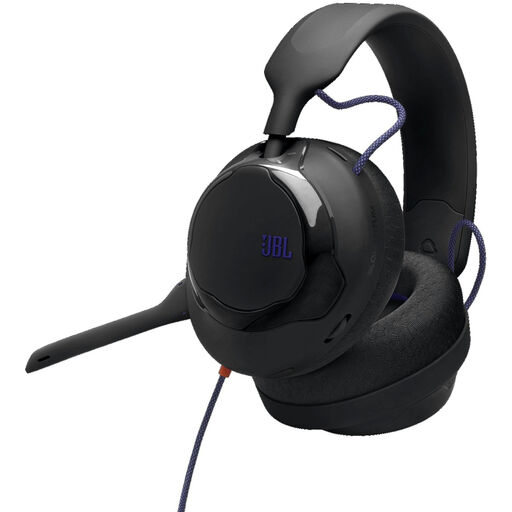
JBL Quantum 120 Wired Multiplatform Gaming Headset – Black
A wired headset for practising speaking and listening on a device with a compatible 3.5mm connection.
The product description lists a detachable cardioid boom microphone, stereo audio and a 3.5mm connection.
It also mentions a lightweight design and fabric ear cushions; check for yourself whether the fit feels comfortable.
View at Joybuy
 No image available
Logitech PC 960 USB Headset
An option for practising at a computer while seated, provided the USB connection suits your device.
The product description lists an adjustable microphone boom and in-line controls for volume and muting the microphone.
An adjustable headband and soft ear cushions are also mentioned. Check whether the fit works for your practice sessions.
View at Joybuy
 No image available
Jabra EVOLVE 30 II MS Stereo
A wired headset for speaking and listening back, provided the included connections work with your device.
The description lists stereo audio, a microphone, a 3.5mm connection and an included LINK MS controller for USB.
The stated cable length is 0,95 m; bear in mind the distance between your seat and your device.
View at Joybuy
 No image available
Logitech H150, white (981-000350)
A wired headset for practising speaking and listening, provided your device has a compatible connection.
The product description lists an adjustable, rotating microphone and stereo audio.
The 3.5mm plug requires a compatible combined headphone/microphone port. According to the description, a splitter cable for separate ports is not included.
View at Joybuy
 No image available
Razer BlackShark V2 X 7.1 Wired Gaming Headset – Black
This wired headset may suit practising on a device with a compatible 3.5mm connection.
The product description lists an analogue 3.5mm connection, a cardioid microphone and a microphone mute function.
According to the description, the specified 7.1 sound requires Windows software. Check that this suits your device and how you plan to use it.
View at Joybuy
Frequently asked questions
Can I connect a USB headset directly to a venue sound system?
Don’t assume you can: the Logitech H390 and Jabra Evolve2 30 SE are described as USB computer headsets, while the Shure WH20XLR has an XLR connection. Before choosing a headset for a venue rehearsal, check the system’s input and the signal path you’ll need.
How should I position the microphone during a rehearsal?
Put the headset on properly and position the microphone boom close to your mouth, following the Jabra guide. Make a short recording of both language versions, then check the recording source and playback volume on your own device and in your app.
What should I do if the headset turns out to be faulty after I buy it?
According to the Dutch government, there is no fixed statutory warranty period in the Netherlands; if a product is faulty, contact the seller. A manufacturer’s or seller’s warranty may offer additional cover, so check exactly what it includes.
Can I use any wireless headset microphone in the Netherlands without a licence?
It depends on the frequency band: according to the RDI, some bands require a licence. Consult the RDI overview for the exact version and check which frequencies are available at the location where you’ll use it.


