
Vandaag of morgen in huis

Kwaliteit gegarandeerd

Welkomstaanbiedingen ontgrendelen: GRATIS bezorging | Tot 80% korting | Gratis 30 dagen JoyPlus-proefperiode
Download de app
A bike rear light needs to stay securely in place, be visible enough and fit your bike. Yet many people choose a light based only on the number of LEDs or a bold marketing claim. This can leave you with a rear light that shifts after a few rides, runs out of charge quickly or isn’t a good fit for your bike.
This buying guide explains what to look for in an LED bike rear light, a USB-rechargeable model or a rear light for an e-bike.
More LEDs don’t automatically make a rear bike light more visible. Light distribution, viewing angle and mounting height also matter. A light that shines directly behind you may be more practical in busy city traffic than a model with lots of separate light points but a limited viewing angle.
So check whether the manufacturer provides information about light modes, brightness, battery life and mounting position.
The maximum battery life quoted often applies to a low or specific light setting. In flashing mode or at constant high brightness, the battery may run out sooner. When choosing a USB-rechargeable bike rear light, it’s useful to check:
Charge the light before setting off and check regularly that it’s still securely attached.
A seat post, luggage rack and mudguard don’t always use the same mounting system. A light designed for a round seat post may not fit an integrated or unusually shaped one.
The term StVZO-approved rear light also needs some explanation. StVZO is a German road traffic standard. A K-mark shows that the product has been approved under that German standard, but you should also check that the way you use the light complies with the rules of the road where you ride. A CE mark is not a substitute for specific approval for bicycle lighting.
An LED bike rear light uses little energy and can be made compact. Don’t just look at maximum brightness: check for a steady mode and any flashing modes too. For commuting, a simple steady setting can be useful. Leisure cyclists sometimes choose multiple modes so they can adjust battery life.
A bike rear light with brake light usually uses a motion or acceleration sensor. According to the manufacturer’s product description, the light may automatically become brighter when you slow down. Treat this as an extra signal, not a substitute for riding attentively.
A rechargeable battery is practical if you use the light on different bikes. USB-C lets you charge it with many common cables, but check whether a cable is included.
A dynamo light doesn’t need a separate battery. This can be useful for a city bike that’s used every day. Check, though, that the bike has a suitable hub or sidewall dynamo and the right wiring.
A waterproof bike rear light is often described using an IP rating. IP65 means, according to the product specification, protection against dust and water jets; it doesn’t automatically mean the light can be submerged. Also check that the charging port is properly sealed, and dry the light after a wet ride.
An ABS or polycarbonate casing can withstand everyday use, but even a sturdy casing won’t stop a light coming loose if it hasn’t been fitted correctly.
Choose a mounting point where the light faces directly backwards and won’t be covered by a coat, pannier or mudguard. A universal light can be useful for an e-bike, but check that it fits the seat post or luggage rack. A rear light for an e-bike won’t automatically work with the bike’s electrical system; many models have their own battery.
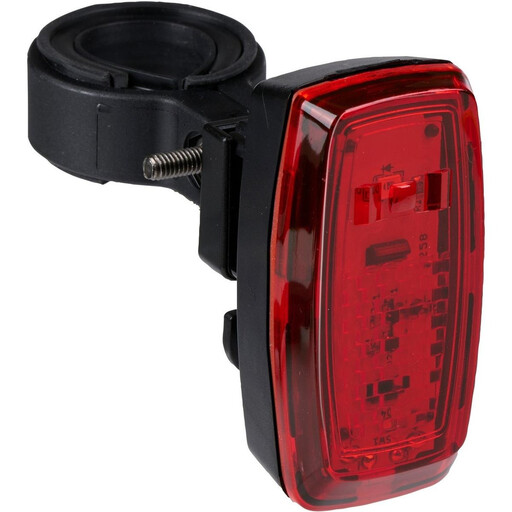
Why it suits this profile: This straightforward bike rear light is a good choice if you want a basic solution for everyday cycling and don’t need a rechargeable battery or smart sensor.
The product description mentions a sturdy ABS construction and compatibility with various bike models. Be sure to check the exact mounting method before buying.
ABS casing, black finish and a minimum two-year statutory warranty, according to the product information.
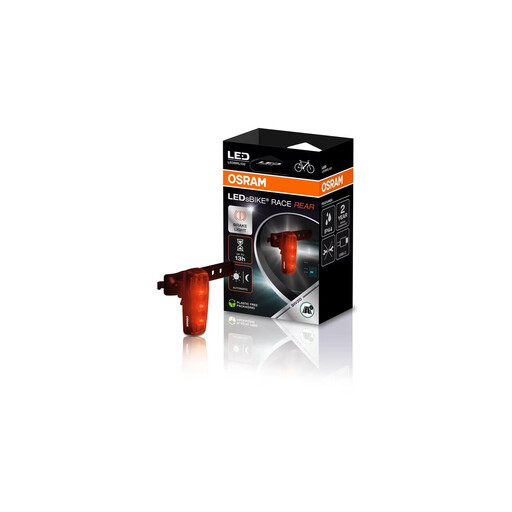
Why it suits this profile: This model is ideal for cyclists looking for a compact, rechargeable light with a brake light function for city rides, trekking, gravel riding or an e-bike.
The light uses an acceleration sensor for its brake light function and has a steady or automatic mode. According to the product information, it is StVZO-approved and carries a K-mark.
USB-C, stated battery life of up to 13 hours, weighs 34 grams and mounts with a flexible rubber strap.
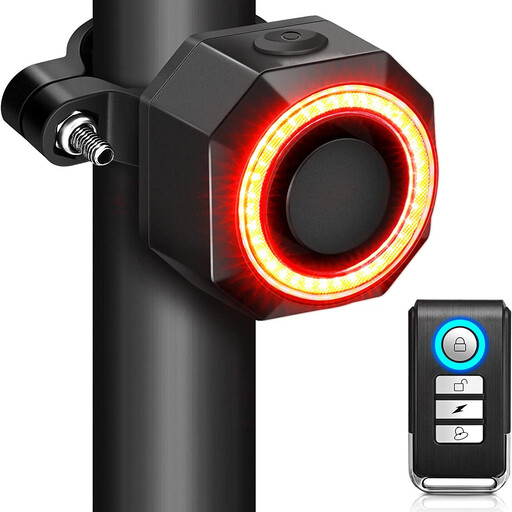
Why it suits this profile: A good fit for e-bike users and cyclists looking for extra features alongside a rear bike light, such as a motion sensor and flexible mounting options.
According to the product description, the casing has IP65 protection against dust and water jets. The light can be attached using a bracket, cable ties or tape.
USB-C, 700mAh battery, brake detection according to the product description and three mounting options for bikes and e-bikes.
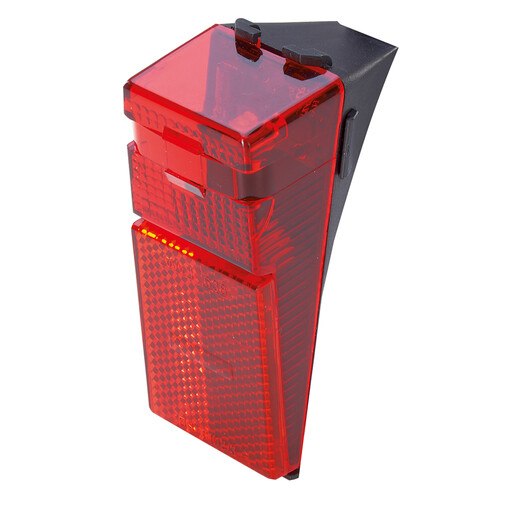
Why it suits this profile: This model is a good choice for city cyclists who want a fixed rear light on the mudguard and would rather not recharge a separate battery.
According to the product information, the light works with a hub or sidewall dynamo and doesn’t use separate batteries. Check in advance that your bike has a compatible dynamo connection.
Mudguard mounting, metal casing, two-wire connection and StVZO approval according to the product description.
We’ve put together a complete, up-to-date list of products that meet these strict selection criteria and the applicable European safety requirements.
Yes, as long as you charge it regularly and check that it’s securely attached. Pay attention to the stated battery life for the light mode you use. A light with USB-C, a charge indicator and a steady mode is practical for everyday use.
It varies by model, light mode, temperature and frequency of use. The maximum battery life stated in the product information is a guide. Charging the light when the battery indicator is low helps prevent you from being caught without a rear bike light during a ride.
Not always. A universal rear light with its own battery can be fitted to many bikes and e-bikes. However, a light that connects to the bike battery or dynamo needs compatible wiring and the correct voltage. So check the mounting, power source and connection before ordering.
