
Cyclists with an existing USB light
When staying in a holiday home, you mainly want to check that the charger and cable are compatible with your light. Lezyne and SIGMA describe different charging connections for their light models.


First, make sure the mains charger matches the charging cable and charging instructions for your existing bike light: USB lights can use different connectors. A charger with USB-A and USB-C is especially useful if you need both cable types or want to charge another device as well. A higher wattage alone does not prove that the light will charge faster. Also check that the plug and stated mains voltage range are suitable for the holiday home, and that the specific charger carries the CE marking required for the Dutch market.
When staying in a holiday home, you mainly want to check that the charger and cable are compatible with your light. Lezyne and SIGMA describe different charging connections for their light models.
You may want to charge a phone as well as your bike light. Mains chargers with USB-A and USB-C offer both types of port, but the power distribution varies by model.
You want to choose a charger that suits the holiday home's power supply and charge your light in a suitable place. The Netherlands Food and Consumer Product Safety Authority explains the CE marking requirement for applicable electrical products on the Dutch market; Brandweer Twente offers advice on safe charging.
Choose this if: you only charge your bike light and already have the cable.
Trade-off: it keeps things simple, but you cannot connect a second device to the same charger.
Choose this if: you use cables with different connectors or want to charge another device as well as your light.
Trade-off: when two devices are connected at the same time, how the available power is shared varies by model.
Choose this if: your light's instructions confirm that the charger is suitable and it matches the holiday home's power supply.
Trade-off: you avoid an extra purchase, but need to check the cable, charging specifications and destination in advance.
| What to consider | What should you check? | Who is this important for? |
|---|---|---|
| Connector and cable | Check the connectors at both ends of the charging cable and follow the charging instructions for your light model. | I want to charge my existing light without using the wrong connector. Consumers for whom the connector and cable are the main priority account for around 50%. |
| Charging multiple devices at once | Count the devices you want to connect at the same time and check the output specifications for each port, including when they are used simultaneously. | I want to be able to charge a phone or another device as well, without taking a separate charger for each one. Consumers who prioritise charging multiple devices at once account for around 30%. |
| Destination and charging location | Check that the plug and stated mains voltage range are suitable for the holiday home, that the specific charger carries the CE marking, and that you follow the instructions for choosing a suitable place to charge. | I want to check that the charger is compatible with the power supply at my destination and charge the light in a suitable place while travelling. Consumers who prioritise safe charging on the go account for around 20%. |
The connector at the charger end of the cable may differ from the one on the light. Some lights charge directly through a USB connection.
Before buying, check the entire charging connection and your light's instructions.
If your cable does not fit, you may need a different cable or mains charger.
A charger's maximum power alone does not tell you how quickly a bike light will charge; the actual power drawn also depends on the connected device.
Choose based on your light's charging specifications and the number of devices you want to connect, not just the highest wattage.
Plugs and power supplies in holiday homes can vary from one destination to another. Do not assume a compatible socket will be available without checking first.
Ask in advance about the sockets and power supply, then compare them with the charger's specifications. If necessary, check whether you need a suitable travel adaptor.
Xtorm offers, among other products, a compact 20 W GaN² Ultra mains charger with USB-C and USB-A.
Belkin offers the BoostCharge WCB009vfWH wall charger with USB-C and USB-A.
Philips offers the DLP4345CB/12 wall charger with USB-A and USB-C.
Hama has mains chargers with different port configurations, including models with USB-A and USB-C and models with USB-C only.
This selection includes USB mains chargers with different port types, power outputs and numbers of connections. Before buying, check your light's charging cable and instructions, whether the charger is suitable for the power supply at your destination, and whether the specific charger carries the CE marking. The Netherlands Food and Consumer Product Safety Authority states that CE marking is mandatory for applicable electrical products offered on the Dutch market.
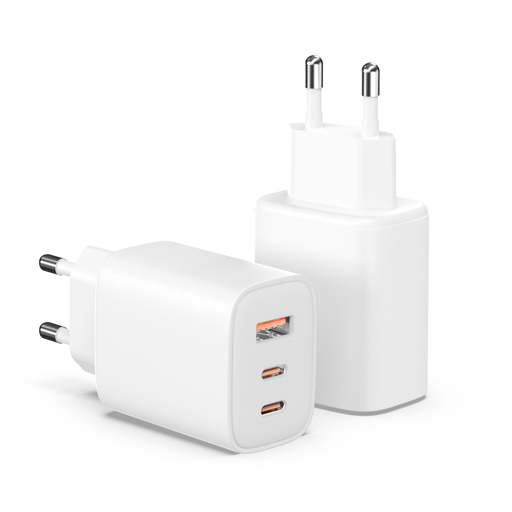 No image available
May suit your charging cable if it uses USB-A or USB-C at the charger end; check your light's required charging specifications.
The product details list two USB-C ports and one USB-A port.
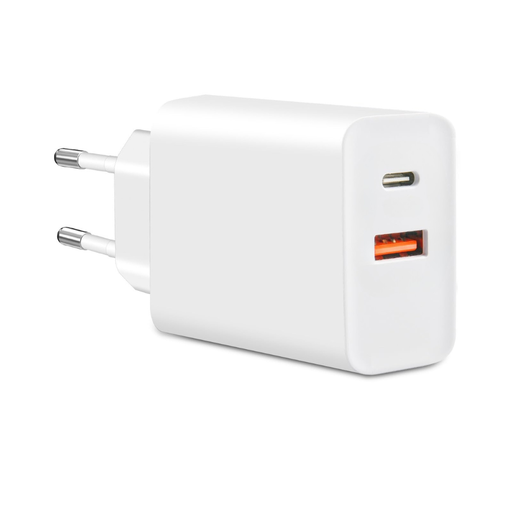 No image available
May be useful if you want to choose between a USB-A and USB-C cable; match the port to your cable and your bike light's instructions.
The product title lists a power output of 30 W and USB-A and USB-C ports.
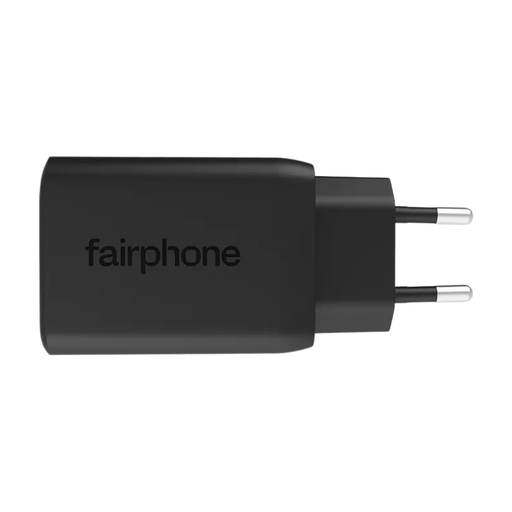 No image available
May be suitable if your light's cable uses one of the listed port types; check the complete charging connection and your light's instructions.
The title lists USB-C and USB; the product description mentions a Europlug Type C. According to the description, charging cables are not included.
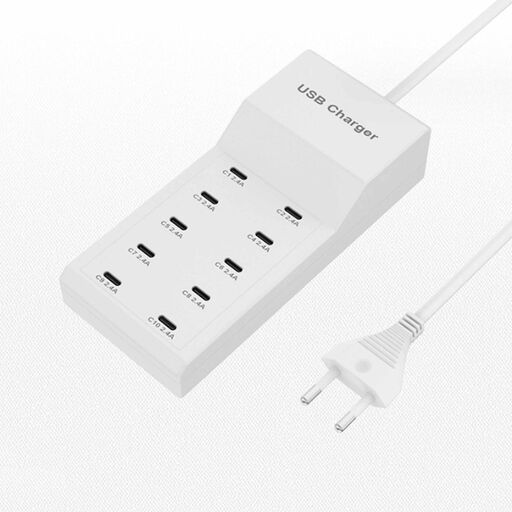 No image available
May be useful if you want to connect several devices; check that the port you need for your bike light is available.
The product title lists 10 ports, USB-A and USB-C. The product name describes it as a travel charger.
 No image available
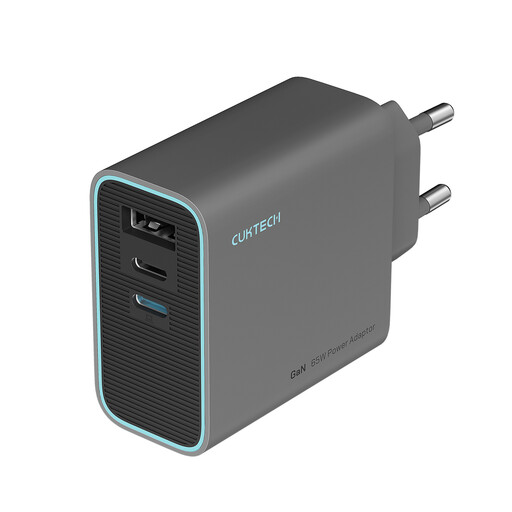
May be suitable if your light's cable uses USB-C at the charger end; check that this matches your light's charging specifications.
The product title lists a power output of 65 W, three ports and a foldable design.
You can if the charger's output and the charging cable meet your light's instructions. Check the connectors at both ends; lights may charge directly via USB or with a separate cable.
Not based on the wattage on the charger alone. Check your light's charging specifications: the mains charger's maximum power does not prove how quickly that light will charge.
Brandweer Twente advises charging during the day where possible, placing the device on a hard surface and unplugging the charger once the battery is full. Also follow your light's instructions and do not use damaged charging equipment.
The Netherlands Food and Consumer Product Safety Authority states that CE marking is mandatory for applicable electrical products on the Dutch market; check the marking on the specific charger. The Dutch Government states that bicycles in the Netherlands must have, among other things, a white or yellow light at the front and a red light at the rear, and that lights must not flash. A charger's CE marking does not determine whether a bike light complies with traffic rules; this does not establish the local rules for a holiday home outside the Netherlands.
When you buy as a consumer in the Netherlands, you are covered by the statutory guarantee: the product must do what you can reasonably expect it to do. The Dutch Government states that the seller must provide a solution if there is a problem; any manufacturer's guarantee does not replace this right.